

Stephen King Mocked After Saying Trump 'Has Never Had a Child' — Trump Jr. Fires Back, Says Author Has 'TDS'
Stephen King's claim that Donald Trump 'has never had a child' triggers viral X row as Donald Trump Jr mocks the author and labels his post 'TDS' in action.
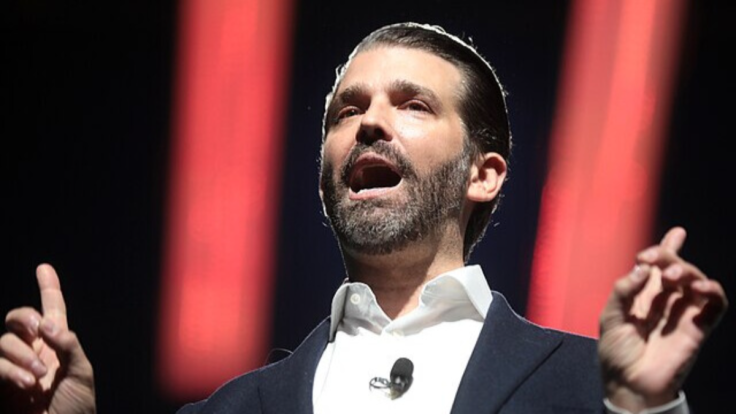
Stephen King's blunt claim that Donald Trump 'has never had a child' has triggered a fierce political firestorm and a rapid backlash from critics and members of the Trump family.
Stephen King, the celebrated American author known for It and The Shining, ignited widespread controversy on X (formerly Twitter) on 23 February 2026 when he posted a series of remarks about President Donald Trump's personal history that included the line 'Trump: has never had a child'. This statement, embedded in a broader critique of Trump's experience and achievements, was swiftly challenged as factually incorrect, drawing attention from political commentators, supporters of the former president and Trump's own son, Donald Trump Jr.
In the hours that followed, the exchange became one of the most viral online political debates of the year, illustrating how a single social media message from a high-profile cultural figure can trigger sharp disputes that reverberate across the political spectrum.
Trump:
— Stephen King (@StephenKing) February 23, 2026
Has never had a child.
Has been married 3 times
Ran several businesses into the ground
Never ran a home, couldn’t make a bed to save his ass
calls people he works with dumb, losers, etc.
Has never done sweat labor
Has never served on a local committee
Has no life…
King's X Post Sparks Backlash Over Trump Claim
In his controversial post, Stephen King compiled a list of assertions about Donald Trump's personal and professional background, including claims about marital history, business performance, home life and community involvement. Among them was the assertion 'has never had a child', a clear inaccuracy given that Donald Trump is the father of five children: Donald Trump Jr, Ivanka Trump, Eric Trump, Tiffany Trump and Barron Trump.
The context of King's post was a broader critique of Trump's life experience as president and public figure, phrased in a terse and confrontational style that drew immediate attention online. While King did not provide substantiating evidence for his claims within the post itself, several social media users noted that parts of the wording resembled a message shared earlier about a different public figure, Representative Alexandria Ocasio-Cortez.
Reactions were swift and intense. Conservative commentators and Trump supporters seized on the factual error regarding Trump's children to undermine King's credibility, with some responses mocking the author for his widely shared mistake. One user wrote that King's message contained 'The TDS in this one is strong', a reference to the widely used phrase Trump Derangement Syndrome.
Well, this is news to me… unless he means birthed a child which would also hold true for every male ever. TDS is real and it’s scary. pic.twitter.com/Bs64S4hyRT
— Donald Trump Jr. (@DonaldJTrumpJr) February 24, 2026
Trump Jr Hits Back At Stephen King
Donald Trump Jr entered the fray on 24 February 2026, directly addressing the disputed claim on X. In a response that included a screenshot of King's original post, Trump Jr wrote: 'Well, this is news to me...unless he means birthed a child which would also hold true for every male ever. TDS is real and it's scary.'
By invoking the phrase Trump Derangement Syndrome, a pejorative term used by Trump allies to describe what they argue are irrational attacks on the former president, Trump Jr framed King's post as symptomatic of broader political hostility rather than grounded critique.
Trump Jr's response quickly became one of the most shared reactions to the controversy, prompting further online discussion about the accuracy and intent of King's remarks. Several commentators echoed Trump Jr's point about Trump's family, highlighting that the president's five children and 11 grandchildren are a matter of public record.
The clash illustrates how figures outside of politics, particularly those with large cultural followings, can become focal points in public political debate, especially in the social media era where rapid responses amplify both criticism and rebuttal.
Trump Derangement Syndrome will make you completely disconnected from reality https://t.co/nu46ynCX2v pic.twitter.com/yODIjaRrSM
— Grokius Maximus ⚔️ (@alx) February 23, 2026
Row Feeds Wider Debate On Celebrity Political Commentary
Stephen King is not new to political commentary. Over the years, he has used social media to express strong views on public figures and policy issues, earning both praise and criticism across the political divide. His online presence as a commentator has included denunciations of immigration enforcement, critiques of economic policies and sharp language directed at political figures.
However, the factual misstep in King's recent post has shifted some of the focus from his broader political critique to the accuracy and responsibility of individuals using their platforms to address public figures. In the rapidly evolving media landscape of 2026, where misinformation and partisan fighting are constant features of online discourse, this incident highlights the risks that even prominent authors face when wading into politically charged territory.
Political commentators have noted that King's influence means his words reach millions of followers who may interpret his commentary as authoritative. Critics from various perspectives argued that mischaracterising basic facts about a public figure's family undermines public trust and fuels divisiveness, regardless of political allegiance. Supporters of King, on the other hand, maintain that his critique was part of a broader satirical or hyperbolic rhetorical approach, common in heated online exchanges.
The controversy comes at a politically sensitive moment. Donald Trump, having returned to the presidency for a second term, is preparing to address Congress and the nation. That context has intensified focus on public commentary about his personal life, leadership and policy record, drawing sharp lines between supporters and critics alike.
In the broader cultural arena, the episode raises enduring questions about how prominent public figures engage with political commentary, the role of social media in shaping public perception and the responsibilities associated with influence and visibility. It also underscores the power of a single line of text to become a catalyst for national discussion, and a reminder of how closely modern political identities are intertwined with cultural figures and digital platforms.
Despite the roaring online response, Stephen King has not issued a public retraction or clarification as of the latest reports. Whether he will address the backlash remains to be seen, but the controversy itself has already solidified this episode as one of the more striking intersections of literature, politics and social media discourse in recent years.
Even for a writer accustomed to terrifying audiences through fiction, this real-world exchange has proven to be one of the most dramatic chapters of Stephen King's public commentary career.
© Copyright IBTimes 2026. All rights reserved.