

Is Krakatoa Erupting Again? Anak Krakatau Disrupts 209 Flights as Ash Spreads, Tsunami Risk Monitored
Volcanic ash from Anak Krakatau causes widespread flight cancellations and disruptions in Indonesia
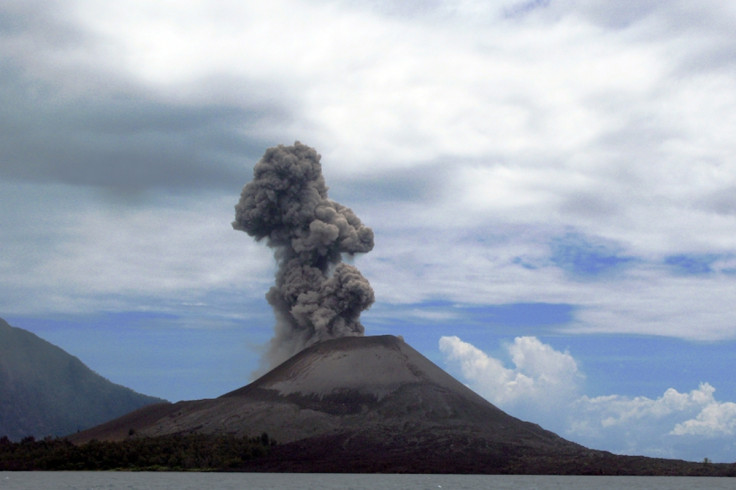
Anak Krakatau has been erupting since late Friday, sending volcanic ash across parts of Indonesia and disrupting air travel, with at least 209 scheduled flights cancelled during a temporary closure at Soekarno-Hatta International Airport on Sunday.
The eruption has also affected other airports, while authorities continue to monitor the ash cloud and have said there is no imminent tsunami threat.
The eruption has disrupted activity in parts of Sumatra and Java, with volcanic ash detected around Jakarta's main airport early on Sunday. Airlines have cancelled or adjusted services as meteorological and aviation teams assess the movement of the ash and its potential impact on flight operations.
Qantas confirmed that some of its services to and from Jakarta had been disrupted, including cancellations beginning on Sunday.
'Our meteorologists and operations teams are closely monitoring conditions in and around Jakarta and any impact on our operations,' the airline said.
'Safety remains our highest priority. We have contacted affected customers and are providing assistance.'
Qantas said services would resume when conditions allowed.
Anak Krakatau Eruption Sends Ash Across Indonesia
Anak Krakatau has been experiencing continuous eruption activity since around 11.07 pm local time on September 4, according to Indonesia's geological authorities.
The volcano is located in the Sunda Strait between Java and Sumatra, in a region that has a long history of volcanic activity. The latest eruption has sent ash towards several areas, including parts of West Java.
Indonesia's Meteorology, Climatology and Geophysics Agency, known as BMKG, reported that volcanic ash was detected at heights of up to around 20,000 feet along one trajectory. In comparison, a plume reached as high as 50,000 feet in another direction.
The movement of the ash has become a major concern for aviation because volcanic ash can affect aircraft operations and reduce visibility.
Berton Panjaitan, a spokesperson for Indonesia's disaster mitigation agency, known as BNPB, said the ash had disrupted activity in Lampung province on Sumatra and Banten province on Java.
BNPB urged residents to remain calm while staying vigilant. People in areas affected by ashfall have been advised to wear masks and eye protection, limit outdoor activities, and cover water sources.
Authorities have also urged motorists to take care because volcanic ash can reduce visibility.
Several schools cancelled activities on Saturday, while local reports said students and residents experienced eye irritation amid the ash. Fishermen also cancelled fishing trips because of the eruption.
209 Flights Cancelled as Airports Face Ash Disruption
Soekarno-Hatta International Airport temporarily suspended operations after volcanic ash from Anak Krakatau was detected in the airport area.
Airport operator InJourney said at least 209 scheduled flights were cancelled during the temporary closure period. The cancellations included domestic, international and cargo services.
The disruption did not remain limited to Soekarno-Hatta. Indonesian authorities reported temporary closures or disruptions at several other airports as volcanic ash spread, while later reporting indicated that hundreds of flights had been affected across the country's aviation network.
Singapore Airlines also cancelled 19 flights between Singapore and Jakarta scheduled for Sunday, while Scoot cancelled a further 12 services, according to later reporting.
Qantas was among the other airlines affected by the eruption, with the Australian carrier warning passengers that conditions around Jakarta were being closely monitored.
The airline advised affected customers that operational changes could continue depending on the conditions.
The scale of the disruption means the original 209-flight figure should be understood specifically as the number of scheduled flights cancelled at Soekarno-Hatta during the reported closure period, rather than as the total number of flights affected across Indonesia.
The airport authorities have urged passengers to check directly with their airlines before travelling because schedules can change as the ash cloud moves.
No Imminent Tsunami Threat From Anak Krakatau
The latest eruption has also renewed attention on Anak Krakatau because of the volcano's history.
In December 2018, a collapse of part of Anak Krakatau's volcanic structure triggered a tsunami that struck coastal communities around the Sunda Strait and killed hundreds of people.
That history has made any significant eruption in the area particularly sensitive. However, Indonesian authorities have said there is currently no imminent tsunami threat associated with the latest activity.
BNPB said there was no imminent risk of a tsunami from the volcano, while BMKG's monitoring detected no sea-level anomaly indicating a tsunami or meteotsunami in the Sunda Strait linked to the eruption.
Indonesia's geological authorities have also assessed that the present structure of Anak Krakatau is relatively small and does not currently have the same potential for a large-scale collapse capable of triggering a tsunami.
Authorities continue to monitor the volcano and the movement of volcanic ash as the eruption continues.
The eruption has nevertheless disrupted the immediate area, with schools, fishing activity and air travel affected across parts of Indonesia as officials track changing conditions.
© Copyright IBTimes 2026. All rights reserved.