

Trump Hit by Devastating Poll Bombshell as Nearly Half of Americans Label Him 'Corrupt'
Survey Highlights Trump's Legal Challenges and Public Perception
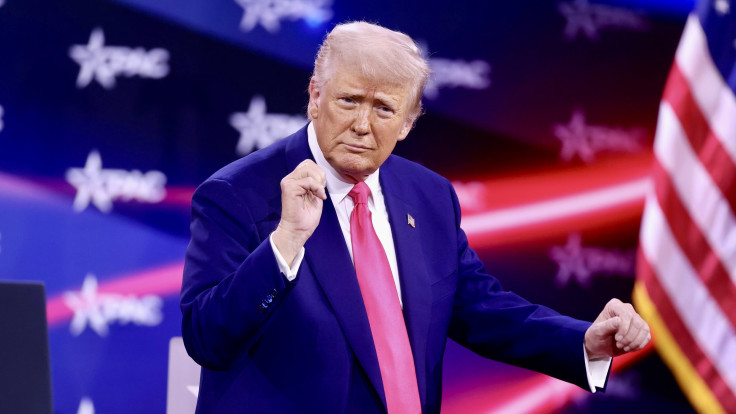
Nearly half of Americans now describe Donald Trump as 'corrupt', delivering a brutal political blow as the former president battles mounting legal peril and a fiercely polarised electorate.
A new national survey has found that close to one in two voters attach the label directly to Trump, underscoring the enduring damage caused by years of investigations, indictments and civil judgments. The finding lands at a pivotal moment in the 2026 election cycle, when public trust and candidate character are emerging as decisive factors.
The polling result does not exist in isolation. It sits atop a dense web of court rulings, sworn testimony and recorded interviews that have shaped public perception and sharpened scrutiny of Trump's conduct in office and beyond.
Polling Data Reveals Deep Trust Deficit
The survey, conducted by YouGov on behalf of The Economist and released in February 2026, asked respondents whether they believed Trump to be corrupt. Forty-nine per cent answered in the affirmative, while a significantly smaller share rejected the characterisation outright. The results reflect a hardened view among independent voters and a near-unanimous verdict among Democrats.
The poll's methodology included a nationally representative sample of adult US citizens, weighted for age, gender, race and education. The margin of error stood at approximately three percentage points. Even allowing for statistical variation, the proportion branding Trump 'corrupt' remains politically potent.
The word carries legal and moral weight. In the context of American politics, it evokes abuse of office, self-dealing and obstruction. For Trump, it echoes language used in multiple indictments and civil complaints that have dogged him since leaving the White House on 20 January 2021.
BREAKING: Trump was just Named as the Most Corrupt President in U.S. History pic.twitter.com/HsjN6b6YjQ
— PoliticsVideoChannel (@politvidchannel) August 28, 2023
Court Rulings And Criminal Indictments Fuel Perception
Public opinion has been shaped by a cascade of formal legal actions. On 30 May 2024, a jury in the Supreme Court of the State of New York found Trump guilty on 34 felony counts of falsifying business records in the first degree in People of the State of New York v. Donald J. Trump. The indictment, filed by the Manhattan District Attorney's Office, alleged that Trump orchestrated a scheme to conceal reimbursements tied to a hush money payment during the 2016 campaign.
In a separate civil proceeding, Justice Arthur Engoron ruled on 16 February 2024 in New York Attorney General v. Trump et al. that Trump and his company had engaged in persistent fraud by inflating asset valuations to secure favourable loan and insurance terms. The court ordered Trump and co-defendants to pay hundreds of millions of dollars in penalties, with the judgment exceeding £280 million ($350 million) before interest. The ruling detailed what the court described as 'repeated and persistent fraud' under New York Executive Law §63(12).
Trump has denied wrongdoing in both cases and is pursuing appeals. In statements posted on his Truth Social platform and in interviews, he has described the prosecutions as politically motivated. During a televised town hall on CNN on 10 May 2023, Trump insisted, 'I did nothing wrong', characterising the investigations as a 'witch hunt'.
Another federal indictment, filed on 1 August 2023 in the US District Court for the District of Columbia, accused Trump of conspiring to defraud the United States in connection with efforts to overturn the 2020 election result. The charging document referenced testimony from former Vice President Mike Pence and other senior officials who told investigators that Trump persisted in claims of widespread fraud despite being informed there was no evidence sufficient to alter the outcome.
Recorded Interviews And Testimony Shape Narrative
Beyond courtrooms, Trump's own recorded words have become central to public debate. In a telephone call on 2 January 2021 with Georgia Secretary of State Brad Raffensperger, Trump urged officials to 'find 11,780 votes', according to an audio recording released by Raffensperger's office. The call formed part of the evidentiary record in subsequent investigations in Georgia.
During sworn testimony in the New York civil fraud case, Trump acknowledged that financial statements contained disclaimers but rejected allegations of intentional misrepresentation. A transcript of his deposition shows him stating, 'The banks got paid back', while disputing the materiality of asset valuations.
Special Counsel filings in the federal election interference case also cited recorded interviews and contemporaneous notes from White House aides. These documents, entered into the public docket, described internal discussions about alternative electors and pressure on state officials. Trump has consistently maintained that he was exercising his right to challenge what he believed were irregularities.
The cumulative effect of these records has been relentless. Legal filings, video depositions and public statements are accessible online, allowing voters to examine primary source material directly rather than relying solely on mediated reporting.
Political Ramifications Ahead Of 2026
The perception of corruption now threatens to overshadow Trump's policy messaging. While his core supporters remain steadfast, the YouGov data suggests that independent voters are increasingly wary. In a closely divided electorate, even a small shift among swing voters can prove decisive.
Republican leaders have offered mixed responses. Some have echoed Trump's claims of selective prosecution. Others have urged the party to pivot towards economic and immigration issues, warning that ongoing legal battles risk alienating moderate voters.
Democratic strategists, meanwhile, have seized on the polling figure as evidence that concerns about integrity resonate beyond their base. Campaign advertisements and fundraising appeals increasingly reference the criminal convictions and civil judgments as proof of unfitness for office.
Yet Trump has demonstrated resilience in previous cycles. After his first indictment in March 2023, campaign fundraising surged, according to filings with the Federal Election Commission. His political brand has often thrived on confrontation, with legal jeopardy framed as persecution.
Whether the 'corrupt' label hardens into a lasting electoral liability remains uncertain. What is clear is that nearly half of Americans now attach that term to a former president who remains a dominant force in US politics.
For a candidate seeking to reclaim the White House, the verdict of public opinion may prove as consequential as any delivered in court.
© Copyright IBTimes 2026. All rights reserved.