

Hungary Expels 10 Russian Diplomats Over 'Unacceptable Activities' After Years of Close Ties With Putin
Budapest's decision marks a significant departure from Viktor Orbán's pro-Moscow stance
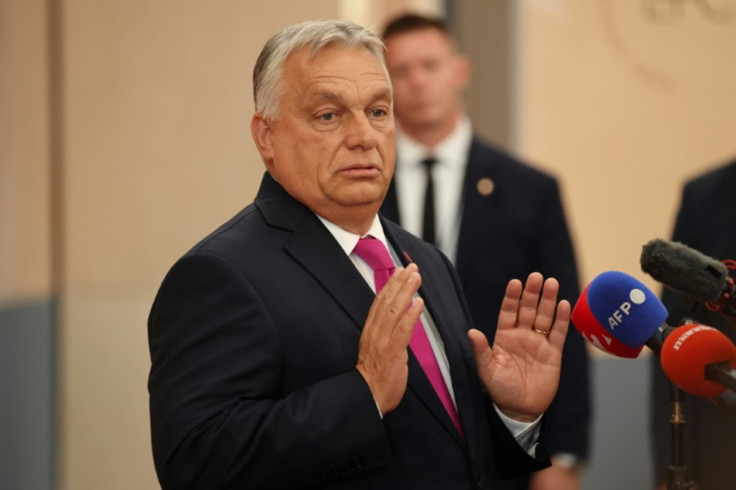
Hungary has ordered 10 Russian diplomats to leave the country after accusing them of conducting activities incompatible with their diplomatic status.
The decision represents one of Budapest's clearest moves away from the close relationship with Moscow maintained under former Prime Minister Viktor Orbán.
Hungarian Foreign Minister Anita Orbán announced the expulsions on Tuesday, 8 September 2026. She said the diplomats had engaged in activities considered unacceptable under the Vienna Convention, although she did not disclose what they were accused of doing.
Hungary Says Expulsions Will Protect Its Sovereignty
Anita Orbán said a Hungarian Foreign Ministry official had informed Russia's ambassador to Budapest, Evgeny Stanislavov, that the 10 members of the Russian mission must leave.
She said the decision was intended to protect Hungary's security and sovereignty.
The foreign minister stressed that the expulsions did not amount to a severing of diplomatic relations. Hungary, she said, remained prepared to maintain necessary dialogue with Russia based on mutual respect and adherence to diplomatic rules.
Anita Orbán is not related to Viktor Orbán, who served as Hungary's prime minister for 16 years before leaving office in 2026.
Hungarian authorities did not identify the diplomats, describe their alleged activities or publicly specify how long they had been given to leave. The wording used by the government does not establish that the diplomats were involved in espionage.
Under Article 9 of the Vienna Convention on Diplomatic Relations, a receiving state may declare a diplomat persona non grata without explaining its decision.
Russia Threatens Retaliation
Russia condemned the expulsions and said it would respond.
The Russian Foreign Ministry described Hungary's decision as an unfriendly step. Stanislavov called it an unprecedented and unjustified escalation and questioned Budapest's stated intention to preserve dialogue.
Moscow did not immediately explain what retaliatory measures it would take. Governments frequently respond to diplomatic expulsions by ordering officials from the other country to leave.
The dispute could reduce diplomatic staffing between Budapest and Moscow, despite Hungary's insistence that it does not intend to end diplomatic relations.
Hungary Moves Away From Orbán's Russia Policy
Prime Minister Péter Magyar took office in May 2026 after campaigning on promises to tackle corruption and dismantle political structures established during Viktor Orbán's government.
Viktor Orbán maintained close relations with Russian President Vladimir Putin following Russia's full-scale invasion of Ukraine in February 2022. His government repeatedly opposed or delayed European Union measures against Moscow and continued pursuing Russian energy agreements.
Magyar's government has since sought to repair Hungary's relationships with the EU, NATO and Ukraine.
In May, Hungary summoned Stanislavov following Russian drone attacks on Ukraine's Transcarpathia region, which is home to a substantial ethnic Hungarian community. Anita Orbán described the attacks as unacceptable and called for a ceasefire.
European Commission Supports Hungary's Decision
The European Commission described the expulsions as a legitimate decision by the Hungarian government.
A commission spokesperson linked the action to European concerns about alleged Russian hybrid operations, including espionage, sabotage, cyberattacks and political interference. Russia has repeatedly denied attempting to destabilise European countries.
The expulsions do not end Hungary's relationship with Moscow. However, they signal a significant change in Budapest's approach following the end of Viktor Orbán's premiership.
Further tensions may depend on Moscow's response and whether Hungary takes additional measures against suspected Russian activity.
© Copyright IBTimes 2026. All rights reserved.