

Sweden Builds Tiny Houses a 25-Year-Old Can Actually Afford, but There's a Catch
Exploring the potential and challenges of compact housing in Sweden
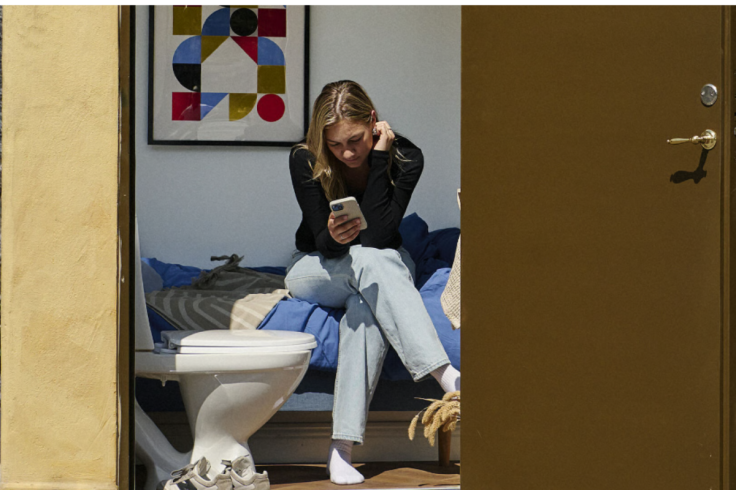
A housing company in Sweden has unveiled three unusually tiny houses designed to show what a 25-year-old on an average income can realistically afford in today's housing market. But rather than offering a new solution for young buyers, the homes are meant to highlight just how severe the country's affordability crisis has become.
The homes, created as part of a housing campaign by Swedish developer Riksbyggen and creative agency BBDO Nordics, range from roughly 20 to 48 square feet (1.9 to 4.5 square metres). They contain only the basics, including a toilet and somewhere to sit, with some so cramped that there is not even enough space for a person to stretch out fully.
The sizes are based on Riksbyggen's 'Square Meter Index', which considers factors including average wages, property prices and mortgage conditions in different Swedish cities. That means affordability varies dramatically by location.
In Umeå, for example, a typical 25-year-old could theoretically afford a home measuring around 48 square feet. In Gothenburg, that figure falls to about 33 square feet, while Stockholm's equivalent home is an astonishingly small 20 square feet.
Tiny Homes Come With Big Message
The houses are not intended to be sold or lived in permanently. Instead, they were built at full scale to give the public a physical sense of what the country's housing crisis looks like when affordability is reduced to a simple calculation.
The campaign is calling for measures including increased housing construction, more accessible loans for first-time buyers and renewed support for housing aimed at older people. The latter could potentially free up existing homes for younger residents.
The project has also attracted political attention, with Sweden's Housing Minister Andreas Carlsson visiting one of the miniature properties. Riksbyggen says there is growing political interest in some of its proposals, particularly the idea of state-backed loans for first-time buyers.
Ultimately, the bizarrely small houses are less about promoting tiny living and more about asking a difficult question: if this is all a young person can afford, how did housing become this expensive?
Why Tiny Homes Are Attracting Young Swedes
For many young adults, buying a first home can be difficult without substantial savings or financial help from family. Large homes in desirable locations can be particularly expensive, while renting can make it challenging to build enough savings for a deposit.
Tiny houses attempt to tackle the problem by changing the equation entirely.
Instead of trying to make a traditional house cheaper, developers and architects reduce its size. Some designs prioritise essential living space, incorporating compact kitchens, bathrooms, sleeping areas and flexible furniture into a relatively small footprint.
For a 25-year-old who prioritises independence over having a large living room or spare bedroom, that trade-off can potentially make homeownership more achievable.
The approach also reflects Sweden's wider reputation for innovative housing design. Scandinavian architecture has long focused on making small spaces practical, functional and visually appealing, making the country an obvious place for experiments involving compact homes.
The Catch Is Bigger Than the House
The biggest issue is that affordability is not determined by the building alone.
Even if a tiny house costs significantly less than a conventional property, buyers still need somewhere to put it. Land can be expensive, particularly close to major cities and public transport. Planning rules, building regulations, utilities and connection fees can also add substantial costs.
A tiny house therefore does not necessarily mean a tiny overall housing bill.
There can also be restrictions surrounding where such properties can legally be placed and how they can be used. Depending on the design and location, a compact dwelling may be subject to different planning and building requirements.
That means someone attracted by a low advertised price may discover that purchasing the house is only one part of the financial equation.
Could Tiny Houses Solve the Housing Problem?
Tiny homes are unlikely to solve Sweden's housing shortage on their own, but they could offer another option for people willing to compromise on space.
The appeal is particularly obvious among younger buyers who may prefer a smaller home in exchange for lower living costs, less maintenance and greater financial independence.
However, the concept also highlights a broader problem facing young people across Europe. When ordinary homes become increasingly difficult to afford, simply making houses smaller does not address the underlying cost of land, construction and access to desirable locations.
For a 25-year-old, a tiny Swedish house may therefore look like an affordable route into homeownership — but the real catch is everything surrounding the house itself.
The idea could still prove valuable if governments and developers pair compact housing with affordable land, sensible planning rules and accessible financing. Without those changes, however, even the smallest house can come with a surprisingly large price tag.
© Copyright IBTimes 2026. All rights reserved.