

Who Becomes King After Harald V? Norway's Royal Succession Explained Following His Death
Crown Prince Haakon succeeds King Harald V, marking a new era for Norway's monarchy
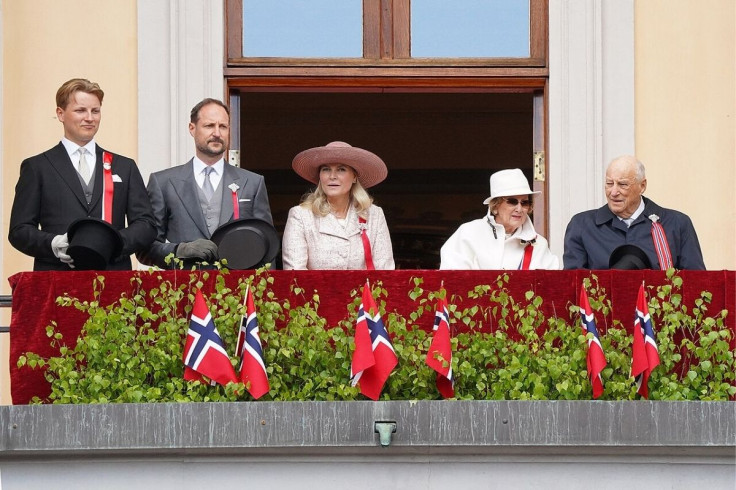
King Harald V's death at 89 has triggered an immediate transition in Norway's monarchy, with his only son, Crown Prince Haakon, succeeding him and his eldest child becoming the new heir to the throne.
The Royal Court announced that Harald died peacefully at Oslo University Hospital Rikshospitalet at 6:35 a.m. on Friday, 28 August 2026. He had reigned since January 1991, when he succeeded his father, King Olav V.
Haakon, 53, automatically became king following his father's death. He is expected to take the regnal name Haakon VIII, although this will be confirmed at an extraordinary Council of State.
Haakon Becomes Norway's New King
The accession marks a major generational change for Norway's royal family.
Haakon has spent decades preparing for the throne and has already performed many of the King's constitutional duties during periods when Harald was unable to work because of illness. He most recently served as regent while his father's health deteriorated.
His accession means Norway now has its fourth king since the country gained full independence from Sweden in 1905.
The new monarch will inherit the responsibilities of a constitutional head of state, while Norway's elected government and parliament continue to exercise political power.
Princess Ingrid Alexandra Moves Up the Line
The biggest change beyond Haakon's accession concerns his 22-year-old daughter, Princess Ingrid Alexandra.
She is now Norway's Crown Princess and heir apparent, placing her directly behind her father in the line of succession. Her position is significant because Norway introduced gender-neutral succession rules in 1990, meaning the monarch's eldest child takes precedence regardless of sex.
If Ingrid Alexandra eventually becomes queen, she would be Norway's first reigning female monarch in centuries.
Her younger brother, Prince Sverre Magnus, 20, is now second in line to the throne.
The succession therefore passes directly through Haakon's family, with Ingrid Alexandra representing the next generation of Norway's monarchy.
What Happens to the Wider Royal Family?
King Harald's daughter, Princess Märtha Louise, remains behind Haakon and his descendants in the succession.
Her three daughters, Maud Angelica Behn, Leah Isadora Behn and Emma Tallulah Behn, follow her in the wider line of succession. However, they are much further removed from the throne because Haakon's descendants take precedence.
The immediate succession is therefore straightforward: King Haakon, followed by Crown Princess Ingrid Alexandra and then Prince Sverre Magnus.
Norway Mourns the End of Harald's Reign
The transition comes as Norway begins mourning a monarch who spent more than three decades representing the country.
Harald was widely regarded as a modern and approachable king. His reign included periods of national tragedy and significant social change, during which he frequently used his position to emphasise unity and inclusion.
Following his death, the Royal Palace lowered its flag to half-mast, while national attention turned towards the royal family and the country's new monarch.
For Norway, the succession is immediate and constitutionally established. But the significance goes beyond the formal transfer of the crown.
Haakon now begins his reign at a time when the Norwegian monarchy faces scrutiny over public support and controversies surrounding members of the royal family.
His challenge will be to preserve the institution's connection with the Norwegian public while establishing an identity distinct from the long reign of his father.
The succession has begun. Norway now enters a new royal era under its new king, Haakon.
© Copyright IBTimes 2026. All rights reserved.