

Tesla Cybercab Under Investigation as It Hits Austin, Former Administrator Says NHTSA Is 'Super Frustrated'
Tesla says its steering-wheel-free robotaxi meets existing federal safety standards without an exemption, but regulators are now examining the data and process behind that claim

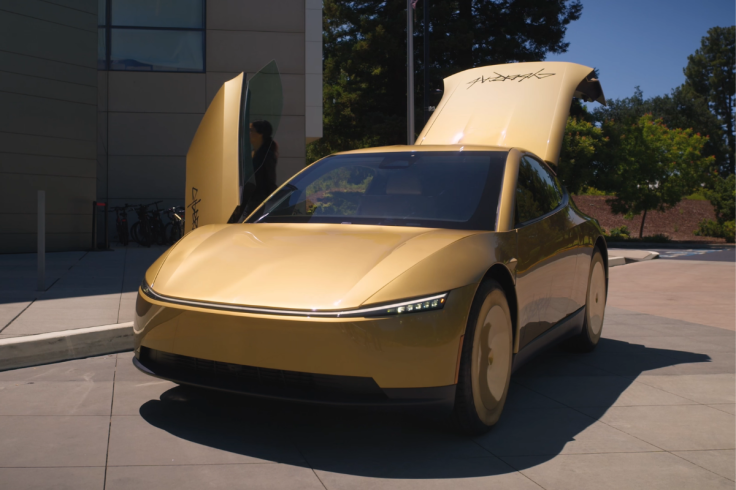
Tesla's Cybercab was barely on the road in Austin before a US safety regulator opened a formal investigation into how the company certified the driverless vehicle as compliant with federal rules.
The National Highway Traffic Safety Administration (NHTSA) launched Audit Query AQ26002 on 3 September, the same day Tesla began commercial deployment of a small number of Cybercabs in the Texas city.
NHTSA said it is examining the technical data and process Tesla used to certify that the vehicle complies with applicable Federal Motor Vehicle Safety Standards (FMVSS).
The Cybercab is designed without permanently attached conventional controls, including a brake pedal, accelerator pedal, steering wheel and mirrors. Tesla told NHTSA that it had certified the vehicles as compliant with all applicable federal standards rather than seeking an exemption.
Ann Carlson, a former acting NHTSA administrator and now a professor of environmental law at UCLA, said the investigation was likely 'an indication that NHTSA is super frustrated with Tesla'.
She pointed to the agency's treatment of Amazon‑owned Zoox, whose purpose‑built robotaxi also lacks conventional manual controls. 'For Tesla to slap them in the face and ignore that—that is gobsmacking,' Carlson told WIRED.
'NHTSA fully supports the safe development and deployment of automated vehicles,' Morrison said. 'But as the federal regulator, we need to ensure that all of our laws are followed.'
The agency has not declared the Cybercab illegal or ordered Tesla to stop its Austin service. The Audit Query is an enforcement action that allows NHTSA to examine the basis for Tesla's self‑certification. Opening the inquiry does not itself establish a defect or violation.
What NHTSA Wants From Tesla
NHTSA's investigation was prompted by public information and covers an estimated population of 1,000 Cybercab vehicles.
The agency will examine the process and technical data Tesla relied on when certifying the vehicle, including whether its compliance framework treated certain FMVSS requirements as inapplicable.
US carmakers generally certify their own vehicles as meeting federal safety standards, subject to NHTSA oversight.
Here, the regulatory issue is whether Tesla's interpretation of which requirements apply to a driverless vehicle is supported by the technical work behind its certification.
Tesla Took a Different Route From Zoox
Zoox had previously pursued self‑certification before NHTSA scrutiny led to a different regulatory path. In July, NHTSA granted the company a temporary exemption allowing commercial deployment of up to 2,500 vehicles annually for two years. The exemption covers certain requirements in eight federal safety standards.
Tesla has taken a different route. It says an exemption is unnecessary because the Cybercab complies with the applicable standards. NHTSA is now examining the reasoning behind that position.
Texas records cited by Reuters showed 45 Cybercabs among about 420 Tesla autonomous vehicles registered in the state in early September. NHTSA's 1,000‑vehicle figure is its estimated population for the investigation, not a count of Cybercabs currently operating on public roads.
Tesla has also discussed much larger ambitions for autonomous ride‑hailing, including deployment at a scale of millions of vehicles. That makes the regulatory path more consequential if the company seeks to expand the Cybercab beyond its initial rollout.
The Rulebook Is Changing, Too
NHTSA is simultaneously rewriting parts of the regulatory framework for automated vehicles. The agency said it has begun work on eight rulemakings involving standards including brake pedals, windscreen wipers, lighting and rear‑view mirrors.
The work is intended to address requirements that may not fit vehicles designed without conventional human controls.
But those changes are not yet complete. NHTSA said existing standards remain in force until the rulemaking work is finished. That leaves Tesla trying to certify a vehicle built for a driverless future under rules that were largely written around conventional vehicles.
The Cybercab Is Still Operating
For now, the Austin rollout continues. NHTSA's opening document states that Tesla plans to expand the Cybercab deployment to additional vehicles and locations, and the agency has not announced a recall or ordered the vehicles off public roads.
NHTSA is assessing whether Tesla's technical and legal reasoning supports its claim that the Cybercab meets the federal safety standards that apply to it, and its findings will determine how the vehicle may be deployed beyond Austin.
© Copyright IBTimes 2026. All rights reserved.