Horrifying Moment Tourist Is Forced Into 260-Foot Canyon Plunge as She Screams 'Let Me Go'
A tourist was reportedly forced into a 260-foot canyon jump in Dagestan despite pleading not to take part
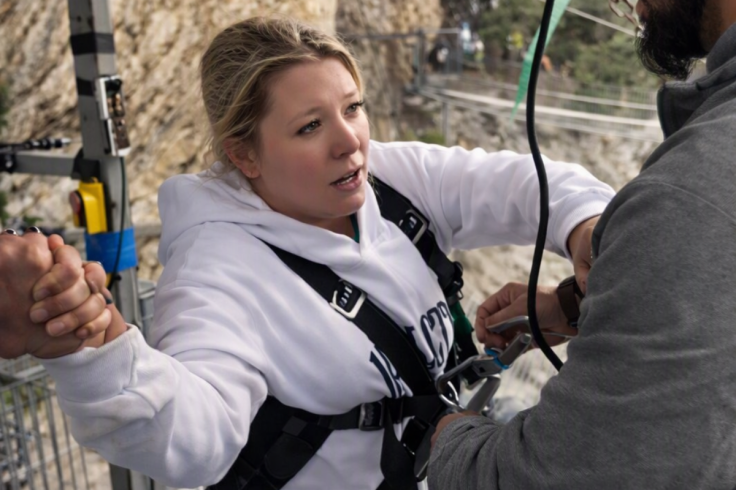
A tourist was filmed appearing to be forced into a 260-foot canyon plunge in Dagestan after reportedly changing her mind about the jump, with footage showing instructors kicking her legs as she pleaded to be released.
The woman survived the plunge, but the incident has prompted online outrage and renewed attention to safety and consent at extreme-sports attractions.
The woman can be heard begging staff not to throw her from the ledge, while the instructors appear to laugh during the confrontation. However, Dagestan's tourism ministry and representatives of the attraction have disputed the apparent circumstances, saying the footage was staged and that the woman had agreed to the jump.
The Terrifying Moment a Tourist Appears To Be Forced Into a 260-Foot Canyon Swing
The incident occurred at the Noh'o tourist attraction on the Sulak River in Dagestan, Russia. Footage obtained by East 2 West shows the distressed woman attempting to move away from the edge as instructors try to position her for the jump.
The woman is heard pleading, 'Please don't throw me like that! Let me go,' before adding, 'Please... Don't! I'm begging you!' The instructors reportedly tell her to 'calm down' and not 'jerk around' as she struggles to get away from the ledge.
The footage then appears to show an instructor kicking the backs of her legs, forcing them to give way so staff can position her for the plunge. The woman is subsequently swung out over the canyon while her husband films the incident, with an onlooker claiming he laughed as his wife endured the ordeal.
The tourist survived the 260-foot plunge and was later asked whether she wanted to attempt the jump again. She refused, reportedly telling her husband, 'I said no!' An investigation into the incident was reported to be under way.
A real act of abuse: in Dagestan, a tourist was forcibly pushed off a zipline over the Sulak Canyon
— NEXTA (@nexta_tv) September 29, 2026
The woman changed her mind at the last moment and refused to jump, but the foolish instructors could no longer be stopped.
After struggling with her for a while, an attraction… pic.twitter.com/iQtWrqnNLV
Social Media Users Condemn the Alleged Treatment of the Tourist
The footage has triggered criticism on social media, with commenters questioning how staff could proceed after the woman appeared to withdraw her consent. Several users described the incident as abusive and argued that refusing to jump should have been enough to stop the activity.
Several commenters called it 'assault', while others criticised the apparent laughter during the incident. One commenter stressed that safety staff should respect people's decisions, while another said the worker involved should lose his job.
Some reactions also focused on the woman's husband, who reportedly filmed the incident. However, the online comments represent individual reactions, and the circumstances surrounding the footage remain subject to investigation and conflicting accounts.
Brazil Rope-Jumping Accident Left a 21-Year-Old Woman Dead
The latest incident has also revived attention to the death of Maria Eduarda Rodrigues de Freitas, 21, who died during a rope-jumping activity in Limeira, São Paulo state, in June.
She fell approximately 40 metres (131 feet) from Ponte do Esqueleto, also known as Skeleton Bridge, after being launched from the structure without being connected to the safety equipment.
According to reports, Rodrigues de Freitas was launched from the bridge before being secured to the safety equipment. Three instructors were initially arrested, and the three men later faced qualified homicide charges under the legal concept of dolus eventualis, involving the alleged acceptance of the risk of death.
The case subsequently progressed, with the event organiser and the three instructors becoming defendants after a São Paulo court accepted the prosecution's complaint. All four defendants remained in custody as court proceedings continued, with further witness hearings taking place in September.
The fatal incident highlighted the dangers associated with extreme-sports activities when essential safety procedures are not followed. Unlike the Dagestan incident, in which the tourist survived the plunge, Rodrigues de Freitas died after the fall.
Both cases have drawn attention to the responsibilities of staff overseeing high-risk recreational activities. While the circumstances differ, the incidents have renewed scrutiny of safety equipment, clear safety procedures and participants' decisions.
© Copyright IBTimes 2026. All rights reserved.
- Recommended For You