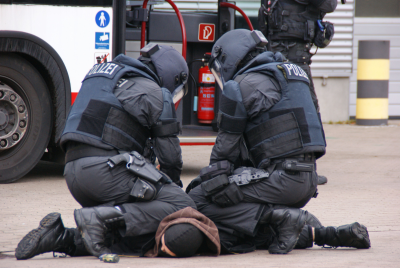
TPUSA's Alex Clark Accuses Candace Owens of Implying Charlie Kirk's Inner Circle Orchestrated His Death
Owens' conspiracy claims spark backlash and deepen rifts within conservative media
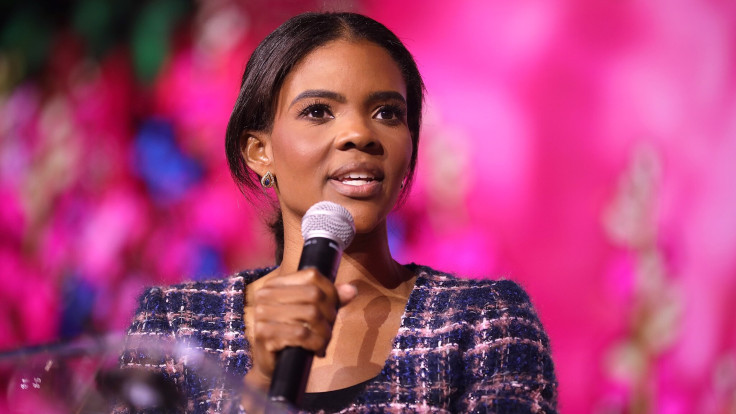
A public feud between TPUSA's Alex Clark and conservative commentator Candace Owens has erupted over Owens' controversial remarks following the assassination of Charlie Kirk. Clark accuses Owens of pushing conspiracy theories and nearly implicating Kirk's closest friends and mentors in his death — a claim that has ignited backlash across conservative media circles.
Clark Condemns Owens's Accusations
Clark took to social media on November 9 to denounce Owens' behaviour, stating that she had launched a 'tirade' against Kirk's inner circle. 'She's stopped just short of outright accusing them of orchestrating his death,' Clark wrote, referencing Owens' repeated insinuations and public condemnations.
Clark also criticised Owens for attacking her Wall Street Journal interview, accusing her of being emotionally detached. 'Candace, positioning herself as Charlie's self-styled "David," claims she's only seeking truth... Unlike David, however, Candace hasn't slain a giant. She's been sparring with a lightweight libtarded CNN reporter, and somehow still losing,' Clark added.
Owens Questions the Official Narrative
Owens has publicly rejected the official account of Kirk's death, stating in a CNN interview with Elle Reeve that she does not believe the primary suspect, Tyler Robinson, was responsible. 'I personally don't believe that Tyler Robinson killed Charles Curtis,' she said.
She also claimed to have access to 'sources on both sides' and referenced 'weird Fed messages' that lacked timestamps. When pressed by Reeve for proof, Owens responded, 'Yeah, but they didn't put timestamps on them and Discord came out and said they didn't exist.'
Among her more extreme theories was the suggestion that an underground tunnel may have been used by the assassin to escape, a claim that has drawn scepticism and ridicule online.
When Candace first launched her so-called “Davidic” crusade to defend Charlie and “uncover the truth” behind his assassination, she accused me of being unfazed by his death and publicly condemned me for giving an interview to The Wall Street Journal a week later, calling my…
— Alex Clark (@yoalexrapz) November 9, 2025
Media Fallout and Online Reaction
Owens's CNN interview quickly went viral, with transcripts and clips circulating widely. Her remarks have sparked intense debate, with many accusing her of exploiting Kirk's death for personal or political gain. Clark, in particular, accused Owens of hypocrisy, noting that Owens criticised her for speaking to the press while conducting her own media appearances days later.
The feud has exposed deeper fractures within the conservative media ecosystem, particularly among figures affiliated with TPUSA. Owens' rhetoric, which blends personal grievance with speculative claims, has raised concerns about the movement's credibility and internal cohesion.
The Battle for the Narrative
As Owens continues to promote her self-described 'Davidic crusade' to uncover the truth behind Kirk's death, critics warn that her approach risks alienating allies and undermining the legacy of the man she claims to defend. The insistence on unverified narratives—ranging from timestamp discrepancies to subterranean escape routes—places the onus of proof squarely on Owens.
Without the production of credible evidence, her campaign threatens to transform a tragedy into a spectacle of personal branding. Observers note that this controversy marks a critical turning point in how conservative influencers navigate the intersection of grief, loyalty, and accountability in the digital age.
Institutional Risks and Future Stability
The feud between Clark and Owens illustrates how internal disputes can destabilise movements built on shared ideology, particularly in the wake of a sudden leadership vacuum. When high-profile figures clash publicly, the result is often confusion among supporters and diminished credibility in the wider political arena.
The spread of conspiracy theories within mainstream conservative circles risks alienating moderate audiences and weakening organisational unity, potentially jeopardising the donor relationships that sustain operations. For TPUSA, the controversy serves as a stress test of resilience, forcing interim leaders to decide whether to confront divisive rhetoric or allow it to fracture the movement further.
Ultimately, the dispute underscores the structural fragility of digital-first political movements, where the incentives for engagement often outweigh the imperative for collective cohesion.
© Copyright IBTimes 2026. All rights reserved.
- MOST POPULAR IN National