

'New Socialist Right': Trump Administration's Proposed Stay-at-Home Subsidy Divides Republicans
Proposed rule could allow stay-at-home parents to receive federal child care assistance, igniting debate among conservatives
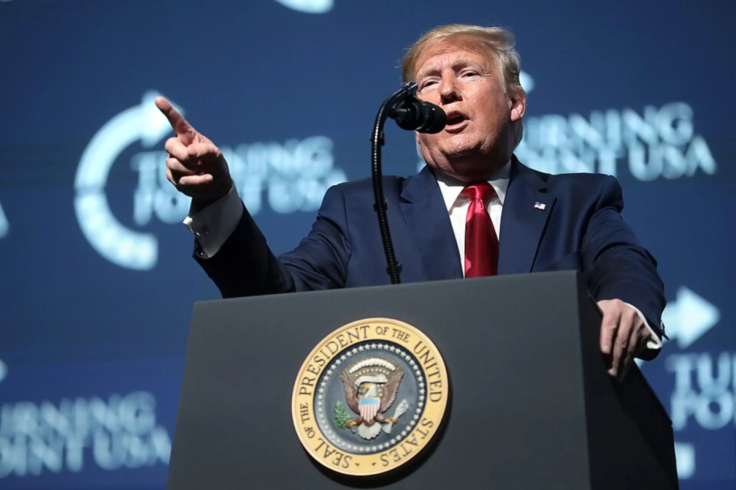
The Trump administration is drafting a rule that would allow some married parents to use federal child care assistance when one parent stays home to care for the couple's children, a move that has prompted criticism and support from prominent conservative commentators.
The proposal, centred on the Child Care and Development Fund (CCDF), could make the roughly $9,000-a-year (around £6,600) average value of CCDF assistance available to some qualifying stay-at-home parents, although the actual amount would vary and the plan remains unfinalised.
The federal child care programme dates to the 1990s and provides assistance to low-income families to help pay for eligible child care while parents work, attend school or participate in job training.
Under current rules, CCDF assistance is generally used to pay for eligible child care rather than to compensate a parent for caring for their own child. The draft would allow one married parent to receive CCDF assistance for caring for the couple's child while the other parent works, creating what the proposal terms a new 'parent-based child care' category.
A Conservative Split Over Parent-Based Child Care
The proposal has prompted criticism and support from prominent conservative commentators.
Dana Loesch, former NRA spokesperson, branded it an example of the 'new socialist right,' while Tomi Lahren compared it to pandemic-era payments that she said 'destroyed our workforce and supply chain' and warned of a potential 'giant fraud boondoggle.'
Jenna Ellis, a former lawyer to Trump, argued that working taxpayers should not fund a parent to stay home, writing that 'all of the tradbros are missing the obvious point, isn't that the husband's job?.'
Angela Morabito, who served as an Education Department press secretary in Trump's first term, called the idea a 'gut punch' to working mothers, saying taxing them to subsidise another family's 'stay-at-home lifestyle' felt unfair.
Brittany Hughes, an editor at the conservative Media Research Center, said supporting stay-at-home mothers must be affordable for everyone or it amounts to 'redistribution of wealth... which, yes, is socialism.'
Retired Army Gen. Michael Flynn, a former national security adviser to Trump, said the reported $9,000 amount was insufficient and called for higher payments and tax exemptions for homeschooling families.
Not all conservatives are opposed. Megan Basham of a major news outlet argued that if parents are forced to fund child care subsidies, they should not prefer paying a day care over a parent.
Michael Knowles, a conservative commentator, told reporters that the policy was among the 'very best' of Trump's second term and a 'no-brainer,' arguing that it would encourage marriage and allow more mothers to stay home. Andrew Kolvet of Turning Point USA described it as 'phenomenal,' even as he predicted establishment GOP resistance.
Eligibility, Funding and Legal Questions
Major news outlets first reported the proposal, with administration officials subsequently confirming key details. Because the draft has not been finalized, it must still undergo standard administrative review and the applicable rulemaking process.
Under the draft, eligibility would be narrow. Families would need to be married, have one spouse working at least 35 hours a week, have the other stay home to care for the child, and meet state income thresholds.
Federal rules generally allow states to set an income threshold of up to 85% of state median income, although some states set lower limits. Single parents and unmarried couples would not qualify for the proposed new parent-based category under the draft.
According to reports the government lawyers reviewing the draft had questioned whether the marriage requirement could withstand a legal challenge.
The proposal would use existing CCDF funding, which includes roughly $12 billion (£8.86 billion) in annual federal budget authority, rather than a new appropriation from Congress.
Child care advocates have warned that expanding eligibility without additional funding could put pressure on existing resources, potentially increasing waiting lists or reducing assistance for some families. Supporters counter that parents who provide care themselves should not be financially penalised compared with those who buy outside care.
© Copyright IBTimes 2026. All rights reserved.