

Donald Trump's Involuntary Right Arm Spasms Could Point to Neurodegenerative Disease, Doctor Claims
Dr John Paul Garrison claims Donald Trump's involuntary arm spasms could indicate a neurodegenerative disease, raising concerns about his health
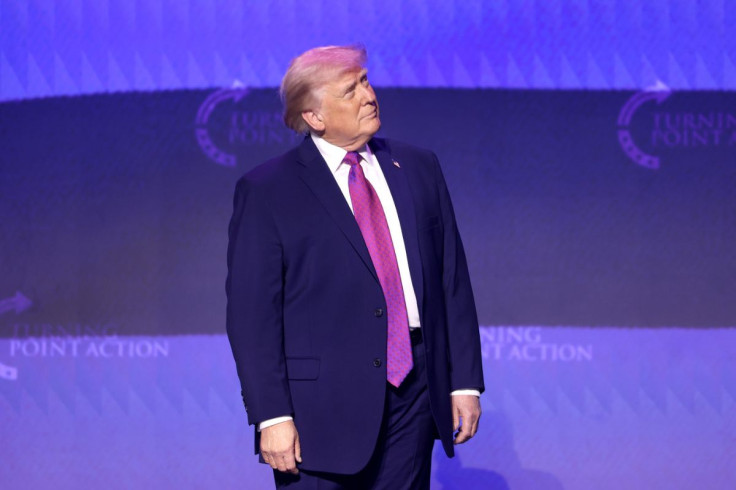
Donald Trump is facing fresh scrutiny over his health after a doctor claimed that involuntary right arm spasms seen during recent public appearances could indicate an underlying neurodegenerative disease.
Dr John Paul Garrison, a clinical and forensic psychologist who specialises in body language and works as an online political commentator, highlighted the apparent tremors after analysing the president's movements across two separate public events.
The observations follow existing discussions regarding the president's physical stamina and cognitive sharpness. Garrison had already concluded that the president has seen an accelerated cognitive and physical decline in the last year, which has likely been worsened by his old age.
The psychologist now argues that recent footage shows the president exhibiting what appears to be concerning neurological symptoms.
Doctor Reviews the Involuntary Right Arm Spasms
During a detailed breakdown of the footage, Garrison observed that the president appeared to experience a minor spasm on his right side whenever he was not speaking.
The psychologist noted that this twitching shows signs of increasing discomfort when the attention is not directly focused on him. Garrison pointed to the recurring movement as a potential symptom of a serious medical condition.
'As you can see, President Trump seems to have a distinct spasm on one side,' Garrison explained while reviewing clips of the recurring twitch.
'What this could mean is that this could be a neurodegenerative disease. We could be talking Alzheimer's, we could be talking Lewy body dementia, you could be talking something like Parkinson's disease.'
Spasms Could Signal a Neurodegenerative Disease
Lewy body dementia is a brain disorder that can impact movement and cause people to have trouble focusing.
Garrison theorised that the unusual physical ticks could alternatively stem from post-stroke behaviour. The doctor explained that damage to certain areas of the brain can cause this response, noting that observers see something distinct, appearing entirely involuntary.
Garrison says agitation appears to make the spasms more likely. He explained that Trump has consistently appeared quite impatient when other people are speaking.
'He feels agitated, and that's going to add to the likelihood we're going to see more of these spasms,' Garrison elaborated. 'Standing there, feeling irritated. Those types of feelings can increase the likelihood these will occur. If you were paying attention just now, you saw his right hand twitching a little bit. I do think that there's some awareness that this is going to happen again.'
Doctor Explains Observations Across Two Recent Events
Garrison focused on these movements while examining a second press conference in which Trump boasted about his new helipad on the South Lawn. The psychologist zeroed in on the president's right hand as he explained that it seemed to suffer a spasm. The right hand appeared to suffer repeated tremors throughout the outdoor appearance.
'Now, it did appear that there was a distinct right-side spasm. It happened repeatedly over the course of the first meeting as well as the press conference outside,' Garrison noted. He added that he intends to continue exploring this issue as more behaviours become apparent, mentioning that there has been no shortage of them recently.
The White House did not immediately respond to an inquiry about the apparent arm spasms. IBTimes UK cannot independently verify these claims.
In addition to the new spasms, observers and reports have pointed to severely bruised hands, perpetually swollen ankles, a neck rash, slurred speech, repeated confusion, falling asleep in public, and sleepless nights spent rage-posting online.
© Copyright IBTimes 2026. All rights reserved.