

Donald Trump's Eyes Show 'Somebody's Brain Dissolving Inside Their Skull', Healthcare Expert Claims
Physical therapist's analysis of Trump's appearance sparks debate over his cognitive health
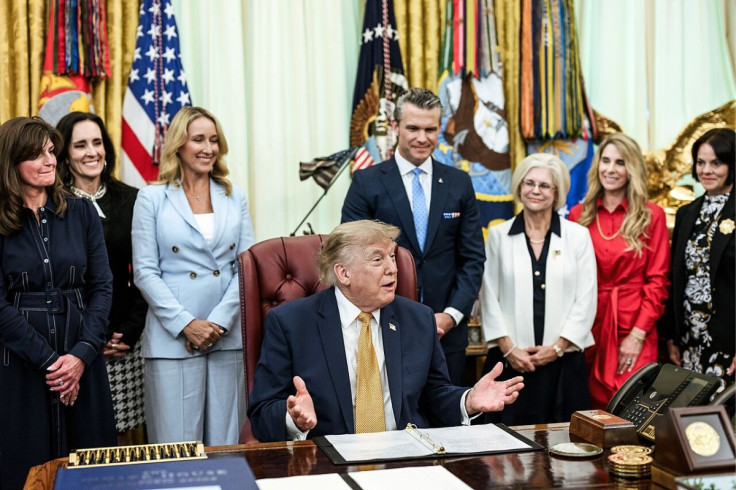
Donald Trump's appearance during a White House briefing has triggered renewed online speculation about his health after physical therapist Dr Adam James claimed the president's eyes and apparent drowsiness were signs of stimulant use and advanced dementia. James said Trump's brain was 'dissolving inside of their skull', but there is no publicly available medical evidence confirming those claims.
Trump is completely passed out asleep at his afternoon event while RFK Jr. speaks loudly pic.twitter.com/MYtDSwZpWl
— Headquarters (@HQNewsNow) August 10, 2026
Footage from an Oval Office meeting involving Health Secretary Robert F Kennedy Jr appeared to show Trump struggling to remain alert. James, who specialises in geriatric physical therapy, analysed the footage and argued that the whites of Trump's eyes appeared to have retreated towards the corners beneath his eyelids.
That observation became the basis for a much broader interpretation of Trump's health. However, a short video cannot establish dementia, stimulant use or neurological deterioration, particularly when the person being discussed has not been examined by the commentator making the claim.
'His Brain Is Disconnecting'
James said Trump could barely stay awake because he had dementia and was 'sundowning', according to the Irish Star.
'Clinically speaking, these are all dementia symptoms,' James said, arguing that Trump's brain was disconnecting from a normal sleep-wake cycle because the suprachiasmatic nucleus, a structure involved in regulating the body's internal clock, was supposedly deteriorating.
James also claimed the whites of Trump's eyes had disappeared because the president was 'high as a kite' on a stimulant such as Adderall or Provigil.
He later described the situation as 'somebody's brain dissolving inside of their skull' and raised concerns about Trump having access to nuclear weapons.
The claims are highly speculative. James is a physical therapist rather than Trump's physician, and no evidence has been presented establishing that Trump has dementia or is taking Adderall, Provigil or another stimulant.
The Sundowning Claim
Sundowning is a recognised phenomenon involving increased confusion, agitation or behavioural changes later in the day among some people with dementia. It can be associated with disruption to normal sleep-wake patterns.
But appearing tired or briefly closing one's eyes during a meeting does not, by itself, demonstrate sundowning or dementia. Establishing cognitive decline generally requires a medical assessment that considers a person's history, symptoms and cognitive functioning.
James also suggested that long-term stimulant use could have produced tolerance, making the drugs less effective at keeping Trump alert. No evidence was presented to establish that Trump uses such medication or that it explains his behaviour.
That distinction is important. The footage may show Trump appearing tired or inattentive, but it cannot establish why he appeared that way.
Sleep deprivation, illness, medication effects, stress and ordinary fatigue can all influence how someone appears during a public event. None of those explanations can be confirmed from the clip either.
The Medical Evidence
Scott Small, director of Columbia University's Alzheimer's Disease Research Center, has explained that dementia involves the death of brain cells.
'What matters most is the dying of cells,' Small said. He added that Alzheimer's dementia typically develops over a long period before a patient receives a diagnosis.
Small's comments describe dementia generally and were not an assessment of Trump. They therefore cannot be used to confirm James's interpretation of the footage.
Medical diagnosis from photographs or short video clips is particularly problematic because many conditions can produce similar outward behaviour. A person appearing sleepy, distracted or less responsive during a meeting does not provide enough information to determine whether neurological disease is responsible.
James has previously made claims about Trump's cognitive health, including suggestions involving frontotemporal dementia and brain atrophy. Those claims have not been established through a publicly documented diagnosis.
Trump's Health Debate Returns
The latest comments come amid continuing scrutiny of Trump's physical and cognitive health. Clips showing the president appearing to close his eyes or lose concentration during public appearances have repeatedly circulated online, producing competing interpretations from supporters and critics.
Trump's age has also kept the issue in the political spotlight. He is among the oldest people ever to serve as US president, making questions about his ability to carry out the demands of the office politically significant.
But viral footage can create a misleading sense of certainty. A brief clip may show what a person appeared to do at one particular moment, while revealing nothing about their medical history, medication or underlying health.
That is particularly relevant when the claim involves dementia. The condition cannot be established simply by observing someone's eyes or alertness during a meeting.
For now, the footage shows Trump appearing tired or inattentive. It does not establish dementia, stimulant use or neurological deterioration.
James's description of Trump's brain 'dissolving inside of their skull' therefore remains a dramatic allegation from a commentator who has not examined the president, rather than a confirmed medical finding.
© Copyright IBTimes 2026. All rights reserved.