

Brampton Mayor Calls Trump's Lake Ontario Rename 'A Bit Preposterous' as Canada Vows To Ignore Any Action
Canadian officials and indigenous leaders reject Trump's executive order
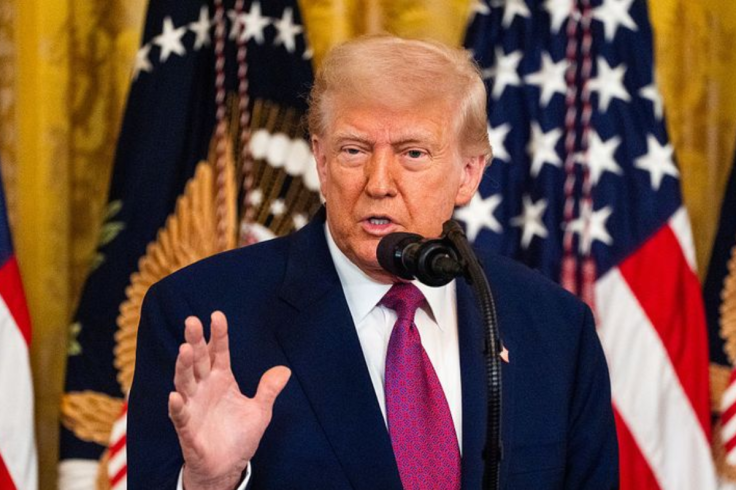
Brampton Mayor Patrick Brown has dismissed President Donald Trump's executive order to rename Lake Ontario as 'Lake America' as 'a bit preposterous', saying Canadians will ignore the directive.
The decree, which requires US federal agencies to adopt the new name for the easternmost Great Lake, has met immediate opposition from Canadian officials, who insist the historic name will remain.
Mayor Brown said the only person who would struggle with the new designation was the American president himself, likening the move to a hypothetical attempt by Canada to rebrand the Mississippi River.
How Trump's Lake Order Would Work in Practice
The executive order comes amid a worsening trade relationship between the United States and Canada. High‑stakes negotiations collapsed last week, prompting both nations to impose retaliatory tariffs on cross‑border goods.
The White House has presented the renaming as recognition of American investment in the waterway, noting that the deepest sections lie in US territory.
The directive requires all US federal departments to update maps, contracts and official communications within 30 days. Despite this domestic mandate, the president's power has clear jurisdictional limits.
He cannot compel Canada, international bodies or even the state of New York to adopt the new title. New York Governor Kathy Hochul said on social media that her state would continue using the traditional name.
Canadian Prime Minister Mark Carney dismissed the move, noting that the original term predates both Canadian Confederation and the American Declaration of Independence. The name, derived from an Iroquoian word meaning 'vast body of water', has appeared in written records for more than four centuries.
Grand Chief Pierre Picard of the Wendat Nation condemned the decision, accusing the president of trying to erase the Indigenous origins of the lake's name.
Trade Fight Takes Centre Stage
Trump linked the renaming directly to the trade dispute, accusing Canadian officials of treating the United States 'very badly' and using the row to justify £16.6 billion ($20 billion) in tariffs affecting dairy, steel and agricultural machinery.
Canada is preparing matching retaliatory measures due to begin on 8 September.
The White House cited a nearly £3.3 billion ($4 billion) US investment in protecting the Great Lakes ecosystem over the past decade as justification for the change.
Officials also argued that because the United States supplies nine of the 11 icebreaking vessels operating in the region, the lake represents a critical American asset.
Map Change Will Not Shift the Border
Despite the political dispute, the lake remains a key resource for about 5.6 million people living along its shores. Its waters link the Great Lakes system to the Atlantic Ocean and support international shipping, power generation and recreation.
Canada still controls about 52 per cent of the surface area, so the international boundary through the lake is unchanged.
This is not the first time the administration has ordered federal geographic renaming. Early in 2025, a similar executive order changed the Gulf of Mexico to the Gulf of America in US federal databases.
As with that earlier decree, the international community has largely kept the traditional name. While federal maps in Washington are set to change, the water off Toronto will continue to be recognised internationally as Lake Ontario.
© Copyright IBTimes 2026. All rights reserved.