

Trump Eyes Another Name Grab, Floating 'Trump Strait' for Hormuz After Declaring US Control of the Waterway
US-Iran tensions escalate as Trump floats renaming Hormuz, claiming US holds the waterway
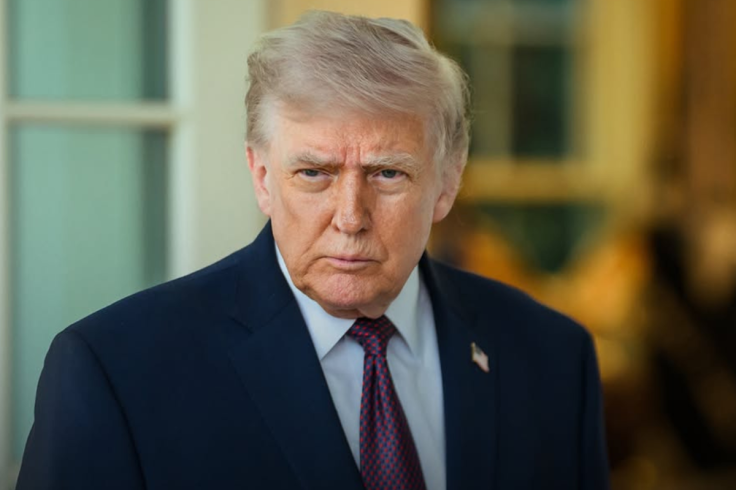
President Donald Trump has floated renaming the Strait of Hormuz the Trump Strait after declaring that American forces now control the waterway.
The idea appeared in a Truth Social post on Wednesday, 2 September, and the White House later shared a map of the Gulf with the new name marked on it. Asked in the Oval Office whether he meant it, Mr Trump said it was 'just thrown out there'.
Trump Strait and a Familiar Pattern of Name Changes
The post asked whether the waterway should be re branded now that it was under USA control, adding that, like America itself, it would be hotter than ever before. The White House followed with a graphic and said the name had a nice ring to it.
It's got a nice ring to it pic.twitter.com/Fmzc9iUu8u
— The White House (@WhiteHouse) September 2, 2026
The flourish sits in a sequence of second-term renaming drives. An executive order of 20 January 2025 directed federal agencies to call the Gulf of Mexico the Gulf of America.
Last week Mr Trump signed an order instructing the Interior Department to list Lake America in place of Lake Ontario. Canada and Mexico have rejected the respective changes, though Google and Apple have updated their maps for users in the United States.
Hormuz is different. It is an international strait, not a feature on the American shoreline, but a US naming decision could not by itself compel other governments to adopt the proposed name.
Control of the Waterway Remains Contested
Mr Trump has spent weeks insisting that Washington already runs the strait. In a phone interview published on Wednesday he said American forces now control it and had taken out 28 boats the night before.
A White House statement last month said nearly 1,500 commercial vessels had passed under US protection, carrying 750 million barrels of crude. Those claims are disputed. Iran's Revolutionary Guard said two tankers had hit sea mines.
Shipping data showed only a handful of crossings in recent days, far below pre-war traffic of more than 100 vessels a day. Fighting resumed this week after a month-long lull.
US forces struck Iranian sites near the strait; Tehran fired at American positions in Jordan and Gulf hosts. The war began with US-Israeli attacks on 28 February. Mr Trump has also said he may declare the waterway US territory, a claim Iran rejects.
Oil Flows and the Legal Status of Hormuz
Before the conflict, about a fifth of global petroleum liquids consumption passed through the strait, while it also carried around a fifth of global LNG trade. Brent crude settled at $95.63 (£70.9) a barrel on Wednesday as traders priced in disruption.
The strait, 21 nautical miles (38.9 km) at its narrowest, lies in the territorial seas of Iran and Oman. Under the United Nations Convention on the Law of the Sea, international straits are subject to transit passage that coastal states may not suspend.
Neither Washington nor Tehran is a party to the convention, though the United States treats transit passage as customary law. Iran still argues that only it and Oman may govern the route.
The United States is still enforcing a blockade on Iranian ports while escorting some commercial traffic.
© Copyright IBTimes 2026. All rights reserved.