

UK Passport: Home Office Unveils 'Most Secure Ever' Document With New Royal Cypher
New British passport with King Charles's coat of arms and advanced security features launches today in biggest redesign for 25 years
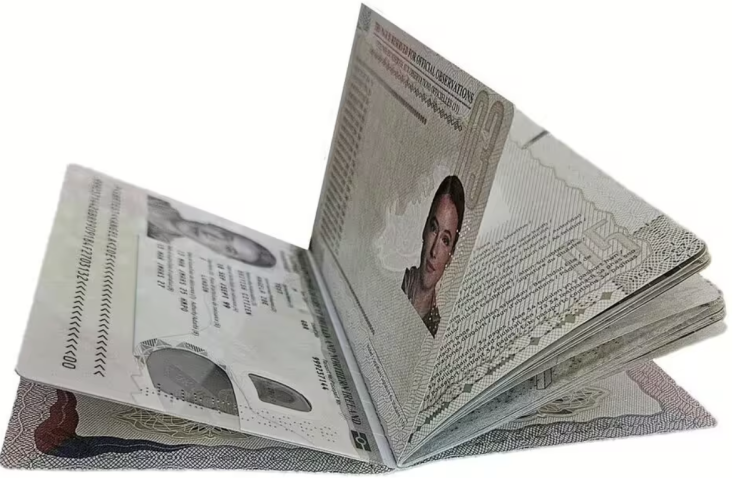
Britain's beloved blue passport is getting a major makeover.
From today, travellers collecting a new British passport will receive a document that the Home Office claims is the most secure ever produced—complete with King Charles's coat of arms and some of the most sophisticated anti-counterfeiting technology money can buy.
The overhaul marks a significant moment for the nation's travel credentials, representing the most significant redesign in a quarter of a century.
Whilst the previous iteration served Britons well since its introduction in 2020, this latest version takes security to a whole new level, making it exponentially harder for forgers and criminals to replicate.
The Royal Seal: A New Era For British Passports
For the first time, the cover proudly displays King Charles III's coat of arms, symbolising a fresh chapter following the late Queen Elizabeth II's reign. The initial 300 passports have already entered distribution, setting the stage for millions more to follow as citizens renew their travel documents over the coming years.
Open the pages, and you'll discover another striking change. Rather than generic illustrations, the redesigned interior now showcases four UNESCO-protected natural landscapes that represent the full breadth of the United Kingdom: the majestic Ben Nevis, the stunning Lake District, Three Cliffs Bay's dramatic Welsh coastline, and the geological wonder of the Giant's Causeway in Northern Ireland.
These beautifully detailed photographs celebrate Britain's heritage whilst serving a practical purpose—they make forgery significantly more difficult.
Mike Tapp, the Minister for Migration and Citizenship, expressed his pride in the achievement: 'I'm proud to see our new British passports in circulation. Featuring His Majesty's Coat of Arms and landscapes from all four nations, they celebrate our heritage whilst delivering enhanced security.
They are also the most secure British passports ever produced, helping us protect our borders and deliver outstanding public service.'
Revolutionary Security Features That Stay Ahead Of The Game
Beneath the striking imagery lies an impressive array of cutting-edge security enhancements that would make even the cleverest counterfeiter think twice.
The Home Office has incorporated dozens of such measures over the years—the first modern passport emerged in 1915, but the initial security feature, a simple watermark, wasn't introduced until 1972.
This new passport features intricate designs that are nearly impossible to duplicate, alongside clever elements that only become visible under ultraviolet light. These features ensure British border authorities remain several steps ahead of organised crime networks attempting to forge travel documents.
The technological innovation extends beyond the physical document itself. The Home Office has completed an ambitious four-year project that transferred over a billion UK passport records—including names, birth dates, and facial images—to a secure cloud-based platform.
Remarkably, this new system has already processed more than 350 million queries at an average speed of just 200 milliseconds per search, allowing HM Passport Office (HMPO) to issue 4 million passports far more seamlessly than previously possible.
A Greener Approach With Impressive Results
Beyond security and convenience, the digital transformation has delivered unexpected environmental benefits.
The transition to cloud-based systems has resulted in an 88 per cent reduction in carbon emissions—equivalent to removing the carbon emissions from driving 57,000 miles annually in an average petrol car. For a nation increasingly conscious of its environmental footprint, this is a meaningful achievement.
The statistics speak for themselves when it comes to efficiency. In the first nine months of 2025 alone, HMPO issued 5.1 million passports on time, with an impressive 99.7 per cent of straightforward applications processed within the three-week target. These figures demonstrate that modernisation, security, and reliability need not be mutually exclusive.
© Copyright IBTimes 2026. All rights reserved.