

Around 140 Rescued From Normandy Dinghy After Burnham and Macron Announce Mega-Boat Crackdown
Unusual route highlights growing risks and smuggling tactics
Around 140 people have been rescued from an inflatable dinghy in the English Channel after it made an unusually long journey from France's Normandy coast to UK waters, just days after Prime Minister Andy Burnham and French President Emmanuel Macron announced a new crackdown on large, overcrowded small boats.
The vessel left the Bay of the Seine overnight and was monitored by French rescue boats for about 10 hours before reaching UK waters around lunchtime on Monday.
French authorities said it was not safe to intervene and stop the dinghy while it was at sea. Once the vessel reached UK waters, those on board requested assistance and were met by RNLI lifeboats.
The rescue came shortly after Burnham and Macron agreed to step up efforts to tackle small boat crossings, including a new focus on the larger dinghies increasingly being used by smugglers.
Rescue Teams Bring Migrants Ashore at Langstone Harbour
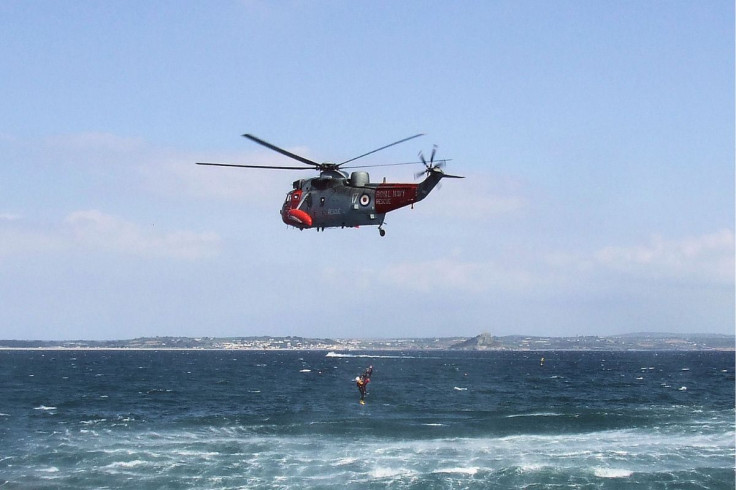
RNLI crews from Bembridge and Yarmouth, on the Isle of Wight, responded to the dinghy after it entered UK waters. An HM Coastguard helicopter and aircraft supported the rescue, while RNLI lifeboats brought those on board safely ashore at Langstone Harbour, between Hayling Island and Portsmouth.
Border Force, Border Security Command, Hampshire Police and the South Central Ambulance Service were also involved in the response. The number of people aboard the vessel was estimated at around 140, although officials' initial accounts did not provide further details about those rescued.
Smugglers Shift To Distant Launch Points
The departure from the Normandy coast was described by French officials as highly unusual. The location is around 170 miles from the areas around Calais where small boats have more commonly launched.
The longer journey leaves people at sea for much longer, increasing the risks posed by weather, busy shipping lanes and the condition of the boats. French authorities believe smugglers are turning to more distant launch points to avoid tighter policing around Calais.
That pressure has also contributed to a shortage of smaller boats, officials said, with rival smuggling groups increasingly working together and turning to larger vessels that can carry more people.
The shift has contributed to the use of so‑called 'mega dinghies', allowing much larger numbers of people to be packed onto a single crossing. In August, a small boat carrying 230 people completed the Channel crossing, according to figures cited by officials.
Leaders Announce Crackdown on 'Mega Dinghies'
The rescue followed talks between Burnham and Macron on efforts to reduce Channel crossings.
Downing Street said the two leaders recognised progress had been made but agreed that further action was required as smuggling operations changed.
The UK is deploying 45 additional police officers to French beaches as part of a 'surge team' intended to target large‑capacity vessels.
Under a 'payment‑by‑results' arrangement with France, the UK is also funding an increase of 40% in personnel working on French beaches. Officials said joint enforcement since the election had prevented more than 48,000 crossing attempts and resulted in the seizure of 1,100 boats and engines.
Crossings Fall Despite Rise in Overcrowding
Despite the growing use of larger, more heavily loaded boats, the number of people crossing the Channel has fallen compared with last year. Between 1 January and 1 September 2026, between 16,391 and 16,513 people made the crossing in small boats, around 43% fewer than during the same period in 2025.
Crossings during the summer were also at their lowest level since 2019. However, the average number of people aboard each vessel has increased sharply. In the 12 months to 1 September, boats carried an average of 68 people, more than twice the average recorded in 2021.
MP Demands Clarity Over Route
The unusual route has prompted questions from Joe Robertson, the MP for Isle of Wight East. Robertson said he was concerned that the incident had taken place so far from the narrower parts of the Channel where crossings have more commonly occurred.
He said there was no indication that the migrants had specifically been heading towards the Isle of Wight. Robertson said authorities needed to establish exactly what had happened and that there should be 'no ambiguity' over the circumstances. He added that he would raise the matter with the Home Office.
Overcrowded Dinghies Increase Risks in Channel Crossings
The incident has also highlighted the risks associated with increasingly crowded Channel crossings.
The Channel is one of the world's busiest shipping routes, and strong winds, powerful currents, sandbanks and cold water can make any incident at sea particularly dangerous. A boat in distress can be difficult to reach, while anyone who enters the water may have only a limited time before the cold becomes life‑threatening.
Overcrowding can further increase the risk of a dinghy becoming unstable or capsizing, particularly when carrying large numbers of people for an extended period. The rescue operation ended without the loss of life being reported.
© Copyright IBTimes 2026. All rights reserved.