Alien Tech or Comet? Expert Puts His House on The Line Over 3I/ATLAS
Expert John Tonry bets against alien tech for Comet 3I/ATLAS

Imagine a celestial drifter, a piece of primordial ice and rock that began its life light-years away, now making a temporary, fleeting appearance in our cosmic neighbourhood. This isn't science fiction; it's the reality of a new arrival: Comet 3I/ATLAS, a unique visitor that is doing more than just passing by. It's offering a once-in-a-lifetime glimpse into the composition of worlds orbiting other stars.
The comet, officially designated 3I/ATLAS, is taking a remarkably long journey this year, a visit not from the distant Oort cloud of our own sun, but from an entirely different stellar system. It was first detected on July 1, 2025, marking a momentous event that not only captures the imagination but also significantly expands the limits of what astronomers can study.
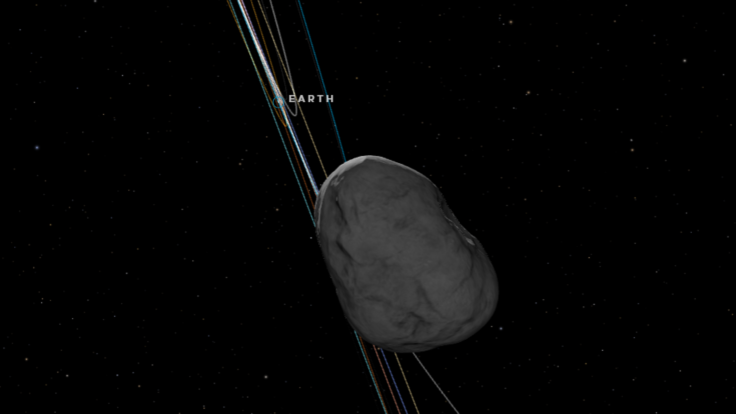
The Enigmatic Identity of Comet 3I/ATLAS: A Galactic Wanderer
It is a truly extraordinary celestial event, one that highlights the dynamic nature of the galaxy. The '3I' designation itself marks this object as only the third interstellar object recorded traversing our solar system. The first, 'Oumuamua, which appeared in 2017, became famous for its bizarre, non-cometary behaviour, fuelling intense, even wild, speculation about its origin and nature. The second, 2I/Borisov, was a more classic comet, confirming that these galactic wanderers do, in fact, exist and can be detected. Now, 3I/ATLAS completes this exclusive trifecta of known visitors.
This current visitor's detection is thanks in part to the meticulous work of the Asteroid Terrestrial-impact Last Alert System (ATLAS) — a NASA-funded project co-created by astronomer John Tonry. The ATLAS system, which operates from multiple sites, was designed primarily to spot near-Earth asteroids and provide a 'last alert' for potential impact events. Instead, it has also become adept at delivering a different kind of treasure: a sample from beyond the solar system.
The comet's interstellar origin was immediately determined because of its highly unusual, unbound path — a hyperbolic trajectory — meaning it is moving too fast for the sun's gravity to pull it into a closed orbit. At its maximum speed near the sun, 3I/ATLAS was travelling at roughly 246,000 kilometres per hour.
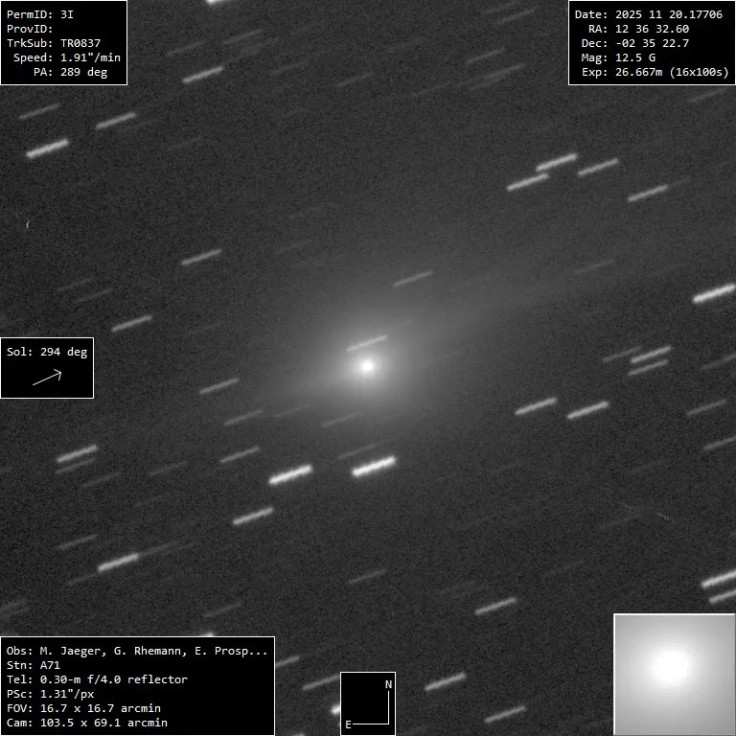
Beyond the Alien Hypothesis: What 3I/ATLAS Really Offers
Like its predecessors, the arrival of 3I/ATLAS has triggered the inevitable, perennial question: Is this latest 'space oddity' a product of alien technology? It's a compelling, perhaps romantic, notion that a technological marvel, perhaps a derelict probe, is making a flyby. However, Dr. Tonry, a pivotal figure in the system that detected it, remains firmly grounded in scientific realism.
He is quite clear that, while he understands the curiosity, he's 'willing to bet his house' that this comet isn't an early holiday gift from aliens. Crucially, astronomers have confirmed that 3I/ATLAS exhibits a clear coma (the gaseous 'atmosphere') and a dust tail, both telltale features of a natural, active comet composed of frozen gases and dust, not manufactured metal.
Yet, even with that certainty, the scientific significance is profound. The real value of this latest visitor lies not in fantastical theories but in the unprecedented opportunity it gives astronomers to study the raw, pristine material of exoplanetary systems. This object, hurled from a distant star's planetary centre, is essentially a preserved sample from the formation of worlds around another sun.
It is a piece of another star's protoplanetary disk, offering a chemical signature that is utterly unobtainable otherwise. It is important to note that 3I/ATLAS poses absolutely no threat to Earth; its closest approach on Dec. 19, 2025 will be a safe 270 million kilometres from our planet.
Dr. Tonry summarises the monumental importance of this visit perfectly: 'It's the only way we're ever going to get material from another solar system, I mean, certainly within our lifetimes'.
This statement underscores the current limitations of our space labour. We cannot yet send a probe to another star and return a physical sample. This comet, however, is a gift delivered straight to our Earth-based and space observatories. Astronomers across the globe are rushing to gather data on the object's composition, trajectory, and behaviour.
By analysing the gases and dust released by 3I/ATLAS as it is warmed by our sun, they can deduce the conditions and material abundances in the distant stellar environment from which it originated. It provides a unique, uncorrupted data point for models of star and planet formation, adding a new dimension to our understanding of the cosmos. The brief holiday journey of Comet 3I/ATLAS is truly an invaluable scientific present.
The journey of Comet 3I/ATLAS from a distant stellar system to our celestial neighbourhood is a fleeting, precious opportunity to look beyond our own cosmic home. Though astronomer Dr. Tonry is willing to bet his house that this is natural, not alien, its arrival is a profound reminder of the dynamic, ever-changing nature of the galaxy. It offers us the chance to study exoplanetary raw material without ever leaving Earth.
© Copyright IBTimes 2026. All rights reserved.
- MOST POPULAR IN Trending