3I/ATLAS Update: Rare 'Metal' Composition Hints at Hidden Cryovolcanism
Comet 3I/ATLAS boasts high nickel and extreme CO₂-rich cryovolcanism.
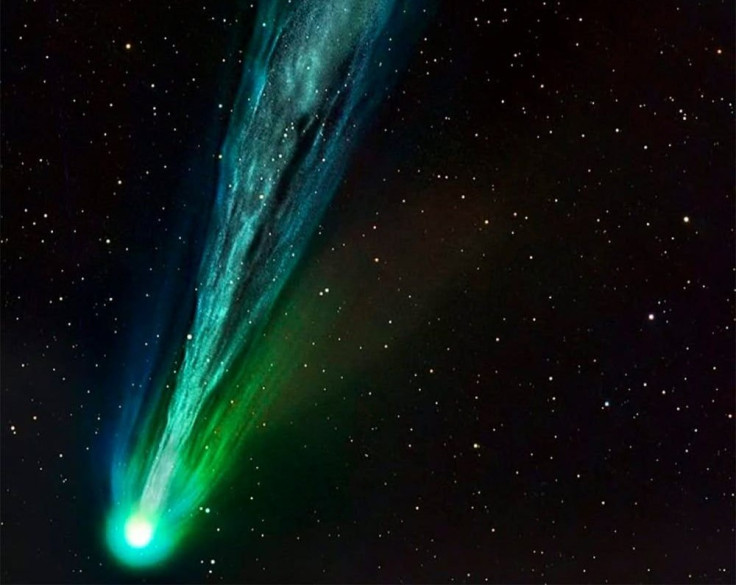
The deep, echoing void of interstellar space has just sent us a traveller, and it's unlike any other we have encountered. Imagine a silent, pristine remnant from a star system light-years away — a piece of cosmic history drifting into our solar neighbourhood.
This is the essence of comet 3I/ATLAS, the third confirmed interstellar visitor to be detected by astronomers. It's not just a passing rock; it's a time capsule. Its recent arrival and the subsequent flood of high-quality data have been quietly shaking the foundations of the scientific community. Researchers aren't just looking at the building blocks of our universe, but perhaps the foundational materials of an entirely different one.
With alerts from NASA amplifying its significance and new data highlighting its truly peculiar features, 3I/ATLAS promises to deliver profound insights into cosmic materials, elemental processes and planetary formation far beyond the sun's gravitational influence. For keen observers, this aligns perfectly with growing investor interest in space exploration and scientific research, poised to impact global market dynamics.
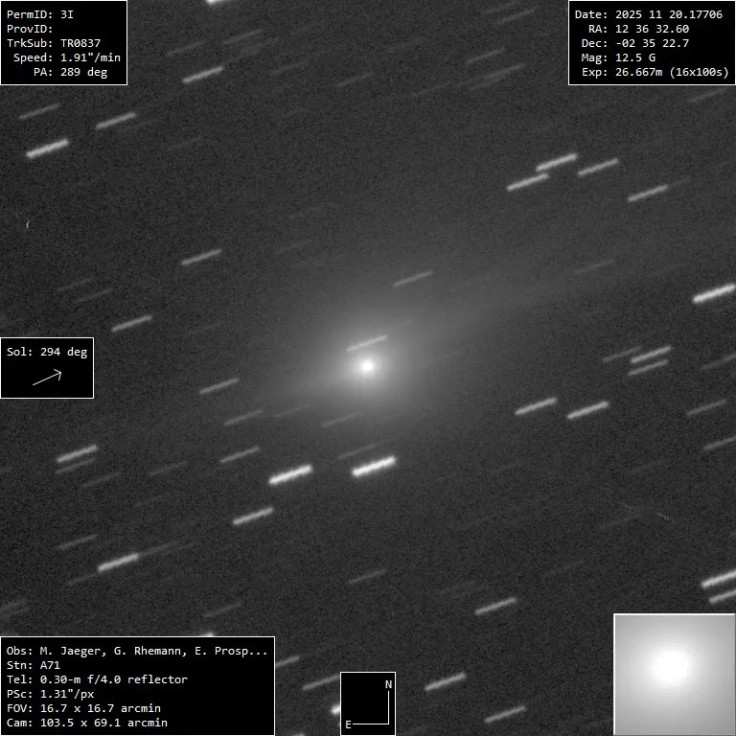
Revealing the Unique Composition of Comet 3I/ATLAS
Comet 3I/ATLAS has rapidly captured significant scientific attention, primarily due to its non-solar-system origin and its genuinely surprising composition. The 'I' in its name signifies its interstellar status, marking it as only the third object of its kind ever observed, following the infamous Oumuamua and 2I/Borisov. What truly sets this comet apart, however, is the material it is made of.
A recent spectrophotometric analysis, detailed in an Astrobiology report, suggests an unusually high metal content, which is a significant rarity among known interstellar bodies. This finding alone presents a massive opportunity for deeper understanding. Crucially, spectroscopic observations by the Very Large Telescope (VLT) detected strong atomic nickel (Ni I) vapour in the comet's coma at a distance of nearly four times Earth's distance from the Sun (3.9 AU). Furthermore, researchers are thrilled by its almost perfectly pristine carbonaceous makeup.
This indicates that the comet has not interacted extensively with different stellar environments or even our own Sun's radiation, suggesting it has been preserved in a deep freeze for billions of years. To have a near-perfect sample of material from a distant stellar nursery is an exceptional stroke of luck, enriching our knowledge about the raw, untouched components that seed life and planets across the cosmos.
Adding complexity to its structure and unpredictable movement is the evidence of cryovolcanism — volcano-like eruptions of frozen, volatile substances such as water ice, carbon monoxide and ammonia. The mechanics of these geyser-like outbursts, caused by subsurface pressure changes, add an extra layer of difficulty to predicting the comet's trajectory. This activity is tied to an unprecedentedly high ratio of carbon dioxide (CO₂) to water (H₂O), measured by the James Webb Space Telescope (JWST) at roughly 8:1.
The abundant nickel and carbon monoxide are theorised to be released at low temperatures through the sublimation of highly volatile organometallic compounds, such as nickel tetracarbonyl (Ni(CO)₄), providing a chemical pathway for cryovolcanism that differs from typical Solar System comets. Understanding these properties and how they impact the comet's life cycle could open doors to new theories in astrobiology, fundamentally enriching our knowledge about comet compositions and their potential role in seeding life across planets in different solar systems.

Analysing Market Interest in 3I/ATLAS and Space Research Companies
As we continue to uncover more about the unique characteristics of 3I/ATLAS, the business and finance community is beginning to take serious notice of the technological and investment opportunities presented by such discoveries. Companies focusing on space exploration, advanced sensor technology, and data analytics are already seeing an uptick in interest and investment.
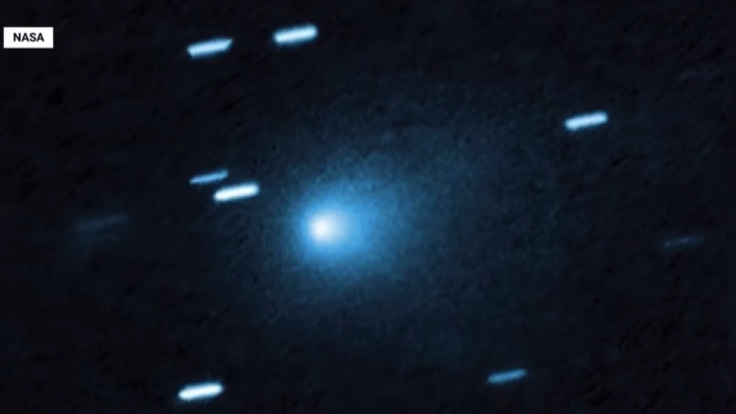
Firms that partner directly with the American space agency, NASA, or specialise in high-resolution astrophotography and astronomical data processing are particularly likely to benefit from the immediate and sustained demand for high-quality data on such fleeting cosmic objects. For instance, NASA recently released stunning comet images and new data of 3I/ATLAS.
This fuels public fascination, which often translates into enhanced investment potential. These scientific insights, corroborated by government agency interest, could soon reflect positively in stock evaluations for companies in the sector, strongly catalysed by ongoing space research and the global race to commercialise space data.
The Broader Influence of Comet 3I/ATLAS on Exploration Trajectories
The implications of 3I/ATLAS extend far beyond immediate market interests; the comet significantly influences the long-term trajectory of global space exploration. By providing tangible, accessible insights into rare physical and chemical processes — such as the formation of metal-rich, pristine carbonaceous bodies — this comet opens completely new research avenues. Scientists are intensely focused on unravelling cosmic mysteries that simply cannot be studied from within the protective bubble of our own solar system.
The discovery powerfully reinforces the necessity for enhanced space missions specifically designed to provide direct samples and high-fidelity data from interstellar objects. While current missions might be repurposed, the complexity of 3I/ATLAS suggests that long-term funding priorities may shift towards more robust, flexible exploratory missions capable of intercepting these high-velocity travellers.
As technological advancements continue to drive down the cost of launching and operating sophisticated space instruments, such ambitious missions become increasingly viable and frequent, creating a powerful feedback loop between pure scientific discovery and engineering innovation.
Final Thoughts on the Significance of 3I/ATLAS
The excitement surrounding comet 3I/ATLAS demonstrates a compelling fusion of profound scientific discovery and significant market opportunity. For forward-thinking investors, this interstellar comet represents a beacon of innovation, prompting increased interest in companies fundamentally linked to space research, advanced imaging technology, and data analytics.
As the age of space exploration continues to evolve at pace, those involved in this technological frontier might find themselves at the vanguard of new scientific understanding and financial growth. Enterprises in this field could benefit from both the scientific prestige of unlocking the cosmos' mysteries and the financial opportunities that accompany a rapidly expanding sector.
The journey of 3I/ATLAS represents a cosmic bridge between deep scientific discovery and pioneering commerce. As this interstellar mystery continues to unfold, the frontier of space research is rapidly becoming the next great financial frontier, influencing everything from sensor technology to long-term mission funding.
© Copyright IBTimes 2026. All rights reserved.
- MOST POPULAR IN Trending