

3I/ATLAS Update: Studying This Pre-Sun Matter Gives NASA 'Goosebumps'
3I/ATLAS is confirmed as an ancient, natural comet
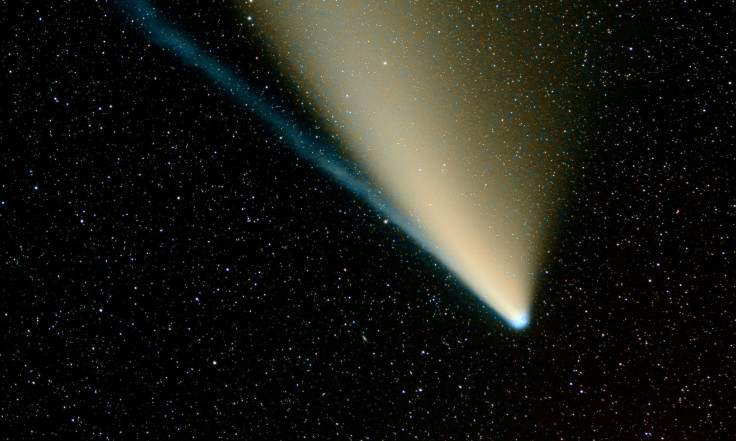
The sudden appearance of an object hurtling through our Solar System that didn't belong here instantly set the astronomical community abuzz. Since the famous fly-by of 'Oumuamua, the possibility of detecting an interstellar visitor — and the wilder speculation of an artificial one — has fuelled intense monitoring efforts globally.
On July 1, 2025, a new celestial speedster was detected by NASA's ATLAS telescope in Chile, moving at a blistering pace of around 137,000 miles per hour (221,000 kilometres per hour) and quickly garnering the attention of over 20 spacecraft and major observatories, including the Hubble Space Telescope and the James Webb Space Telescope.
This object, officially designated 3I/ATLAS and also known as C/2025 N1 (ATLAS), was the subject of immediate, intense scrutiny. Was it the third confirmed interstellar comet, or something far more exotic? NASA has now delivered its verdict, closing the door on the speculation that captivated global audiences and confirming the object's truly cosmic, yet entirely natural, origins.
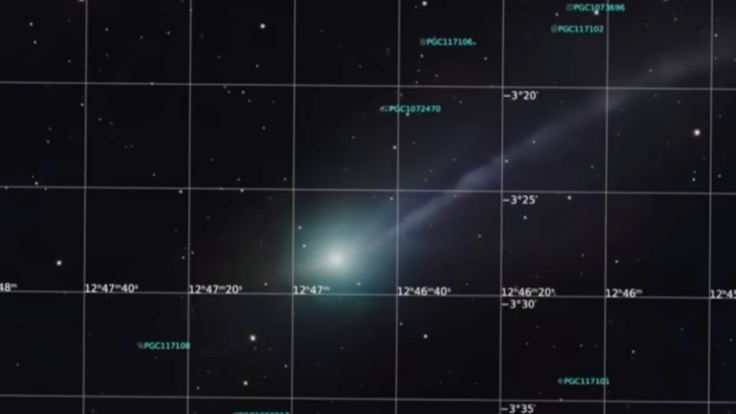
The Interstellar Riddle Solved: What 3I/ATLAS Truly Is
The intense observation period, necessitated by the object's speed and its status as only the third confirmed visitor from outside our solar neighbourhood — following 1I/'Oumuamua in 2017 and 2I/Borisov in 2019 — has yielded definitive results. The object's consistent behaviour under scrutiny has laid all doubts to rest regarding its nature.
During a recent NASA briefing, the agency clarified that the cosmic speedster is, in fact, purely natural. Associate Administrator Amit Kshatriya confirmed the key finding, stating: 'this object is a comet... it looks and behaves like a comet', effectively settling the initial debate.
The crucial evidence that would have suggested an artificial nature — the so-called technosignatures — were nowhere to be found. Science chief Nicky Fox added that 'no technosignatures or artificial patterns were found in its chemical or physical behaviour'. This finding implies that 3I/ATLAS is acting like a normal comet, shedding the icy material from its surface as it approaches the sun, just like the comets born here in the Kuiper Belt or Oort cloud. Astronomers can now move past the search for alien technology and focus intently on the scientific treasure trove this natural visitor represents.
Moreover, NASA has emphatically reassured the public that the object poses absolutely no danger to our planet. Its closest approach will be about 1.8 AU (Astronomical Units). For reference, one AU is the distance from the Earth to the Sun. At 1.8 AU, 3I/ATLAS will safely pass our planet during its journey through the Solar System, giving telescopes like Hubble and Webb ample opportunity to gather data without any risk of collision.
This definitive confirmation, reported by Bizz Buzz News, allows the world to appreciate the sheer luck of studying pristine, ancient matter from another star system, rather than worrying about a close shave with a technological artefact. The comet's closest approach to the sun (perihelion) occurred on October 29, 2025, at a distance of approximately 1.36 AU.
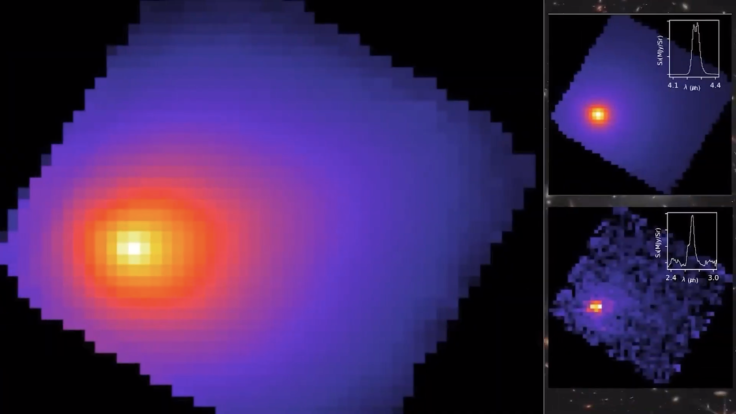
Unmasking 3I/ATLAS's Ancient Chemistry and Exotic Origins
While the object's natural state is now certain, its chemical makeup is anything but ordinary, providing profound clues about its distant home. What makes 3I/ATLAS truly extraordinary is the signature it has left in its tail. Spectral analysis of the escaping gas and dust indicates unusually high levels of carbon dioxide and nickel vapour. This pairing of elements is highly significant. In the frigid, distant regions of our own Solar System where comets are born, such high concentrations are not typically seen.
These exotic signatures powerfully suggest that the comet was born not in our region of space, but in a very ancient and distant stellar system. The intense concentration of nickel vapour in particular points to a formation history under different thermal and chemical conditions than those prevalent in the early Solar System. It is carrying truly pristine material from an era pre-dating the birth of the Sun — a stellar epoch that is almost unimaginably distant in time.
The object's extremely high speed and hyperbolic trajectory suggest it may originate from the Milky Way's thick disc, implying an age of up to 11 billion years, making it potentially the oldest known comet ever observed. This provides astronomers with a crucial, untouched sample of interstellar material that has not been altered by the sun's radiation or gravitational influence since its arrival.
The sheer excitement of the discovery is palpable across the astrophysics community. NASA astrophysicist Tom Statler perfectly captured this sentiment, saying that studying a comet carrying matter from before the sun formed 'gives me goosebumps'. This rare interstellar visitor is now expected to provide astronomers with invaluable insights into the chemistry, evolution and diversity of planetary systems across the galaxy, potentially changing our understanding of how star systems form and what materials they are constructed from.
The findings secured by ATLAS have turned a potential mystery into one of the most exciting scientific discoveries of the decade. Current estimates place the nucleus of 3I/ATLAS at not less than 440 metres and up to 5.6 kilometres in diameter.
The confirmation that 3I/ATLAS is an ancient, natural comet — not an artificial artefact — has simply shifted the focus from existential curiosity to pure scientific wonder. Its exotic, nickel-rich chemistry, formed billions of years ago in a distant stellar nursery, offers a precious, untouched window into the earliest stages of galaxy formation. The real mission now is to exploit this rare opportunity.
© Copyright IBTimes 2026. All rights reserved.