

Ariana Grande Petal Music Video Analysis By Allie Beth Stuckey Highlights Deep Spiritual Sickness
Conservative commentator Allie Beth Stuckey critiques Ariana Grande's 'Petal' video for its violent imagery and perceived spiritual implications
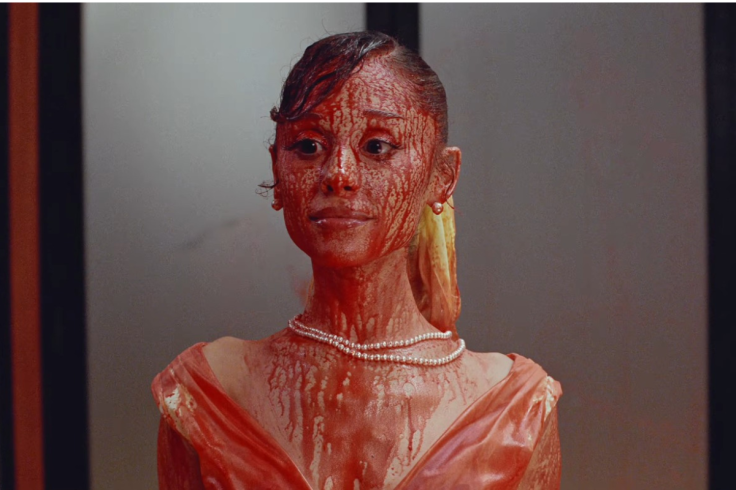
Conservative commentator Allie Beth Stuckey has criticised Ariana Grande's graphic Petal music video, focusing on its chainsaw violence and describing the singer as having a 'skeletal' appearance.
In a recent discussion on her programme, Stuckey argued that the visual's disturbing imagery reflected what she considered troubling mental and spiritual themes. For context, Petal begins with an on-screen parental advisory warning that its explicit content and graphic violence may offend viewers.
The near-seven-minute video casts Grande as Pepper, an aspiring actress repeatedly rejected at the fictional Fame Inc. before the character retaliates against the men judging her.
The video, directed by Christian Breslauer, accompanied the 31 July release of Grande's eighth studio album of the same name.
Ariana Grande's 'Petal' Video Faces Criticism
The video adopts a stylised, horror-inspired narrative rather than the format of a conventional pop video. Pepper is shown entering an audition room, facing dismissive male executives, then returning with a chainsaw after being repeatedly rejected.
Red silhouette imagery is intercut with closer shots of the aftermath. Blood is shown spraying as Pepper attacks, while severed limbs and fingers appear on screen.
The character eventually leaves the room covered in gore as other female auditionees applaud. The sequence has widely been interpreted as a violent satire of Hollywood gatekeeping and the criticism Grande has faced throughout her career. It is, plainly, not subtle stuff.
Stuckey said she would not show the sequence in full on her programme because of its graphic nature.
Instead, she used clips and descriptions of the video to make a broader argument about the direction of female pop stardom, suggesting that artists can become more provocative and violent as their careers evolve.
'They become darker and edgier and more violent and more disturbed in their artistry as time goes on,' Stuckey said, naming Taylor Swift, Billie Eilish and Chappell Roan alongside Grande. 'That seems to also be true of someone like Ariana Grande.'
Her remarks are Stuckey's interpretation, rather than evidence of any wrongdoing or mental health condition. Nor does the video establish that Grande intended its imagery as a statement about her private life, religious beliefs or mental health.
The distinction matters, particularly when an elaborate fictional music-video persona is being treated as evidence about the person portraying it.
Stuckey Questions Grande's Darker Pop Image
Stuckey's criticism moved beyond the chainsaw scene. She described Grande as a 'skeletal figure covered in blood' and said the combination of the singer's physical appearance and the violent imagery left her concerned about what she viewed as a darker force at work.
'When you have this skeletal figure covered in blood, you see the wedding of these two things and she's glorifying them ... I do think that there is something very dark going on mentally and spiritually here,' Stuckey said.
Grande has previously pushed back against public scrutiny of her body and warned against making assumptions about someone's health based on their appearance. The available material includes no new response from Grande, her representatives or the makers of Petal to Stuckey's analysis.
There is no evidence establishing Stuckey's claims about Grande's mental health or spiritual state, and her remarks should therefore be understood as personal commentary rather than medical or factual conclusions.
That has not stopped Stuckey from framing the visual as part of a more troubling Hollywood pattern. She said there were probably 'very scary exchanges' happening behind the scenes in the entertainment business, though she offered no specific examples or evidence to support that assertion.
'I don't know what goes on behind the scenes in Hollywood,' she said. 'But again, we don't even need to know all of that to know that this is just the nature of sin: It takes you from one thing to the other.'
The commentator also criticised Grande's past relationship with her Wicked co-star Ethan Slater, referring to controversy surrounding the beginning of their relationship and the breakdown of Slater's marriage.
Claims and speculation about the timeline have circulated extensively online, but the material provided does not contain evidence establishing the more serious allegations attached to the couple's private lives. Grande and Slater have since reportedly separated.
Stuckey argued that Grande ought to be more controversial than she is, given the visual, her appearance and her personal choices. 'But instead her posts still get millions of likes. People still praise her as being beautiful and wonderful,' she said.
The contrast is what gives the dispute its edge. One viewer may see Petal as a gruesome revenge fantasy about an actress repeatedly judged and rejected by powerful men. Stuckey sees a warning about celebrity culture and sin.
Grande herself has described Petal as emerging from a place of 'unfiltered rage', while coverage of the video has interpreted Pepper's rampage as a symbolic rejection of criticism and industry expectations.
The video itself leaves room for interpretation, but nothing in it substantiates claims about Grande's mental health, physical health or spiritual condition.
© Copyright IBTimes 2026. All rights reserved.