Ron Baron Places £790M SpaceX IPO Bet — Predicts Elon Musk Firm Will Become 'Largest Company on the Planet'
Baron highlights growth in Starlink and orbital data centers, both relying on SpaceX's reusable Starship
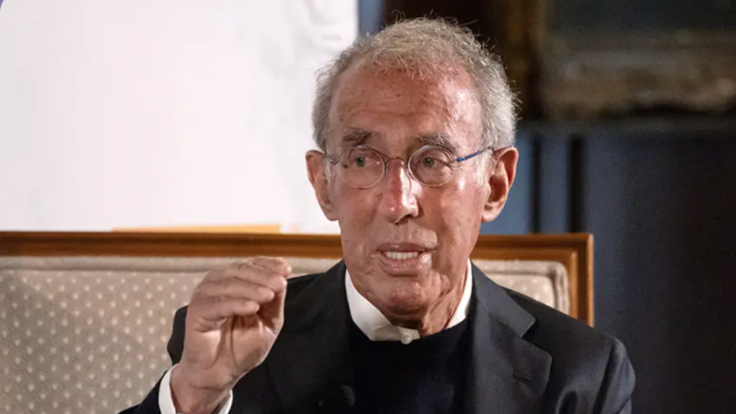
Baron Capital founder and CEO Ron Baron has placed a £790 million ($1 billion) buy order for SpaceX shares at the company's initial public offering, he disclosed on CNBC's Squawk Box on 12 May.
'At the IPO price, I've got an order for $1 billion,' Baron told the hosts. 'I want to buy more stock at the IPO. I don't know if we're going to get filled, but we're going to try.'
The planned purchase would expand what is already Baron Capital's single largest position. The firm has invested approximately £1.3 billion ($1.7 billion) in SpaceX since 2017, a stake now valued at roughly £11.8 billion ($15 billion). SpaceX accounts for more than a quarter of Baron Capital's total assets under management, which Baron put at approximately £44 billion ($55.9 billion) during the interview.
'This is going to become the largest company on the planet,' he said, projecting SpaceX could reach a valuation of £7.9 trillion to £23.6 trillion ($10 trillion to $30 trillion) within 10 to 15 years. He added that even those figures could prove conservative.
How Baron Capital Built Its £11.8B SpaceX Position
Baron described accumulating SpaceX shares through the company's biannual tender offers, in which employees sell stock to outside investors. SpaceX has typically run these as £790 million ($1 billion) offerings twice a year.
'Every single employee is a shareholder in SpaceX,' Baron explained. He said Baron Capital has been 'one of the largest, if not the largest, purchaser in each of these deals.'
The firm's Tesla stake, its second-largest holding at roughly £3.9 billion ($5 billion), brings Musk-related investments to approximately £15.8 billion ($20 billion) of the £48 billion ($61 billion) in total profits Baron Capital has generated since 1992.
SpaceX IPO Could Raise £59B in Largest-Ever Listing
SpaceX filed a confidential S-1 registration statement with the Securities and Exchange Commission on 1 April 2026. Baron Capital's Q1 2026 shareholder letter confirmed that lead underwriters Goldman Sachs, JPMorgan, Morgan Stanley, Citi, and Bank of America Merrill Lynch have suggested a valuation of £1.38 trillion to £1.57 trillion ($1.75 trillion to $2 trillion) at listing.
The company is targeting a Nasdaq listing, with a roadshow expected to begin in early June, according to The Motley Fool. If executed at the upper end, the offering would raise up to £59 billion ($75 billion), surpassing Saudi Aramco's £23.2 billion ($29.4 billion) raise in 2019 as the largest IPO ever priced.
Elon Musk has discussed reserving as much as 30% of the float for retail investors. On a £59 billion raise, that would amount to roughly £17.7 billion ($22.5 billion) in shares available to individual buyers at the IPO price.
Ron Baron said today his SpaceX investment is now worth over $15 billion dollars, up from $1.7 billion invested, and that 1/3 of all of Baron Capital's lifetime profits (~$60B) have been due to investing in Elon Musk companies.
— Sawyer Merritt (@SawyerMerritt) May 12, 2026
Absolute legendary investor and huge supporter of… pic.twitter.com/lmCCCPAg9b
Baron dismissed concerns that the targeted valuation is too high. 'I think the company over the next 10 or 15 years is going to be worth $10 trillion, $20 trillion, $30 trillion,' he said. 'And I could be very low.'
Starlink's £9B Revenue Year Anchors the SpaceX Valuation
The financial case rests heavily on Starlink. The satellite broadband division generated £9 billion ($11.4 billion) in revenue during 2025 with an EBITDA margin of 63%, according to financial disclosures obtained by The Information. Its subscriber base surpassed 10 million in early 2026.
Companywide, SpaceX posted total revenue of roughly £11.8 billion to £12.6 billion ($15 billion to $16 billion) in 2025 and an estimated £6.3 billion ($8 billion) in EBITDA, Reuters reported.
Baron highlighted two growth areas. The first is Starlink's continued expansion. 'Starlink is going to be the internet for the entire planet,' he said.
The second is orbital data centres, where solar energy and vacuum cooling eliminate the power and water costs that constrain terrestrial facilities. 'You're getting free electricity and free cooling once you get into space,' Baron said.
Both ambitions depend on Starship, SpaceX's next-generation launch vehicle designed to carry more than 100 metric tonnes to low Earth orbit. Baron described reusable rocket technology as the foundation of everything SpaceX has achieved, noting that no other company had attempted it before Musk.
© Copyright IBTimes 2026. All rights reserved.
- Recommended For You