Elon Musk, Sam Altman Legal War Explained: The $852 Billion Trial Over AI's Future Begins in California
Elon Musk's lawsuit against Sam Altman reaches court, laying bare a fractured alliance and a battle over who steers the next wave of AI.


Elon Musk and Sam Altman will face each other in a California courtroom on Monday, as a closely watched $852 billion legal battle over the future direction of artificial intelligence begins in Oakland, centred on control of OpenAI and its flagship product, ChatGPT. The AI trial, overseen by US District Judge Yvonne Gonzalez Rogers, will probe Musk's allegation that Altman and OpenAI betrayed the non-profit mission he says they agreed on in 2015 and quietly turned the company into a for-profit juggernaut behind his back.
OpenAI was founded in 2015 as a non-profit research lab based in San Francisco, billed as a kind of counterweight to tech giants like Google and Facebook. Musk was a founding backer and early sponsor, channelling roughly $38 million into the project between December 2015 and May 2017.
The stated goal, at least on paper, was almost utopian: develop powerful AI in a way that benefitted humanity as a whole, rather than concentrating control in a handful of corporations. That idealistic framing is now at the heart of a civil lawsuit accusing OpenAI's current leadership of quietly pivoting from an altruistic mission to a classic Silicon Valley growth machine.
AI Trial Pits Musk Against Altman Over OpenAI's Direction
Musk's lawsuit, filed in August 2024 and now heading to trial, accuses Sam Altman and OpenAI president Greg Brockman of 'double‑crossing' him and the public by straying from the company's original charter. The claim is that a non-profit research outfit became, in practice, an engine for private profit, culminating in a valuation pegged at $852 billion, while wielding technology some fear could upend labour markets and even threaten humanity's survival.
OpenAI has dismissed the case as little more than competitive sniping. The company's position is that Musk's claims amount to 'sour grapes,' motivated less by principle than by his interest in promoting his rival AI venture, xAI, which he launched in 2023. On that view, the AI trial is as much about bruised egos as it is about legal fine print.
Originally, Musk sought more than $100 billion in damages, a figure that would have made this one of the most expensive technology disputes ever to reach a courtroom. A series of pre‑trial rulings, however, have clipped his ambitions.
He has now dropped any personal claim for damages and is instead asking the court to order payments to OpenAI's charitable arm, funded largely by profits from the company's commercial operations and from Microsoft, which became OpenAI's biggest outside investor after Musk cut off his funding.
Musk is also asking for Altman to be removed from OpenAI's board. He presents that as a necessary step to restore the company's founding mission. OpenAI's defenders see it rather differently, as an attempt by a former insider to reassert influence over a company he chose to stop bankrolling.
The AI trial will not be decided by a jury alone. Judge Gonzalez Rogers has made clear she will have the final say, with the jury acting in an advisory capacity — a nuance that could matter if the factual picture is messy but the legal issues are technical. 'Part of this is about whether a jury believes the people who will testify and whether they are credible,' she said earlier this year, explaining why she believed the case warranted a full airing in court.
Personal Histories and Risks Loom Over AI Trial
The courtroom drama will unfold against a backdrop of two very different public personas. Musk, 54, is one of the world's richest men, with an estimated fortune of around $780 billion tied up in Tesla, SpaceX and other ventures. His reputation as a visionary has often run alongside criticism of erratic behaviour, controversial social media posts and ambitious promises, particularly around Tesla's self‑driving technology, that have yet to fully materialise.

The AI trial also lands at an awkward time for him. Just last month, a separate jury found him liable for defrauding investors during his $44 billion takeover of Twitter in 2022. Any damaging revelations about his conduct or judgment could cast a shadow over SpaceX, which is reported to be eyeing a public listing this summer that some analysts believe could push Musk towards an unprecedented trillionaire status.
Judge Gonzalez Rogers has placed some limits on how far lawyers can go in raking over Musk's private life. She has barred questioning about his suspected use of ketamine, but will allow inquiries about his appearance at the 2017 Burning Man festival in Nevada and his relationship with Shivon Zilis, a former OpenAI board member and the mother of several of his children. Those details are not central to the legal issues, but they could colour a jury's sense of his character.
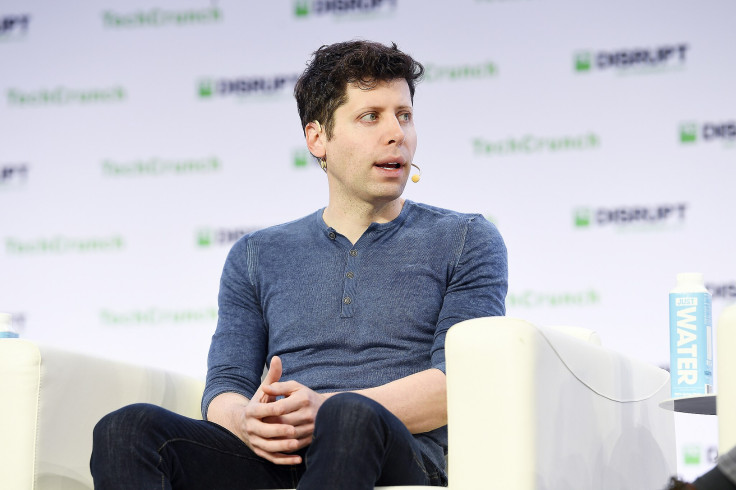
Altman, 41, lived largely outside mainstream public attention until late 2022, when the release of ChatGPT turned him into the most recognisable face of the AI boom. Some commentators have likened him to a modern J. Robert Oppenheimer, a slightly uncomfortable comparison that captures both the promise and the dread surrounding the technology he champions.
Recently, the glow has dimmed. A long profile in the New Yorker painted him as an unscrupulous operator, while police in San Francisco arrested a 20‑year‑old man on attempted murder charges after a Molotov cocktail was thrown at Altman's home, an attack investigators linked to the attacker's anxieties about AI.
The trial is also expected to dig into OpenAI's own internal convulsions, including the boardroom coup in 2023 that briefly saw Altman ousted as CEO before a rapid reinstatement. Musk has cited that episode as evidence that OpenAI's directors had detected 'deceptive conduct' around Altman's leadership, though those claims are very much contested and nothing presented so far has been independently confirmed in court.
What seems less in doubt is that Musk and Altman's relationship has deteriorated from admiration to acrimony. In a February 2023 email exchange released as part of the pre‑trial evidence, Altman wrote to Musk, 'you're my hero,' and said 'it really (expletive) hurts when you publicly attack OpenAI.'
Musk replied that 'it is certainly not my intention to be hurtful' before adding the line that now sits at the core of his public crusade over AI: 'the fate of civilization is at stake.'
© Copyright IBTimes 2026. All rights reserved.
- Recommended For You