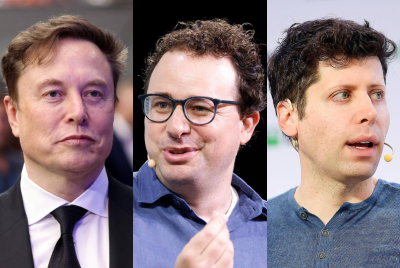
Elon Musk Accuses OpenAI CEO Sam Altman of 'Stealing a Charity' in Explosive Post
Musk claims that OpenAI's shift from a non-profit to a 'capped-profit' model undermines its original mission.

Elon Musk has accused OpenAI CEO Sam Altman of 'stealing a charity' in a post on X, escalating a long-running dispute over how the artificial intelligence company was structured and later evolved. In the post, Musk also named Greg Stockman and alleged that financial gains were made through OpenAI's transition away from its original non-profit framework.
OpenAI has previously rejected similar claims, saying in court filings and public statements that allegations against its leadership are unfounded.
OpenAI Accusations Over Charity Structure
In his post, Musk wrote, 'Scam Altman and Greg Stockman stole a charity. Full stop.'
He went on to claim that Greg Stockman received 'tens of billions of stock for himself' and that Altman obtained 'dozens of OpenAI side deals with a piece of the action for himself, Y Combinator style.' Musk also suggested that Altman would later be 'awarded tens of billions in stock directly' following legal proceedings.
Scam Altman and Greg Stockman stole a charity. Full stop.
— Elon Musk (@elonmusk) April 27, 2026
Greg got tens of billions of stock for himself and Scam got dozens of OpenAI side deals with a piece of the action for himself, Y Combinator style. After this lawsuit, Scam will also be awarded tens of billions in stock… https://t.co/R27ZeG9nNR
Musk went on to imply that there is a legal and ethical question to ask: 'Do you want to set legal precedent in the United States that it is ok to loot a charity? If so, you undermine all charitable giving in the United States forever.'
He also referred back to OpenAI's origins, writing that he 'started it, funded it, recruited critical talent and taught them everything I know about how to make a startup successful FOR THE PUBLIC GOOD,' before adding, 'Then they stole the charity.'
Elon Musk Ready to Sue OpenAI
Musk replied to a post that included a quoted response from OpenAI's newsroom account, which said, 'We can't wait to make our case in court where both the truth and the law are on our side.'
The account also accused Musk of being 'jealous' in a bid to derail a competitor. 'We'll also finally have the chance to question Mr. Musk under oath before a jury of Californians about this,' the newsroom concluded.
We can't wait to make our case in court where both the truth and the law are on our side. This lawsuit has always been a baseless and jealous bid to derail a competitor. We'll also finally have the chance to question Mr. Musk under oath before a jury of Californians about this…
— OpenAI Newsroom (@OpenAINewsroom) April 27, 2026
However, a separate 'readers added context' note attached to the post claimed that a federal judge found 'ample evidence' for Musk's case to proceed to jury trial on issues including breach of charitable trust and unjust enrichment.
It also stated that Musk co-founded OpenAI as a non-profit and donated over $44 million (£34 million) with the expectation it would remain mission-aligned.
Musk vs Altman in Court
Musk and OpenAI's leadership, including CEO Sam Altman, are locked in a long-running dispute over what the company was meant to be when it was founded in 2015 and what it has become since.
Musk was one of OpenAI's co-founders and early funders. The organisation was originally set up as a non-profit research lab, with a stated goal of developing artificial intelligence in a way that benefits humanity rather than being driven by profit. Musk has repeatedly said he supported that mission and invested significant money and effort into getting it off the ground.
The tension began after Musk left OpenAI, and the organisation later shifted into a 'capped-profit' structure, allowing it to raise major investment and issue equity-like returns under certain limits. Musk argues that this shift effectively changed the spirit of the original arrangement, which he says was meant to remain non-profit and focused on public benefit.
OpenAI, for its part, has defended the change as necessary to fund the massive computing costs and research needed to compete in the AI industry. It maintains that its governance still reflects a commitment to safety and public interest, even while operating with commercial elements.
The legal dispute is already underway in court in California, with proceedings having started on 27 April 2026 in Oakland, California. The case is expected to continue over the coming weeks, with both sides preparing to argue sharply different versions of how the organisation was founded and later restructured.
© Copyright IBTimes 2026. All rights reserved.
- Recommended For You