Smoking Gun Memo Rocks OpenAI Trial as Elon Musk Faces 'Painful' Grilling in $150B Fight for Control
In a California courtroom, Elon Musk's challenge to OpenAI raises stark questions about broken promises, big money and who gets to steer the future of AI.

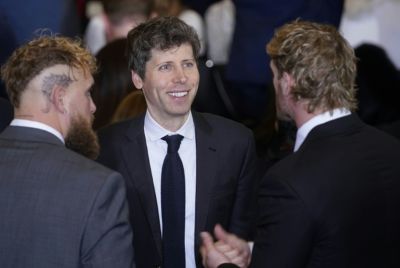
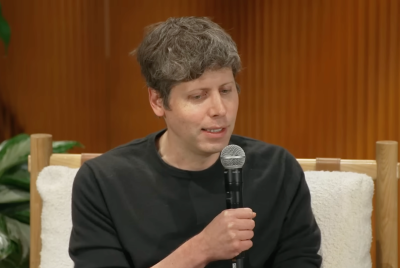
Elon Musk and OpenAI chief executive Sam Altman faced each other in a packed federal courtroom in Oakland, California, on 27 April, as a $150 billion trial over the future of ChatGPT and the company's charitable roots opened before a hand-picked jury.
The case centres on whether OpenAI, created in 2015 as a non-profit dedicated to developing safe artificial intelligence for the benefit of humanity, quietly shifted into a profit‑driven juggernaut in breach of its founding mission. Musk, once a founding donor and board member, now says the organisation he helped launch has been turned into what he calls an $800 billion commercial enterprise riding on his seed money. OpenAI, backed by Microsoft and led by Altman, insists the transformation was both necessary and openly discussed and that Musk is acting out of rivalry as he builds his own AI start‑up, xAI.
Smoking Gun Memo And The Battle For OpenAI's Soul
In his lawsuit, Musk is asking for up to $150 billion in damages from OpenAI and major investor Microsoft, with the sum to be directed back to the charity rather than to him personally, according to Fox Business. He is also seeking a drastic restructuring: the re‑establishment of OpenAI as a pure non‑profit and the removal of Altman and OpenAI president Greg Brockman from leadership.
The trial has already produced one of its most dramatic moments in the form of internal writings and correspondence that cut against OpenAI's current narrative. Among the exhibits, reported by The Next Web and others, is a 2017 diary entry by Brockman in which he reflects on the organisation's early pivot towards profit. He wrote that if OpenAI moved to a for‑profit model just months after publicly presenting itself as a non‑profit, then 'we were lying all along.' That line is now being treated by Musk's legal team as a kind of smoking gun memo, potentially showing that the charitable framing was, at some point, at odds with internal thinking.
Earlier messages, highlighted by The Verge from inside the courtroom, appear to bolster Musk's claim that he was central to OpenAI's rise. Emails presented to the jury included Nvidia boss Jensen Huang personally promising to fast‑track AI supercomputers for the young lab, a deal Musk says he brokered himself. Other internal notes showed Brockman and chief scientist Ilya Sutskever praising Musk's early leadership in almost reverential terms.
9/ This email exchange from September 2017 was shown to jurors
— Ariel Givner (@GivnerAriel) April 28, 2026
Musk: “Either go do something on your own or continue with OpenAI as a nonprofit.”
Altman: “I remain enthusiastic about the non-profit structure!”
It's crazy because in this same month Brockman wrote in his… pic.twitter.com/VgVpJzpa8X
None of this, Musk argues, squares with how the company later sidelined him and converted its structure in 2016 into a capped‑profit subsidiary that has since attracted billions in commercial investment, including from Microsoft. On the stand, he told the court he felt like 'a fool' for effectively giving away tens of millions of dollars in 'free money' that, in his telling, helped build a corporation now eyeing a valuation of up to $1 trillion through a planned IPO. NPR verified his expression of regret in its courtroom reporting.
Painful Cross‑Examination Over ChatGPT And Profit Motives
If the documents gave Musk some early moral high ground, his own performance under cross‑examination threatened to erode it. The Verge's reporter in the gallery described the session with OpenAI lead counsel William Savitt as one of the most 'painful' she had witnessed, with Musk repeatedly dodging yes‑or‑no questions, contradicting himself and arguing directly with the lawyer rather than answering. At one point, a juror was seen rubbing her temples as the exchanges dragged on.
Savitt's strategy, according to the SF Standard, appeared straightforward: cast doubt on Musk's reliability and present him as a disgruntled rival rather than a betrayed idealist. He confronted Musk with his own past comments on X, as well as notes from early meetings, to show that Musk knew from the outset that OpenAI would need a sustainable revenue stream to compete with giants such as Google.
🚨 Musk vs OpenAI's lawyer — the cross-examination exchanges
— NIK (@ns123abc) April 29, 2026
William Savitt — Wachtell Lipton's lead defense lawyer, Supreme Court clerk, trained to break witnesses.
Savitt opens with a misleading premise.
Musk: "You're being misleading. What you're saying is false."
Savitt… pic.twitter.com/VscVIq6Qvl
CNN reported that moments became heated, with Musk accusing Savitt of trying to 'trick' him, a claim Judge Yvonne Gonzalez Rogers quickly batted away. The judge had already warned during jury selection that emotions around Musk were unusually strong, bluntly acknowledging that many Americans 'do not like him' while urging prospective jurors to put personal views aside.
Savitt also pressed on what he framed as hypocrisy. If Musk now condemns OpenAI's pursuit of profit, the lawyer asked, does the same criticism apply to xAI, the company Musk has launched in direct competition with ChatGPT? Musk conceded that profit motives are a concern across the entire industry, an answer that may resonate with jurors trying to distinguish principle from positioning.
A Verdict That Could Reshape AI — And Charity Law
Behind the personalities and combative exchanges sits a set of questions that reach well beyond ChatGPT. Musk has warned that if OpenAI prevails, the ruling could effectively green‑light future non‑profits to raise money and moral authority on charitable promises, then flip into commercial entities without serious consequence. In his opening remarks, he suggested that a loss could 'jeopardise the legal basis for charity in the United States,' an assertion that struck some observers as grandiose but that does underline the potential precedent.
OpenAI’s response:
— verixon (@VERIXONofficial) April 29, 2026
Scaling AI requires massive capital
The capped-profit model enables progress
Their mission remains intact just evolved.
For more information follow the @VERIXONofficial .@elonmusk @FoxNews @sama @OpenAI pic.twitter.com/tXKA3nZ6YY
OpenAI, for its part, argues that it has remained aligned with its original mission, even as it has sought capital to scale models like ChatGPT and video system Sora 2. According to Fox Business, the company is preparing for a public listing that could value it near the $1 trillion mark. Microsoft chief executive Satya Nadella is expected to testify later in the proceedings, giving the court a direct window into how the tech giant viewed OpenAI's hybrid structure when it wrote its enormous cheques.
The case is being heard with an advisory jury, which will assess liability, while the final say on remedies rests with Judge Gonzalez Rogers. She could, in theory, grant the full $150 billion Musk is seeking, order structural changes to OpenAI's for‑profit arm or decline to intervene in its corporate evolution. Nothing is confirmed yet, and much of what is being alleged about motives and internal intent rests on contested readings of emails and notes rather than hard statutory breaches.
Jurors are expected to begin their deliberations on liability in mid‑May, with the outcome likely to reverberate from Silicon Valley boardrooms to charity regulators and AI labs across the world.
© Copyright IBTimes 2026. All rights reserved.
- Recommended For You