

Trump Showed 'Unusual Behaviours' After 'Very Severe Problems', Psychologist Suggests
Dr John Paul Garrison interpreted the president's comments, gestures and movements while acknowledging that some observations could be coincidental
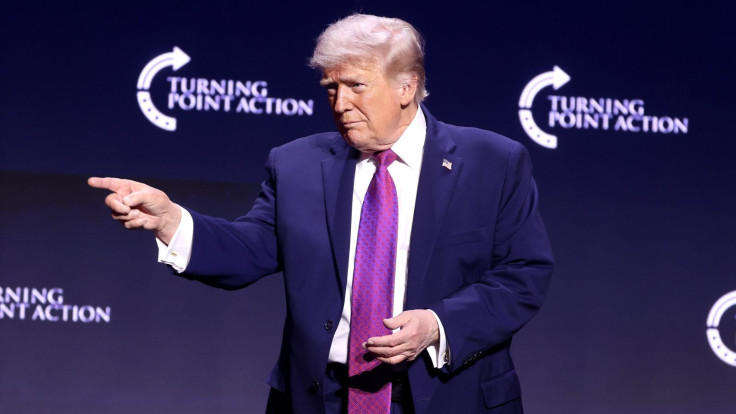
Clinical and forensic psychologist Dr John Paul Garrison has questioned President Donald Trump's behaviour after his remark about 'some very severe problems' during a Thursday event in the White House Rose Garden.
Trump was discussing his lifelong abstention from alcohol, drugs and smoking. He claimed that avoiding those things had spared him the health problems some friends were encountering as they grew older, before referring to difficulties of his own.
'I have other problems. I have some very severe problems. But those are not one of them. I don't want to add them to the list.'
Trump's Remarks About His Health
The comment came amid public concern about Trump's health and fitness for office, according to the supplied report. It describes the White House as having disclosed some health conditions while rejecting rumours and maintaining that he is in good condition for his age.
Garrison examines public figures' behaviour in YouTube videos and has devoted several to Trump. He has suggested that the president is experiencing severe decline, possibly accelerated by a stroke. Those remain Garrison's suggestions.
In his analysis of the Rose Garden appearance, Garrison interpreted Trump's apparent reconsideration of the comment as backpedalling. He linked that reaction to what he described as impulsivity, which he has previously associated with certain forms of cognitive decline.
'As I've said on many videos recently, he is impulsive,' Garrison explained. 'He makes statements without thinking. And this is one of the rare times he's really talking about himself and providing information that people don't already have. So, immediately upon reflecting on it, when he took just a second to think about what he just said, now he's starting to backpedal.'
Trump's Unusual Behaviours in Footage
Garrison also highlighted how Trump complimented members of the media after the comment, contrasting that approach with his frequent attacks on journalists as 'fake news'. He interpreted the altered approach as a sign of vulnerability and suggested it lent substance to Trump's remark.
He also drew attention to the president's posture.
'Another thing that I want you to pay attention to is how wide open his arms are when he said that. That does suggest, right now, as he's talking about this, he is very open,' Garrison added. 'He is very vulnerable as he's talking about this. And as I said, this was an impulsive decision to state this.'
Garrison then examined footage from a separate event at which Trump received an honour from firefighters. He identified movements he interpreted as involuntary spasms, including an instance in which the president appeared to jerk backwards.
Garrison's Caution About Trump's Movements
The psychologist suggested that a particular look from Trump sometimes preceded a more noticeable movement. His interpretation remained qualified, however. He acknowledged that the behaviour might be coincidental and that Trump could have been looking towards cameras or someone outside the frame.
'Now, this behavior may just be a coincidence, but I have noticed it a number of times before there is a significant spasm,' Garrison stated. 'Sometimes he does look out and look at cameras, or there may be somebody he's looking at off camera. But this look right here, I've seen a number of times before he has a noticeable spasm.'
© Copyright IBTimes 2026. All rights reserved.