

'He's Not Making Sense': MAGA Diehards Explain What Will Reportedly Sink Donald Trump in the Midterms
Disillusioned MAGA voters in Michigan say Donald Trump's rhetoric and the cost of living are testing Republican turnout ahead of the midterm elections
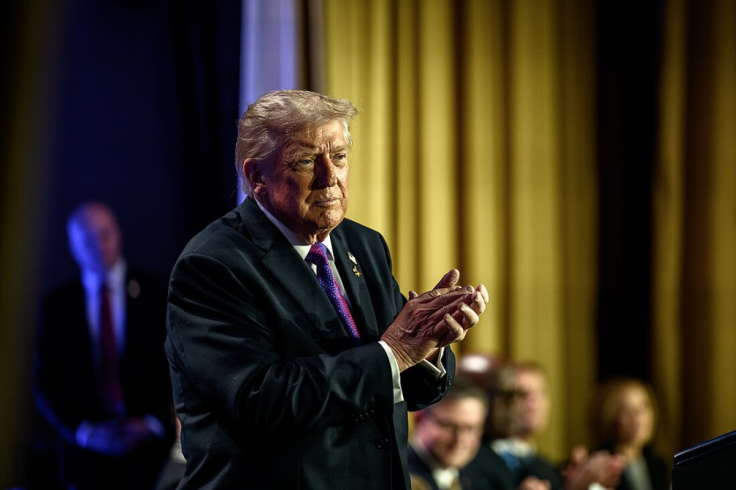
Some of President Donald Trump's former supporters in western Michigan say they have grown disillusioned with him ahead of November's midterm elections, raising questions about whether Republican candidates can count on their turnout.
Jim Pasek, an 80-year-old retired pharmaceutical plant maintenance worker from Gobles who has voted for Trump twice, told The New York Times, 'He's not making sense.'
Pasek's full remark was more revealing than the headline. 'It confuses me, and then I just get disgusted and tune out,' he said, according to the newspaper.
MAGA Voters Losing Patience
The concerns emerged after The New York Times interviewed voters in Gobles, Stevensville, Paw Paw and Hudsonville, Michigan, for a report published on 8 October.
The newspaper found signs of an enthusiasm gap among Republicans, including people who described themselves as likely voters but said they were paying less attention to the election.
Lindsay Kronemeyer, a 35-year-old conservative Christian mother of two who works in construction, told the newspaper, 'People are just more focused on everyday life.' She added, 'I don't hear the chatter on the Republican side of "Trump this, Trump that." He's just not there in my head anymore.'
That is a striking shift for a movement built around Trump's personal appeal. The interviews cannot establish how widespread the mood is nationally, but they offer a specific illustration of a problem Republicans cannot easily ignore.
The New York Times described the potential consequence as the 'red undertow', Democratic gains that come not only from voters switching parties, but from Republicans who sour on Trump and stay at home. The newspaper framed this as an emerging possibility, not a confirmed election result.
What Could Sink Trump in the Midterms
Trump has tried to make himself central to the campaign. At the Republican National Committee convention in Dallas on 10 September, he told supporters: 'You gotta pretend I'm on the ticket ... because in a way I am on the ballot.'
He also used the event to promise a 'Trump dividend' of $5,000 (£3,780) for every adult citizen if Republicans won the midterms. The transcript records him saying, 'If we win the midterms, we will, on the other hand, provide a, let's call it Trump dividend, $5,000 for every adult citizen in our country.'
The pledge is therefore conditional on Republicans winning, rather than a confirmed payment plan. The transcript does not set out eligibility rules, funding arrangements or a legislative route for delivering the money.
Trump's remarks at the same event included a claim that $22 trillion (£16.63 trillion) was 'coming into this country.' The transcript confirms what he said, but not the basis for the figure or whether it refers to announced commitments, projected investment or money already received.
Voters interviewed by The New York Times pointed to more immediate pressures. The newspaper's reporting linked Republican disengagement to the conflict involving Iran, petrol prices and the cost of living, alongside signs that some supporters no longer hear Trump as a presence in their political lives.
The Polling Warning Signs
There is broader evidence of strain, though it measures political identity rather than voting intentions. A University of Massachusetts Amherst poll, conducted from 21 to 26 August among 1,000 respondents, found that the share of Republican respondents identifying at least somewhat with the MAGA movement had fallen by nine percentage points since March.
The university said the largest fall, six percentage points, came among Republicans who identified only 'somewhat' with MAGA, while those identifying 'very much' fell by three percentage points. The survey had a reported margin of error of 3.5 percentage points.
UMass Amherst's poll director, Tatishe Nteta, connected the decline to Trump's decision to attack Iran, his failure to address the affordability crisis and his reluctance to release all information associated with Jeffrey Epstein.
Those are the university's attributed explanations for the trend, not proof that every disillusioned Republican will stay home.
The polling result is not a forecast. It does, however, reinforce the question raised in Michigan: whether Trump can still convert loyalty into votes when the election is only weeks away.
A Test for Republicans
The midterm elections are scheduled for 3 November, 25 days after the reporting was published. Trump's Dallas speech made clear that he sees the contest as a personal test, telling the audience: 'On election day, November 3rd, you gotta do me a favour. You gotta get out and vote.'
For Republicans, the difficulty is that the voters most likely to respond to that appeal are also the ones expressing fatigue. Pasek did not announce a switch to the Democrats. He said Trump confused him, then disgusted him, then made him switch off.
The interviews raise questions about whether some disillusioned supporters will turn out in November. They do not settle the answer.
© Copyright IBTimes 2026. All rights reserved.