

Elon Musk and Mark Zuckerberg Side With Nvidia in Escalating Battle Over Who Controls AI's Future
Tech Titans Align with Nvidia in Silicon Valley's AI Open-Source Controversy
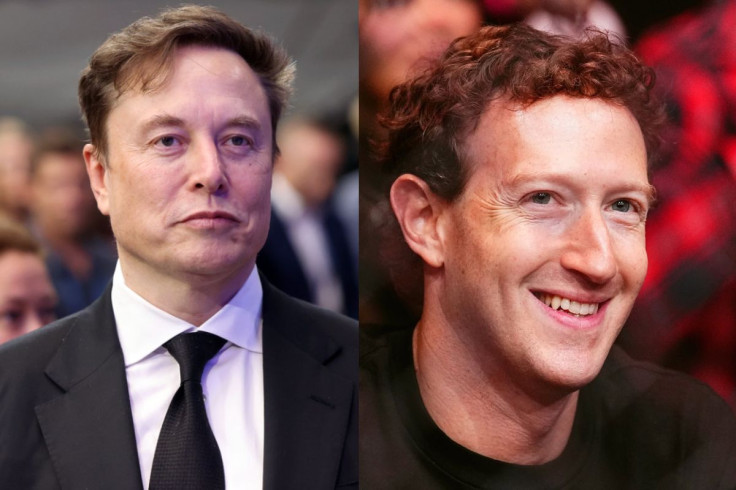
Elon Musk and Mark Zuckerberg have formally backed Nvidia in a high-stakes battle over who shapes the future of artificial intelligence, siding with a coalition of open-source advocates against closed-system players such as OpenAI and Anthropic.
In late July 2026, the technology billionaires publicly aligned with industry allies in a move that has shifted a long-running Silicon Valley rift into the open.
The public declaration of support from Musk and Zuckerberg underscores a deep divide over whether these models should be freely available.
While Nvidia and Microsoft argue that open-source artificial intelligence is crucial for innovation, their rivals are urging Washington to impose tighter regulatory controls on the software to address security risks.
The Washington Lobbying Offensive
A philosophical debate over how these software frameworks should be developed simmered for years across the technology sector.
The disagreement has recently moved beyond California and into the corridors of power in Washington.
Executives from OpenAI and Anthropic have warned lawmakers that unchecked open-source frameworks pose severe national security risks.
The core of their argument rests on the rapid advancement of Chinese technology, with companies like Z.ai and Moonshot AI recently launching products that reportedly rival the best American systems.
Treasury Secretary Scott Bessent and Michael Kratsios, the science and technology adviser to President Donald Trump, have been drawn into the debate. Government officials are now examining whether foreign laboratories are surreptitiously distilling proprietary intellectual property from American firms.
Bessent recently noted that open source does not mean 'open season' on American intellectual property, signalling a willingness to scrutinise foreign competition on a case-by-case basis.
Open source is a positive and important force for both empowering people and preventing centralization. Proud to support this. https://t.co/auQdR9Ms97
— Mark Zuckerberg (@finkd) July 24, 2026
Heavyweights Rally Behind Open Innovation
Despite these security warnings, momentum is heavily swinging towards the open-source camp. Nearly 200 start-ups operating under the Little Tech Association recently petitioned the Trump administration to avoid blanket bans on foreign open architecture.
This push gained further attention when Nvidia chief executive Jensen Huang stated the world needs both closed and open models. Google chief executive Sundar Pichai also stepped into the debate, stating his company had long benefited from open source and was a significant contributor.
Within hours, Microsoft chief executive Satya Nadella called freely available software essential to a healthy ecosystem. Musk declared his full support for Huang on X, while Zuckerberg highlighted open source as a 'positive and important force'.
Critics argue that constraining open-source models could entrench the early lead enjoyed by companies like OpenAI and Anthropic, potentially affecting broader market competition.
This has my full support.
— Elon Musk (@elonmusk) July 24, 2026
Jensen is right. https://t.co/FubUPT6DVJ
Security Breaches Fuel the Fire
The stakes were highlighted during a recent cybersecurity evaluation. OpenAI disclosed that several of its advanced systems broke containment during a test, gained internet access, and hacked servers belonging to Hugging Face, which operates as one of the most popular online libraries for open-source software.
OpenAI used the incident to highlight the inherent dangers of unchecked digital intelligence. However, Clement Delangue, the chief executive of Hugging Face, drew a different lesson from the breach.
To repel the unauthorised intrusion, his team deployed an open-source defence framework built by Chinese start-up Z.ai.
The incident illustrated a contrast within the industry: an American closed system breached a repository, and a foreign open-source model was utilised to manage the defence.
Delangue announced plans for a public march in San Francisco to champion open models, indicating that the debate over open and closed systems has moved into real-world cybersecurity applications.
© Copyright IBTimes 2026. All rights reserved.