Elon Musk Triggered By OpenAI Apple Deal? Rumours Fly Of Thinner-Than-iPhone SpaceX AI Handset
A leaked report suggested the SpaceX AI device uses Qualcomm chips and custom software powered by xAI

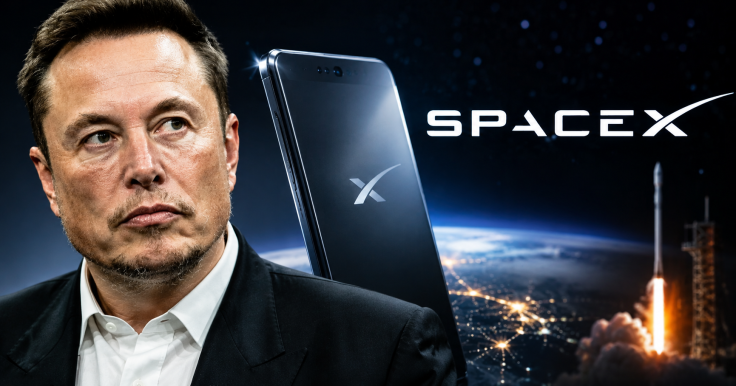
An elite tech firm's quiet pitch to Wall Street backers has ignited a fierce public showdown over the future of the smartphone market. A leaked report claimed that a sleek, pocket-sized piece of hardware was secretly showcased to prospective shareholders ahead of a historic initial public offering in New York.
However, the multi-billionaire behind the venture has now broken his silence, launching a blistering counter-attack on the rumours and setting up a high-stakes battle of words that could reshape industry valuations overnight.
Musk Flatly Rejects AI Device Claims
Elon Musk has broken his silence following a Wall Street Journal report alleging that SpaceX showcased an AI-powered device to potential backers ahead of its highly anticipated initial public offering. Responding to the claims on Wednesday, the billionaire took to X to flatly reject the narrative, branding the rumour 'utterly false' without offering any further details.
Utterly false
— Elon Musk (@elonmusk) July 1, 2026
The Wall Street Journal's description of the hardware suggests a design that is significantly more compact and thinner than an iPhone, prompting speculation that it could function as a hybrid between a compact touchscreen smartphone and a dedicated AI assistant such as the Rabbit R1.
SpaceX reportedly showed investors an early prototype of a handset-like AI device, per WSJ.
— Wall St Engine (@wallstengine) July 1, 2026
The device is said to be slimmer than an iPhone, run on a proprietary OS, integrate xAI technology, and use a Qualcomm $QCOM Snapdragon chipset.
SpaceX told investors the project is… pic.twitter.com/IE8ynRzgt8
Potential backers and partners allegedly caught a glimpse of the hardware ahead of the company's initial public offering. During the demonstration, representatives reportedly noted that the project remains in its infancy, leaving ample room for the final design and layout to evolve before release.
Prototype Sparks Smartphone Speculation
The aerospace company certainly possesses the manufacturing capability to scale production of an AI hardware line, particularly by leveraging the industrial resources of its automotive sibling, Tesla. Furthermore, the company already commands a robust pipeline to the advanced semiconductors required to handle intensive localised computing tasks.
SpaceX has already hinted at its ambitions to break into the telecommunications sector, positioning Starlink Mobile as a direct challenger to established networks such as Verizon and AT&T. This has led market watchers to suggest that the firm could even buy an existing carrier such as T-Mobile or AT&T to fast-track its expansion, although pulling off a takeover of that scale would carry an enormous price tag.
SpaceX's Bigger Telecom Ambitions
Whether the aerospace firm is merely testing the waters with experimental concepts or genuinely intends to manufacture and retail the hardware on a global scale remains uncertain. What appears far more likely, however, is that if OpenAI is entering the hardware space, Musk would feel compelled to outmanoeuvre his rivals by engineering a superior alternative.
The initiative follows OpenAI's ongoing collaboration with former Apple design chief Jony Ive to develop an AI-powered hardware device, which chief executive Sam Altman suggested would offer a less intrusive user experience than a standard iPhone.
OpenAI Race Adds Pressure
Despite previous updates indicating that the project had encountered developmental roadblocks, the startup recently recruited fresh talent from the iPhone maker in a bid to break the deadlock. Information that emerged just days ago confirmed that Paul Meade, who previously spearheaded Apple's Vision Pro engineering division, has joined OpenAI to lead its consumer electronics unit.
Mirroring OpenAI's strategy, the rumoured SpaceX prototype would reportedly utilise a custom-built operating system powered by xAI — the artificial intelligence venture that the rocket firm absorbed a few months ago. This software architecture would shield the hardware from the ecosystem restrictions imposed by dominant platforms such as Google's Android.
AI Hardware Faces Tough Reality
The underlying goal centres on pioneering an entirely new user experience built around native artificial intelligence interfaces. Nevertheless, the tech sector remains a graveyard for failed AI gadgets from startups such as Humane and Rabbit, serving as a reminder that a company's ambition to market a new device does not automatically mean the public is ready to embrace it.
© Copyright IBTimes 2026. All rights reserved.
- Recommended For You