

Was Florida Crash Jet N722BD a Charter Flight? Questions Surround Bahamas-Bound Learjet 60
Nine people aboard the Bahamas-bound Learjet 60 died in the Florida crash
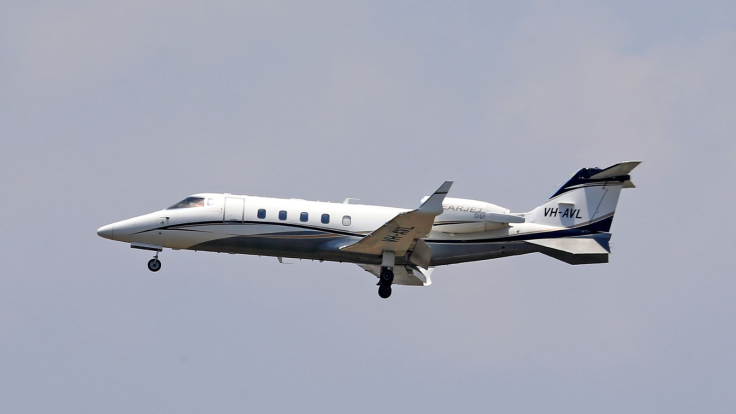
A Bahamas-bound business jet plunged into a Florida neighbourhood on Sunday, killing all nine people aboard and leaving investigators examining its final moments. The Learjet 60, identified by registration N722BD, had departed Austin, Texas, for North Eleuthera when it crashed in Palm Beach County on 1 November.
Beyond questions about the sudden descent, the aircraft's ownership and commercial history have raised another issue: whether the flight was a private journey or a charter carrying paying passengers.
Was Crashed Learjet N722BD a Charter Flight?
FAA-derived operator records show N722BD was authorised for commercial charter under Aurora Aviation's Part 135 certificate. However, officials have not confirmed whether the fatal Bahamas-bound journey was operated as a charter flight.
The aircraft appears on charter listings associated with Aurora Aviation, Inc., under a Federal Aviation Administration (FAA) Part 135 operating certificate. Charter platform Outlier Jets identifies the Learjet 60 by its registration and serial number, 271, and names Aurora as the certificate holder. Austin-Bergstrom International Airport spokesman Jim Reynolds described N722BD as a private aircraft, while the FAA classified the crash under general aviation.
However, neither description establishes whether the flight operated under private Part 91 rules or commercial Part 135 regulations.
Who Owned the Crashed Jet N722BD?
According to the FAA's aircraft registry, N722BD was registered to LR60271 LLC, with an address in Wilmington, Delaware. Its registration certificate was issued in January 2023 and is valid until January 2030. The registry identifies the aircraft as a Learjet 60, a twin-engine business jet, but does not disclose the individuals behind the company or identify who arranged Sunday's flight.
A Delaware registration is not, by itself, evidence of irregular activity. Similarly, an aircraft's appearance on charter websites does not prove that any specific journey was booked commercially.
Flightradar24 recorded the jet arriving in Austin from Little Rock, Arkansas, on 31 October, but earlier movements cannot establish the purpose of Sunday's flight. The distinction matters because Part 135 commercial charter operations are subject to additional requirements governing crew duties, maintenance and oversight compared with many flights operated privately under Part 91.
According to reports, investigators may examine flight documentation and operator records to establish which regulations governed the journey.
What Happened Before the Learjet Crashed?
The FAA said the aircraft was travelling from Austin-Bergstrom International Airport to North Eleuthera Airport when it crashed shortly before 1pm near Lake Worth Beach. US Transportation Secretary Sean Duffy confirmed that all nine people aboard died. However, authorities had not publicly identified the victims or specified how many were passengers and crew for now.
Flight-tracking service Flightradar24 reported that the pilots mentioned icing, turbulence and precipitation before requesting a climb. The aircraft then entered a rapid descent, according to tracking data and recorded air traffic communications, rather than an official NTSB finding.
Those reports do not establish what caused the crash. According to reports, the NTSB has dispatched investigators to Florida, with the FAA assisting its inquiry.
The investigation will examine the aircraft's final flight, including operational records, weather conditions and available evidence. Until authorities release their findings, the flight's charter status and the cause of the fatal descent remain unanswered.
© Copyright IBTimes 2026. All rights reserved.