

iPhone Duo Regret: Why Users Say Apple's Foldable 'Outer Display Is Definitely an Inferior Experience'
An iPhone Duo reviewer questions Apple's foldable future after finding its outer display less comfortable than the iPhone 18 Pro
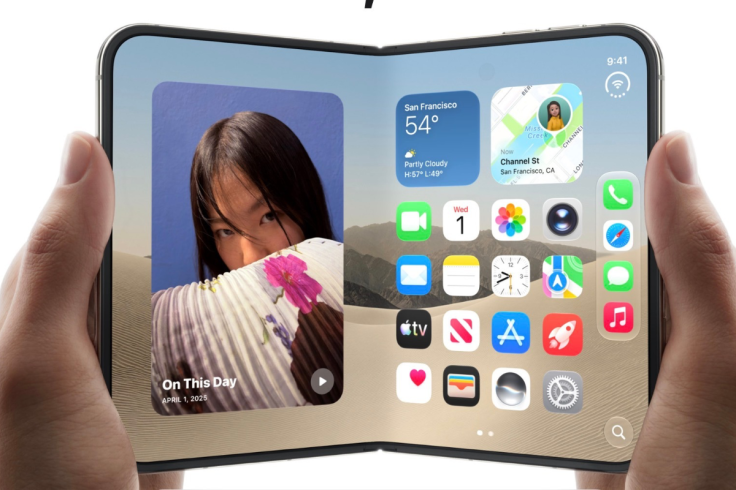
Technology journalist Ryan Christoffel said he rarely unfolded Apple's iPhone Duo during a week of daily use, prompting him to question whether the foldable phone suited his routine.
Although he admired the design, Christoffel found its outer display less satisfying than the one on his iPhone 18 Pro. He said his assessment was based on how he used the device, rather than a technical fault.
Why the iPhone Duo Outer Display Frustrates One Reviewer
Christoffel estimated that at least 90 per cent of his time with the iPhone Duo was spent using its front display. Even when he opened the phone, he sometimes did so deliberately, hoping to find a reason to use the internal screen more.
That left him spending most of his day with the device folded. In that position, he found it too heavy for extended use and too wide to reach comfortably. He also said the interface in many apps took some getting used to.
The outer screen was not unusable, he stressed. But compared with the conventional iPhone 18 Pro, it offered a less satisfying experience for the way he uses a smartphone.
That distinction matters because a feature can be impressive on paper and still go unused. More screen space does not necessarily save time or effort for someone whose phone use involves quick replies, brief checks and frequent interruptions, rather than sustained work on a larger display.
His experience points to a trade-off for foldable phones: the larger screen is a central part of their appeal, but that advantage matters less when an owner regularly chooses to leave the device closed. The reviewer's week is one account, not a measure of how owners generally use the phone.
One-Handed Habits Make the Bigger Screen Less Appealing
For Christoffel, one-handed operation is particularly important. He has three young children and often checks his phone briefly while holding one of them. Unfolding a device is less practical in those moments.
Having both hands free does not necessarily change the calculation. Christoffel said that when sitting down, he is often near his iPad Pro, equipped with a Magic Keyboard. For longer interactions, he would rather use that familiar set-up.
The Duo therefore occupies an uncertain place in his routine. Its exterior feels less convenient than his usual iPhone, while the larger display has to compete with a tablet he already uses.
Christoffel did not dismiss Apple's foldable concept. He described the Duo as an impressive innovation and said he believed other owners who had shared enthusiastic reactions online. His criticism concerned personal fit, rather than proving that the device fails for everyone.
Other reviewers have reached different conclusions. In a review published on 21 October for 9to5Mac, Chance Miller praised the Duo's versatility and found its outer screen useful for quick tasks, including messages and reading. Their contrasting assessments show how strongly the experience may depend on individual habits.
Christoffel has not ruled out changing his mind. He said more time with the handset might reveal an application for the larger screen that makes its compromises worthwhile.
For now, his first week suggests he may prefer a conventional iPhone. For prospective buyers, the central question is not simply whether the foldable technology works, but whether they would use its defining feature often enough to justify choosing it.
© Copyright IBTimes 2026. All rights reserved.