

'Who Is Going To Enforce That?': Passengers Doubt Andy Burnham's Rail Rules Will Ever Be Policed
Headphone campaign prompts doubts over whether staff and police can curb noise on train journeys
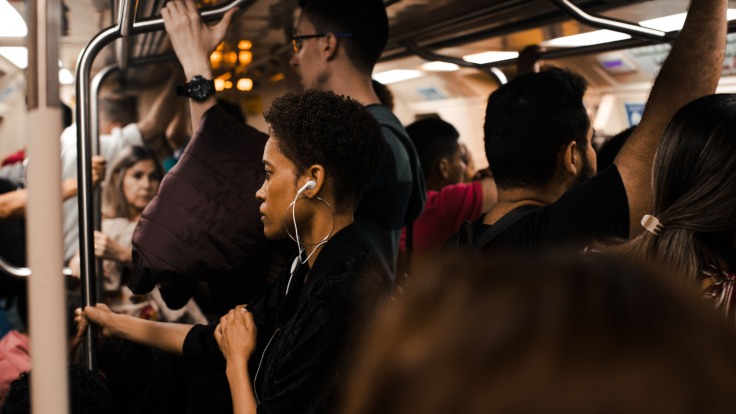
Greater Manchester mayor Andy Burnham has unveiled a nationwide campaign targeting 'headphone dodgers' who play loud music and videos on public transport, prompting widespread scepticism among commuters, who are openly questioning how transport staff will ever enforce the new rules.
According to a report from the Guardian, Mr Burnham announced the crackdown alongside government guidance allowing local transport authorities in England to issue fines of up to £100 on buses, while train operating companies retain existing powers to levy fines up to £1,000 for similar behaviour.
Under the slogan 'share the carriage, not the noise', the national poster and audio awareness campaign urges passengers to use headphones, avoid speakerphone calls and keep personal audio quiet across the rail network.
🚨 NEW: The Government has announced headphone dodgers on trains will face fines of up to £1,000 as a nationwide campaign launches today pic.twitter.com/fupMfsJvjP
— Politics UK (@PolitlcsUK) October 18, 2026
Public Skepticism Over Real-World Enforcement
Following the official announcement posted by Politics UK on X (formerly Twitter), social media users immediately voiced deep skepticism regarding the feasibility of policing busy train carriages and crowded bus aisles.
Commentators pointed out that front-line transit personnel rarely patrol carriages to address minor disruptions under normal operating conditions, making new rules feel unenforceable.
User Naco88 raised the core issue regarding staff presence on trains, posting, 'Okay but how often do rail staff actually walk through the carriage to impose these rules? Certainly don't on the tube.'
User Chris Smith highlighted that audio disruptions affect all forms of travel, commenting, 'Needs to be on all forms of public transport not just trains. Buses are a nightmare.'
Unions Raise Fears Over Staff Safety and Powers
The concerns expressed by daily commuters mirror warnings from transport labour unions, who argue that the proposed penalties do little to protect staff or maintain order without physical enforcement teams.
According to the Guardian, government officials have clarified that bus drivers will not be expected to enforce the anti‑nuisance rules themselves, leaving enforcement duties primarily to transport safety officers and police.
Union leaders warn that issuing fines without dedicated, trained security personnel on board could increase friction between lone staff members and aggressive passengers.
Unite general secretary Sharon Graham said: 'The government's proposals are well-meaning but wholly inadequate to tackle the challenges and violence bus workers are facing on a daily basis. The proposed penalties are not going to deal with the issues facing workers.'
Public Backs Crackdown Despite Doubts
Despite growing doubts surrounding practical execution, the policy addresses an issue supported by a clear majority of British commuters tired of public noise.
Polling data conducted by YouGov indicates that approximately 60 per cent of voters back crackdowns on public loudspeaker usage, with a strong majority supporting £1,000 (1330 USD) fines for passengers who play audio out loud on buses and trains. A separate survey by the same organisation revealed that commuters rank people speaking on speakerphones as one of their top three daily travel irritants.
The initiative makes Burnham the latest high-profile leader to champion public transport etiquette, following London Mayor Sadiq Khan's 'travel kind' initiative and similar proposals from the Liberal Democrats advocating for increased bus fines.
As audio reminders and promotional posters roll out across rail stations in England, passengers and transport unions remain doubtful that the measures will effectively deter disruptive commuters without dedicated enforcement officers patrolling carriages daily.
© Copyright IBTimes 2026. All rights reserved.