

UFO Beliefs Explored: Author Warns It Is 'Always Going to Be More Likely That Someone Is Wrong'
UFO reports may feel convincing, but Adam Kirsch says witnesses are more likely to be mistaken than to have seen alien technology
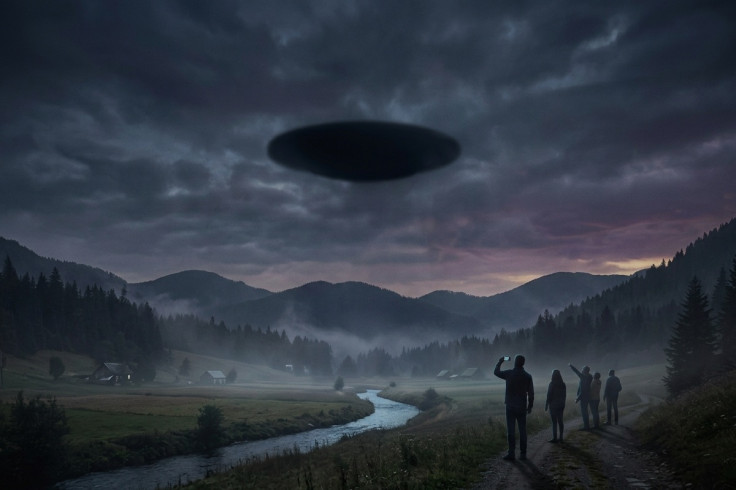
Adam Kirsch, author of the forthcoming We Want to Believe, has argued that UFO claims should be approached with scientific caution, warning in an interview that it is 'always going to be more likely that someone is wrong about what they saw' than that an extraterrestrial craft has appeared in the sky.
Kirsch's book, We Want to Believe: How Aliens Went Mainstream and Why It Matters, is due to be published by Columbia Global Reports on 25 August.
The Atlantic senior editor examines why unidentified flying objects, now often called unidentified anomalous phenomena, or UAP, retain such a powerful hold over the public imagination even when conclusive physical evidence remains elusive.
Whistleblowers claims, military footage and declassified Pentagon material have brought renewed official and public attention to a subject once largely associated with flying-saucer lore, while films and social media have kept the alien question in wider public discussion.
Columbia Global Reports describes the book as an examination of how UAP moved from 'dismissed error to unresolved problem' and why questions about them continue to endure.
UFO Beliefs and the Search for Meaning
Kirsch told reporters that his interest in UFOs began in 2017, when mainstream reporting focused on Pentagon videos and a previously undisclosed programme that collected reports of unexplained aerial sightings.
'The real start of my interest in the subject was in 2017 when there was this sudden reporting in the mainstream media about the Pentagon UFO videos and the so-called secret program to collect UFO reports,' he said. 'For the first time, it seemed like maybe there was some legitimate news or evidence.'
What had long been dismissed as fringe material could now be discussed through military testimony, congressional interest and surveillance technology. The terminology changed, too. UFO became UAP, a more formal term increasingly used by the US government when discussing unexplained observations.
Yet Kirsch's book is not simply a rebuttal of every strange report. He sees the attraction of UFO beliefs as tied to older questions about religion, philosophy and human significance. The publisher similarly describes his approach as drawing on both belief and scepticism rather than treating UAP simply as fantasy or threat.
'For me, humanity's way into the subject is that UFOs are a way of thinking about a lot of the same questions we might also think about in religious or philosophical terms,' Kirsch said. 'Questions like what is unique about humanity, are we alone in the universe, are there other minds, what's our destiny as a species?'
The possibility that humanity is not alone is not merely a scientific proposition. It carries an emotional charge, one that can make every blurry video, unexplained radar reading and pilot account feel potentially significant. Confirmation of intelligent extraterrestrial life would carry profound scientific and philosophical implications.
Kirsch said he had been drawn deeper into the history and lore partly because the discovery of other intelligence in the universe would indeed be extraordinary. 'It would be amazing if we could find proof of that,' he said.
The problem, he added, is that UFO history has repeatedly followed a familiar pattern. Public excitement rises, apparent clues gather momentum and the story eventually 'peters out because there is no evidence and there isn't anything concrete to point to.'
UFO Beliefs Meet the Evidence Test
Kirsch's central distinction is between testimony and evidence. People can report an experience honestly while being mistaken about what caused it, particularly when they are observing something unfamiliar, distant or fleeting.
He pointed to testimony from former military aviators David Fravor and Ryan Graves, arguing that what appears to be corroborating evidence may be less definitive than it initially seems.
'When the camera sees something, the person doesn't see it. And when the person sees something, the camera doesn't see it,' Kirsch said. 'It's always one or the other, it's never both at the same time.'
That is Kirsch's assessment of the cases rather than a definitive finding about all available evidence surrounding the encounters.
He noted that complaints about UFOs being difficult to photograph are hardly new. Witnesses in the 1950s were already saying such objects were strangely unphotogenic, despite the expectation that a physical craft in the atmosphere might produce clearer photographic evidence.
'The obvious and logical explanation is that there's nothing to take a picture of,' Kirsch said.
That is a blunt assessment, but it illustrates the distinction at the centre of Kirsch's argument. A vivid sighting can feel conclusive to the person who experienced it. The leap from 'I saw something I cannot explain' to 'I know what it was' is where he argues greater scientific scrutiny is required.
Kirsch invokes the 18th-century philosopher David Hume's approach to reported miracles. Hume's argument asks whether it is more probable that testimony is mistaken than that an extraordinary event has occurred.
'The same is true of UFOs,' Kirsch said. 'They're not supernatural or miraculous. If they really existed they'd exist in time and space and three dimensions like everything else.'
Kirsch went on to argue that, given current scientific understanding of the universe and interstellar travel, mistaken observation remains more probable than an extraterrestrial spacecraft as the explanation for a UFO report.
He added that modern scientific education requires people to question instinctive explanations, not simply trust them because they are dramatic or satisfying. Released UAP footage may not reveal every available detail, Kirsch said, but an incomplete public record does not automatically point to 'some cosmic secret.'
That distinction also reflects the broader premise of We Want to Believe: unexplained observations may warrant investigation without, by themselves, establishing that extraterrestrial spacecraft are visiting Earth.
© Copyright IBTimes 2026. All rights reserved.