

UFOs Are a National Security Crisis: Why NASA Insiders Fear China and Russia Are Beating Us to UAP Technology
When curiosity is mocked and questions are silenced, the real danger is not what is out there, but what we choose not to see.

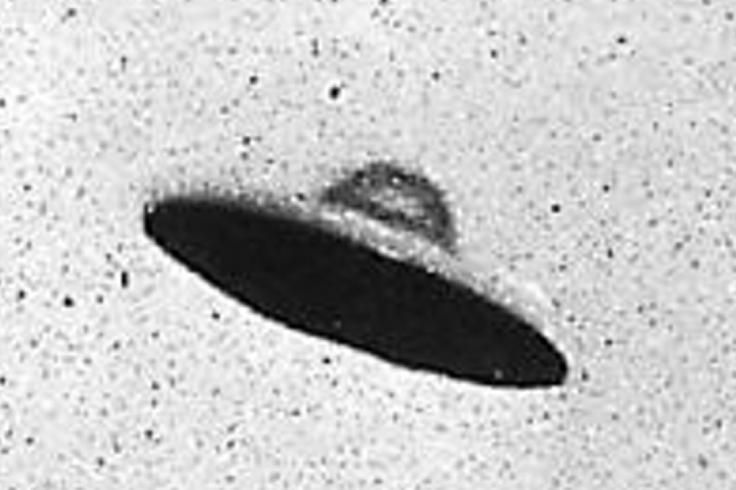
A former senior NASA official now reviewing the space agency's archives for UFO material in the United States has warned that unidentified anomalous phenomena, or UAP, pose a 'significant' national security risk and that NASA itself helped entrench a culture of stigma that kept scientists from speaking up.
The news came after Michael Gold, who once served as NASA's associate administrator for space policy and partnerships, told NewsNation's Reality Check that while he does not believe the agency ran organised UFO cover‑ups, its culture and silence contributed to decades of ridicule around the subject. That stigma, he argues, has cost the US time, data and possibly a technological edge in understanding what is actually in the skies.
UAP, the modern term that has mostly replaced 'UFO' in official documents, refers to any object or event in the air, space or even underwater that cannot immediately be identified. Defence officials, intelligence agencies and now NASA have all been pushed in recent years to treat UAP reports more seriously, particularly as concerns grow that some of the strange objects pilots are seeing may be advanced technology from rival states such as China or Russia.
NASA, UFOs And A Stigma Decades In The Making
Gold told Reality Check that in his view, NASA did not deliberately discourage scientists from asking questions about UAP. Instead, he believes a broader government mindset, formed during the early Cold War, took hold and turned UFOs into a professional third rail.
'In academia, the stigma is so strong that if you even look at this issue, there is a knee‑jerk and automatic reaction against you, threatening your career, threatening your credibility,' Gold said.
It can be recalled that public discussion of UFOs in the 1940s and early 1950s was not always a punchline. Gold noted that sightings were initially treated as a potentially real and unknown phenomenon, with the US Air Force running formal programmes to log and analyse reports.
'In the '40s, early '50s, it was very different than it was today,' he said, pointing to the shift in tone over time. 'There was no mockery. It was treated as potentially real phenomena ... then there was this pivot.'
That pivot, according to Gold, hardened into an 'overarching taboo mindset' that seeped into universities, research labs and government agencies. Even if no one at NASA sent a memo saying 'do not touch UFOs', the message filtered through anyway, helped along by jokes, late‑night TV, and a not‑so‑subtle fear that serious scientists who went anywhere near the topic would be labelled cranks.
From a journalistic standpoint, this is the more uncomfortable part of Gold's account. It suggests that what held NASA back was not a shortage of telescopes or clever people, but a lack of institutional courage.
UAP Files, NASA Archives And A Push For Transparency
Gold's comments carry weight because he is now directly involved in trying to prise open NASA's own UFO, or rather UAP, cupboards.
He previously sat on NASA's independent UAP study team, set up to offer recommendations on how the agency should approach unexplained events in its data. That panel, which reported last year, urged NASA to use its scientific tools and reputation to bring more rigour to a field long dominated by secrecy claims and internet noise.
Now, Gold has moved into the private sector. He sits on a committee convened by the Disclosure Foundation, a group pushing for greater access to official UAP material. The committee's task is to review NASA archival records and flag anything that looks like it deserves a second, more modern look.
Gold told Reality Check that the group intends to press NASA for more openness where it finds gaps.

'I can't force NASA to collaborate or not collaborate,' he said. 'What we will do is talk about the information that is missing and what should be looked at.'
IBTimes UK cannot independently verify what specific files the committee has accessed or what, if anything, of high significance has been found so far, so take everything lightly. But the basic premise, that NASA's historical data sets may contain anomalies overlooked or dismissed under the old stigma, is not far‑fetched. The agency has decades of sensor readings, mission logs and images that were never combed through with UAP in mind.
This is where the story gets a bit wild. If you believe Gold, there may be clues sitting in plain sight, hidden not by conspiracy but by human habit and professional fear.
Why NASA's UFO Hesitation Now Looks Like A Security Gamble
Gold is blunt about why this matters in 2026. It is not just about curiosity or cleaning up the historical record. For him, UAP are now squarely a national security issue.
'We cannot afford to fall behind our geopolitical adversaries in this. We cannot allow a lack of imagination to turn into a lack of freedom,' he said.

For starters, US defence officials have already acknowledged that some UAP incidents could involve foreign surveillance platforms or emerging technology. If scientists and engineers shy away from analysing odd data because they fear the 'UFO' label, that hands an obvious advantage to rivals who do not share the same hang‑ups.
Gold did not name China or Russia directly in the interview, but his warning about 'geopolitical adversaries' will be read in that context. The logic is straightforward enough. If a rival power manages to develop or adapt exotic propulsion, stealth or sensing capabilities first, whether inspired by UAP sightings or not, the strategic balance shifts.
For context, much of the modern UAP discussion in Washington has been driven by military pilots reporting fast‑moving, manoeuvrable objects that do not fit standard aircraft profiles. Official reviews have, so far, stopped well short of saying these are alien craft. Instead, they have stressed the need to separate misidentified mundane objects from anything that might genuinely signal advanced technology.
Gold's argument slots into that frame. He is not claiming NASA secretly has proof of extraterrestrials. He is saying that by laughing off the whole subject for decades, the US may have blinded itself to both potential threats and opportunities.
What happens next is less clear. Gold's committee can review NASA's UFO‑related holdings and publish what it thinks should be re‑examined. NASA, for its part, can either lean into this renewed interest or retreat back into safe technical language and distance.
The former official sounds hopeful, if cautious, that the agency will choose the first path. But the real test will be whether younger researchers now feel they can raise their hands and say: this bit of data is weird, and we should probably look at it.
© Copyright IBTimes 2026. All rights reserved.