

F1 Cars Hit by Sudden Power Loss at Sepang After Safety Software Bug Triggers Engine Shutdowns
Low speeds, limited grip and wet-weather energy settings combined to disrupt power deployment, affecting drivers including Lewis Hamilton and Max Verstappen
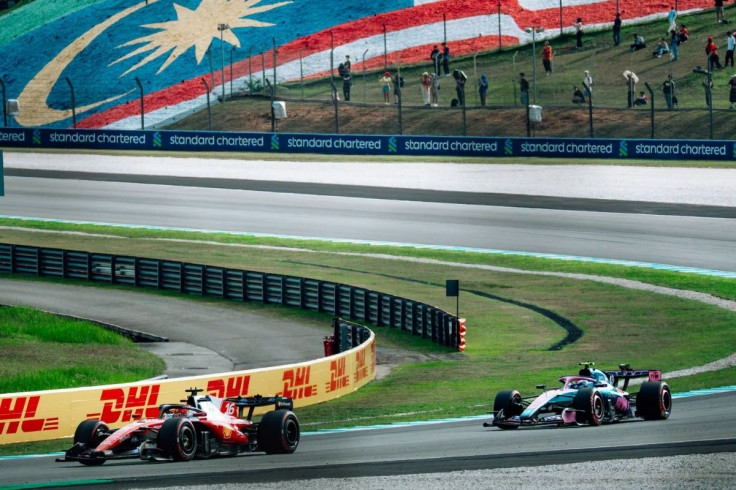
Formula One cars suddenly lost power during the formation laps at Sepang after a software bug interfered with energy deployment, forcing officials to abort the Bahrain Grand Prix start procedure and rush out an emergency update.
The bizarre failure struck several cars as they circulated behind the Safety Car on Sunday, 4 October, following heavy rain at the Bahrain Grand Prix in Malaysia. Max Verstappen and Lewis Hamilton were among those affected, with Hamilton coming to a complete stop before restarting his Ferrari.
The incident created an extraordinary delay before F1's first race at Sepang in nine years could properly begin.
What Caused F1 Cars To Lose Power?
The FIA said an 'unprecedented combination' of low engine speeds, low grip and wet-weather energy-management settings triggered a software bug that prevented electrical power from being redeployed normally.
The problem was connected to software governing the reduced electrical-power deployment used in wet conditions. FIA Single-Seater Director Nikolas Tombazis explained after the race that some cars slowed almost to a standstill during a concertina effect behind the Safety Car.
At extremely low speeds, the software bug prevented power from being redeployed normally, leaving some drivers crawling around the circuit or stopping altogether. Verstappen later described travelling at roughly 35 kilometres per hour while losing speed uphill.
The FIA said the problem had not been detected during previous testing or during the laps to the grid. Limited representative wet-weather running with the new 2026 cars meant the unusual combination of circumstances had not previously emerged.
FIA statement following the Bahrain Grand Prix in Malaysia. #FIA #F1 #BahrainGP pic.twitter.com/yzEHH9EBlq
— FIA (@fia) October 4, 2026
FIA Rushes Out Software Update
With the start procedure suspended, FIA technicians worked on an emergency solution. The governing body's technical department removed an energy-limit constraint in the affected minisectors through an updated software release distributed to every competitor.
Teams then had to load the update and make the necessary changes to their power units before racing could begin. Tombazis acknowledged the fix was produced under significant time pressure, but officials were able to identify the problem quickly enough to allow the Grand Prix to proceed.
Heavy rain had already delayed the scheduled start by roughly 40 minutes. The software problem created another interruption before the field could finally race.
The FIA has promised a full review alongside teams and power-unit manufacturers to establish how the issue escaped earlier testing and prevent a repeat under similar conditions.
Drivers Left With Cars That Would Not Respond
The failure produced extraordinary scenes for Formula One's new generation of machinery.
Hamilton said his power did not return and he was forced to stop on track and restart his car. Verstappen also struggled when the race eventually began, describing his start as 'horrendous' after dropping the clutch and initially receiving no power.
The Dutchman nevertheless recovered to win ahead of Kimi Antonelli, while Hamilton fought back to finish third.
The episode exposed an unexpected vulnerability during F1's first significant wet-weather running with the new regulations.
More importantly, it showed how an unforeseen software condition could disrupt even Formula One's most technologically advanced machinery, giving the FIA, teams and power-unit manufacturers a clear vulnerability to address before the next demanding wet-weather race.
© Copyright IBTimes 2026. All rights reserved.