

Airline Security in Crisis After Pilot Attack Raises Alarming Questions Over Cockpit Screening
An Omani co-pilot, a wounded captain and a plunging Boeing 737 have triggered a high-stakes security mystery over who cleared him to fly to Tel Aviv
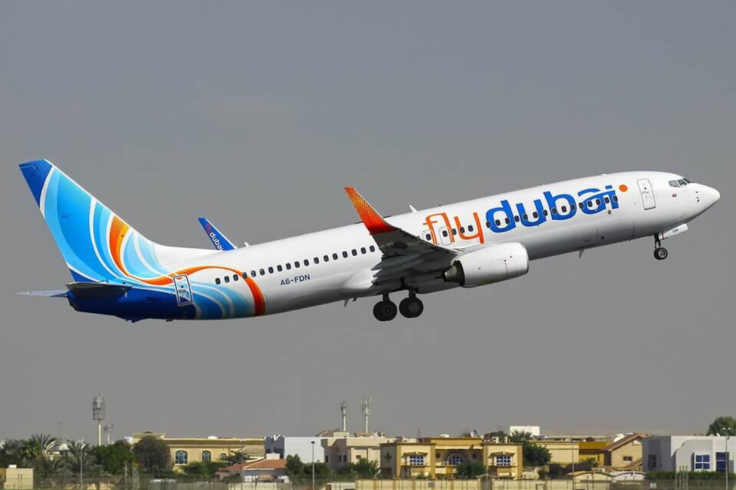
A terrifying cockpit attack aboard a flydubai flight to Tel Aviv has left investigators confronting a question that could have major implications for airline security, as passengers are asking how an Omani co-pilot ended up operating an Israel-bound passenger aircraft.
The incident has exposed glaring security questions regarding how an alleged Omani national came to operate a sensitive Israel-bound route despite a lack of formal diplomatic ties.
Flight FZ1073 was carrying 174 people from Dubai to Tel Aviv on 30 September when a co-pilot attacked his colleague in the cockpit. Israeli officials said the co-pilot stabbed Captain Smit Machchhar and apparently tried to crash the aircraft.
The Boeing 737 plunged nearly 14,000 feet in less than 30 seconds before passengers and crew intervened. The aircraft was eventually diverted to Tabuk, Saudi Arabia, where it landed safely.
The Omani Co-Pilot Mystery
An Israeli official identified the alleged attacker as an Omani national, although Oman, UAE authorities and flydubai have not publicly confirmed his nationality.
That question matters because Oman does not have diplomatic relations with Israel, yet the suspect was apparently serving as operating crew on a flight bound for Tel Aviv.
Former Mossad counterterrorism chief Oded Ailam raised the possibility that the co-pilot may have held two passports. That remains an investigative theory, not an established fact.
Investigators now have to establish how the co-pilot was cleared for the route, what identity documents he used, and what checks were carried out before he entered the cockpit. Israeli authorities have also said they will tighten checks on pilots flying into Israel.
The Weapon Mystery
The attack has also raised questions about what happened inside the flight deck.
Initial accounts described the captain as having been stabbed. Subsequent reporting has examined whether an axe from the cockpit's emergency equipment may have been involved in the struggle.
That leaves investigators with a crucial question: did someone bring a weapon aboard, or did the confrontation involve equipment already in the cockpit?
The UAE General Civil Aviation Authority has said its investigation is examining the operational and security aspects of the incident. The UAE attorney general has also ordered a formal investigation into its circumstances, causes and possible motives.
The Descent Into Chaos
The attack rapidly turned into an aviation emergency. Flight-tracking data showed FZ1073 climbing to around 34,000 feet before a dramatic series of descents and climbs.
The aircraft transmitted the 7700 emergency code and later 7500, signalling unlawful interference, before diverting towards Saudi Arabia.
Israeli officials said fighter jets were scrambled as authorities initially feared the aircraft could have been hijacked. Inside the cabin, however, passengers were already fighting to prevent the worst.
Captain Machchhar Opens the Door
Machchhar, an Indian national, was badly injured but managed to release the cockpit door, allowing people outside to reach the flight deck.
Passengers and crew then helped restrain the co-pilot while two other flydubai pilots travelling aboard the aircraft took control and landed the plane safely in Tabuk.
Among those who intervened was passenger Yaniv Hayun, who was later praised by Israeli Prime Minister Benjamin Netanyahu. Another passenger, Asaf Rajuan, also described joining the struggle.
The sequence transformed what began as a cockpit assault into a desperate fight to regain control of a passenger aircraft.
A Security Chain Under Scrutiny
The incident now puts several layers of aviation security under the microscope. Investigators must establish how the co-pilot was cleared to operate the Tel Aviv route, whether his identity and documentation were properly checked, what happened inside the cockpit, and what triggered the attack.
The UAE investigation is also examining whether the incident involved terrorist activity, prior planning, or outside direction. Authorities have urged the public to avoid unverified claims while the investigation continues.
flydubai has likewise said the underlying reasons for the incident remain unknown and warned against premature speculation.
For now, the most striking mystery remains the simplest one: how did an allegedly Omani co-pilot come to be operating a Tel Aviv-bound flight, and did anything in the system flag the issue before the aircraft left Dubai?
Those answers could determine whether Flight FZ1073 was an isolated cockpit attack, or exposed a much wider weakness in the way airline crews are cleared to fly sensitive international routes.
© Copyright IBTimes 2026. All rights reserved.