

Why Is There a Nationwide Ground Stop Today? What We Know About Flights Halted Across the US
Departing aircraft were told to remain on the ground, while planes already airborne could continue landing and international flights were handled separately
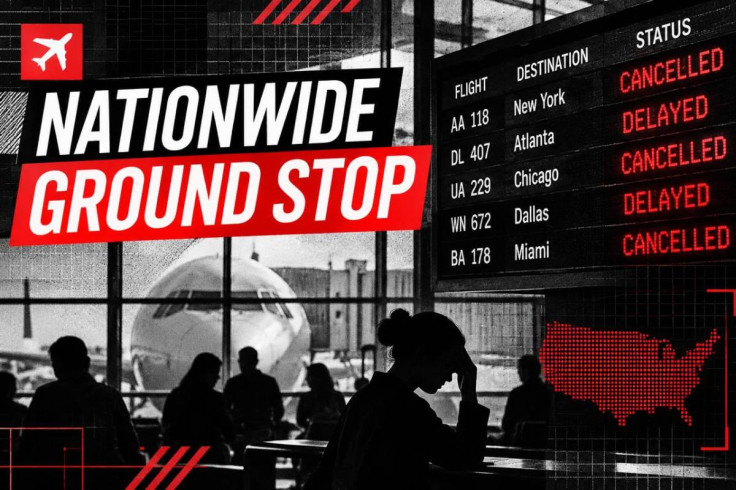
The Federal Aviation Administration (FAA) ordered a nationwide ground stop across the United States on Friday, 13 November 2026, after serious communications problems disrupted air traffic control operations.
The order prevented flights from taking off across the country, raising concerns about widespread delays, cancellations and missed connections.
The disruption began in Chicago before the FAA expanded the restrictions nationwide.
According to Reuters, the agency cited 'extraordinary circumstances and reasons for safety' when announcing the ground stop.
US Transportation Secretary Sean Duffy said the communications problems were affecting all Air Route Traffic Control Centers.
Officials have yet to confirm what caused the problems or when flights can resume normal operations.
Why Did the FAA Order a Nationwide Ground Stop?
The nationwide ground stop followed an earlier disruption in Chicago, where communications problems had already affected air traffic operations.
As the problems spread, the FAA ordered departing aircraft to remain on the ground.
'All departing traffic should remain groundstopped until further notice,' the agency said.
The decision was made to keep flights from taking off while officials investigated the communications issues.
However, aircraft already in the air were not required to land immediately.
Reuters reported that those flights could continue to their destinations, while aircraft waiting to depart had to remain grounded.
International flights were also affected, although the FAA said incoming international services would be handled on a case-by-case basis.
The agency has not explained how those arrangements will affect individual airports or routes.
It also remains unclear whether the communications problems were caused by equipment failure, a technical malfunction or another issue.
How Will the Nationwide Ground Stop Affect US Flights?
For travellers, the biggest concern is the disruption to scheduled departures and connecting flights.
Flights waiting to take off could face significant delays until air traffic controllers give airlines permission to resume departures.
Passengers with connecting flights may also face problems if their incoming aircraft are delayed at other airports.
Even after the ground stop is lifted, airlines may need time to get aircraft back into position, adjust schedules and accommodate affected passengers.
The longer the restrictions last, the greater the potential disruption to flights across the country.
Passengers are advised to check their flight status directly with their airline before heading to the airport.
They can also visit the FAA's National Airspace System Status website for the latest updates.
When Was the Last Nationwide Ground Stop in the US?
Friday's ground stop is an extremely rare event in US aviation.
According to Reuters, it is only the second nationwide suspension of departures since the terrorist attacks of 11 September 2001.
The previous ground stop happened in January 2023, when a malfunction in the FAA's Notice to Air Missions (NOTAM) system temporarily halted domestic departures.
That disruption lasted less than two hours, although flight delays continued after operations resumed.
The latest incident has also raised fresh concerns about the FAA's ageing infrastructure.
Reuters reported that Congress approved $12.5 billion (£9.45 billion) in 2025 to upgrade the agency's communications systems.
On Friday, the FAA and White House requested another $30.1 billion (£22.74 billion) to address other aviation infrastructure problems.
However, officials have not linked those funding needs to the latest communications failure.
For now, two questions remain: What caused the nationwide communications problems, and when will flights return to normal?
© Copyright IBTimes 2026. All rights reserved.