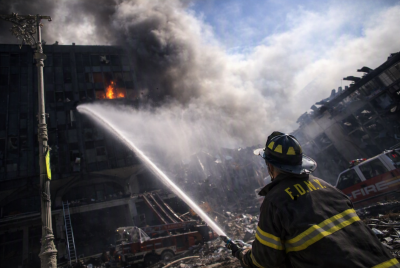
9/11 Responders Still Face Effects of Attack as Long-Term City Air Pollution Worsens Ground Zero Damage
A quarter-century after Ground Zero, new research links heat and air pollution to the lasting health burden of 9/11 responders
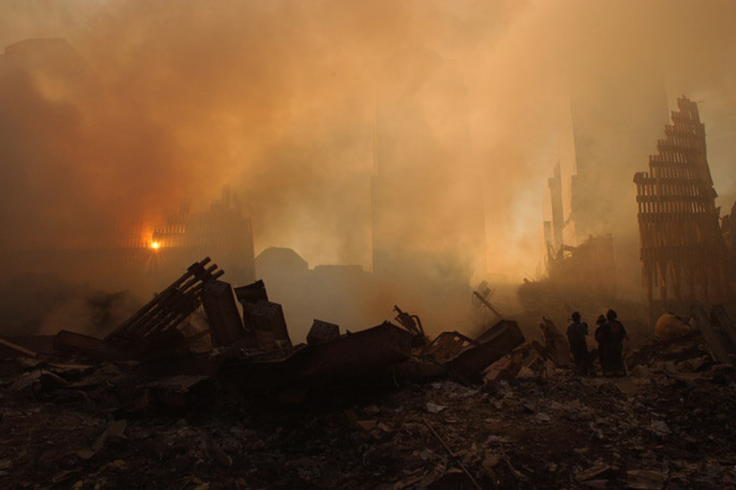
Twenty-five years after 9/11, the health effects of the World Trade Center response are still being uncovered, with new research suggesting that everyday exposure to heat and air pollution may add to the long-term burden faced by responders.
Researchers at the Icahn School of Medicine at Mount Sinai analysed data from 18,734 World Trade Center Health Program responders living in New York City. The study examined later-life exposure to fine particulate matter, known as PM2.5, temperature, and neighbourhood greenery, and how those exposures were associated with frailty, PTSD, and depression.
Published in Nature Communications on 11 September 2026, the research is the first to examine how later-life urban environmental exposures may interact with the chemical and psychological exposures experienced during the World Trade Center response.
Heat Emerges as the Dominant Factor
The most striking finding was temperature.
Researchers found that temperature was the dominant contributor within the environmental exposure mixture, accounting for 98% of its overall association with frailty and 73% of its association with PTSD scores.
That does not mean heat caused PTSD or frailty. The study found associations, not proof of cause and effect. But the finding highlights temperature as a particularly important factor among the environmental exposures examined.
Helena Furman Krasnov, PhD, a postdoctoral researcher at Mount Sinai and first author of the study, said the findings suggest everyday exposures, including heat, air pollution, and access to green space, may contribute to responders' long-term physical and psychological well-being.
NYC Forced to Release 170,000 Pages Exposing 9/11 Toxic Air Deception | Frank Bergman, Slay News
— Owen Gregorian (@OwenGregorian) September 9, 2026
New York City has been forced to release more than 170,000 pages of documents exposing how government officials assured Americans that the air around Ground Zero was safe despite… pic.twitter.com/nwQvjIWeDC
Air Pollution Adds Another Burden
The research also found associations between higher PM2.5 exposure and worse health measures.
For each 2.48 micrograms per cubic metre increase in annual PM2.5 exposure, responders had approximately 2.3% higher frailty scores, 2.1% higher PTSD symptom scores, and 3.9% higher depression symptom scores.
The figures are particularly striking against the broader mental health picture. About 39% of responders met criteria for probable PTSD, while 35% met criteria for probable depression.
The study therefore adds a new dimension to the growing body of research into 9/11 responders' health effects, as this population continues to age.
The Long Shadow of Ground Zero
Maayan Yitshak-Sade, MPH, PhD, associate professor of environmental medicine at Mount Sinai and the study's senior and corresponding author, said researchers wanted to understand how the extreme exposures experienced 25 years ago interact with the environments responders encounter today.
The researchers found that environmental associations were generally larger among responders with greater World Trade Center exposure, earlier arrival at the site, or exposure to horrific scenes. However, most of those interaction findings were not statistically significant, so they cannot be treated as definitive evidence of a stronger effect.
That distinction matters. The study suggests possible increased vulnerability, but it does not establish that Ground Zero exposure directly made individual responders more sensitive to today's heat or pollution.
City officials knew the air surrounding the World Trade Center after the September 11, 2001, attacks was unsafe to breathe despite assuring the public otherwise, according to a batch of never-before-published records released to the public on Tuesday.
— Mosheh Oinounou (@Mosheh) September 8, 2026
“People got sick because… pic.twitter.com/nhAbRzrMb6
Green Space Offers a Different Picture
There was also a strikingly positive finding.
Greater residential greenness was associated with lower frailty, PTSD, and depression scores. For each 6.67-point increase in the study's Green View Index, responders had approximately 1.4% lower frailty scores, 1.9% lower PTSD scores, and 3.8% lower depression scores.
But greener surroundings did not eliminate the associations observed with heat and air pollution.
A 25-Year Health Story Still Unfolding
The study does not prove that pollution or heat causes mental illness or frailty. It also focused on responders living in New York City, meaning the findings may not apply in exactly the same way to responders elsewhere.
Still, the research adds an important piece to the long-term World Trade Center health story.
A quarter-century after the attacks, responders are ageing while researchers continue to examine how the extraordinary exposures of 9/11 may intersect with the ordinary environmental conditions of modern city life.
And among those conditions, heat emerged as the strongest contributor within the exposure mixture studied, while PM2.5 remained significantly associated with worse frailty, PTSD and depression scores.
© Copyright IBTimes 2026. All rights reserved.
- Recommended For You