

Ireland's AI Boom Is Forcing a Nuclear Power Debate It Tried To Ban for Decades
Rising electricity demand from data centres prompts Ireland to revisit nuclear power options
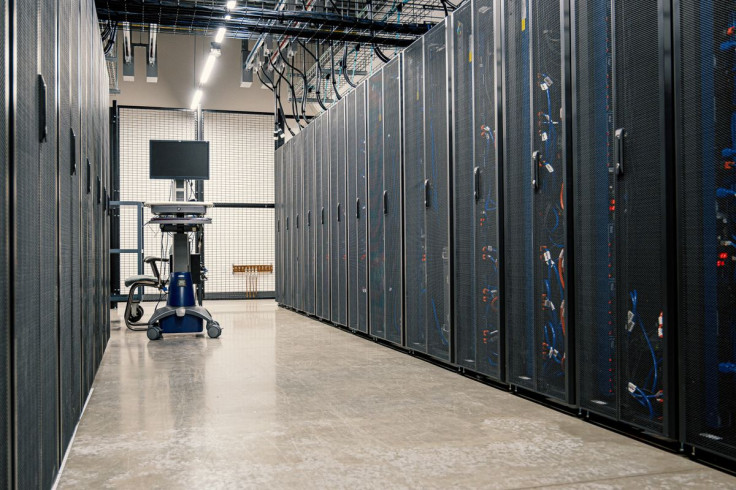
Ireland is reopening its debate over nuclear power as rising electricity demand from data centres, driven in part by the expansion of artificial intelligence, increases pressure on the country's energy system.
Data centres accounted for 23 per cent of Ireland's metered electricity consumption in 2025, according to the Central Statistics Office. Their share is expected to continue rising as Ireland expands its data-centre capacity and attracts major technology companies.
The government says renewable energy remains its immediate priority but has signalled greater openness to nuclear power as a longer term option. Ireland has never generated electricity from nuclear power, while domestic nuclear generation has been prohibited by law since 1999.
Data Centres Increase Electricity Demand
Ireland has become a major European base for technology companies, with data centres contributing significantly to the economy but also placing greater demands on the electricity grid.
EirGrid imposed a de facto moratorium on new data centre connections in the Dublin area in 2021 as the network struggled to accommodate rising demand. New government rules now require data centres to provide 80% of their electricity needs from additional renewable generation either on site or nearby within six years.
The government has also highlighted the sector's economic contribution. An economic study presented by Enterprise Minister Peter Burke in June found that data centres generate £1.8 billion ($2.5 billion) in annual economic activity and support about 19,500 jobs.
Taoiseach Micheál Martin has urged the public to stop the 'demonisation of data centres,' while saying their expansion must remain compatible with Ireland's energy and climate objectives.
Ireland also relies heavily on imported energy. Figures cited by the Financial Times showed that gas accounted for about 40% of electricity generation last year, compared with 32% from wind and 16% from net imports through interconnectors with the UK.
Nuclear Debate Returns To Dáil
The discussion has also entered the Dáil, Ireland's lower house of parliament. Fianna Fáil backbencher James O'Connor has introduced a bill seeking to remove the statutory prohibition on nuclear power generation.
Mr O'Connor has argued that nuclear could help meet Ireland's long-term electricity needs. He has pointed to Finland, which has a similar population size and generates almost 40% of its electricity from nuclear power.
An April poll found that 43% of respondents supported scrapping Ireland's nuclear ban, while 28% favoured keeping it.
The government has not committed to nuclear generation. A technical assessment is examining about 30 technologies that could help decarbonise the electricity system, including nuclear, with options being assessed on factors including cost, readiness, deployment times and public acceptance.
Nuclear Power Would Take Years
Even if the legal prohibition were removed, nuclear power would not provide an immediate response to rising electricity demand.
An Irish government official told Euronews that nuclear power could not practically form part of the country's electricity system until at least the 2040s. Establishing a nuclear sector would also require a new regulatory framework covering reactor safety, operations, decommissioning and radioactive waste.
Hannah Daly, professor of sustainable energy at University College Cork, said nuclear power could not address Ireland's energy challenges within the next 15 to 20 years and warned that it could delay investment in renewable projects.
The government's technical assessment will determine how nuclear compares with other technologies as Ireland plans its electricity system beyond 2040.
© Copyright IBTimes 2026. All rights reserved.