UK Solar Eclipse Puts Evening Grid in Focus as Octopus Offers Free Electricity
Eligible customers can earn a free hour on 16 August by cutting electricity use during the eclipse
Octopus Energy is asking eligible customers to cut electricity use during Wednesday's partial solar eclipse, with its Eclipse Power Down session running from 18:00 to 20:00 on 12 August. Solar generation will fall as evening demand rises during the event, and customers who use less power than usual can earn one free hour of electricity on Sunday, 16 August.
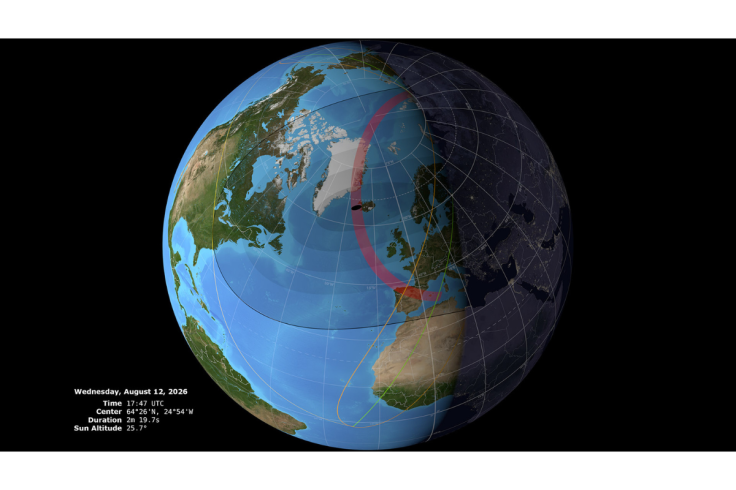
The Moon will cover about 90 to 96 per cent of the Sun across the UK and Ireland, depending on location. Royal Observatory Greenwich says the event will bring the greatest solar coverage seen from the UK and Ireland since 1999.
How Octopus Customers Can Earn Free Electricity During the Eclipse
Customers must join Octoplus and Saving Sessions before opting in to the Eclipse Power Down. They also need a working electricity smart meter that sends regular half-hourly readings.
Octopus will track usage during the two-hour session, and says customers qualify by cutting electricity use during at least one half-hour period. The company will confirm the free-hour time before Sunday.
Octopus says the free hour covers up to 16 kWh, adding that the limit exceeds what a typical home would use in an hour. Participants can also earn 16 Octopoints for each kWh they save.
The company suggests shifting routine tasks outside the session. Customers could run washing machines earlier or avoid other high-use appliances until after 20:00.
Octopus is also running a separate competition tied to the eclipse. Customers can enter for a chance to win solar panels and installation, with a £12,000 cash alternative available under the promotion's terms.
Why the Eclipse Matters for Britain's Grid
The eclipse will cut solar output as millions of people return home and electricity demand climbs, Octopus says. If households reduce consumption for a short period, the company says the grid may need less extra gas-fired generation.
Solar supplied a record 14.4 per cent of Great Britain's electricity in July 2026, according to National Energy System Operator data. It generated 3.2 TWh during the month, beating the previous monthly record of 12.4 per cent set in May.
Octopus runs Saving Sessions through flexibility schemes that reward customers for changing when they use electricity. These programmes help balance supply and demand when generation falls or consumption rises.
The eclipse creates an unusual challenge because solar generation will drop across a wide area at roughly the same time. Octopus says shifting household demand can help narrow that gap while rewarding customers who take part.
What Time the Solar Eclipse Peaks Across the UK
Royal Observatory Greenwich says the eclipse will begin in London at 18:17. The Moon will cover about 90 per cent of the Sun at 19:12, before moving away completely by 20:06.
Coverage will increase farther south-west, with Cornwall seeing roughly 95 per cent coverage and Pembrokeshire reaching about 94 per cent. Parts of Greenland, Iceland and northern Spain will experience totality.
The eclipse will also occur low in the western sky as the Sun sets. Royal Observatory Greenwich recommends finding a high point with a clear western view for the best chance of seeing the full event.
Viewers should never look directly at the Sun during the eclipse. The UK Health Security Agency recommends ISO-compliant eclipse glasses or a pinhole projector.
Ordinary sunglasses do not provide enough protection, even when the sky appears dimmer. UKHSA warns that direct viewing can damage the retina without causing immediate pain.
© Copyright IBTimes 2026. All rights reserved.
- Recommended For You