Supreme Court Emergency Petition Filed by DOJ Over Federal Bureau of Prisons Transgender Surgery Ban
The Justice Department has asked the Supreme Court to lift a court order blocking a federal prison policy on gender-affirming care for transgender inmates
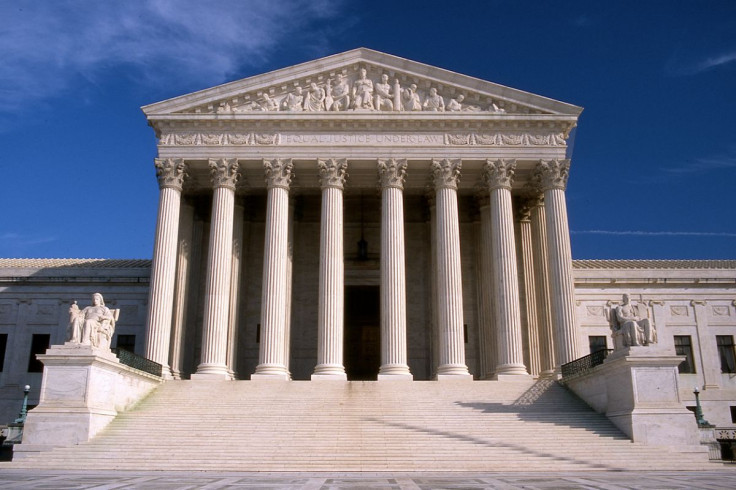
The Justice Department asked the US Supreme Court on Monday, 28 September 2026, to lift a lower-court injunction blocking a Federal Bureau of Prisons policy restricting gender-affirming care for transgender inmates.
The emergency application seeks to allow the policy to take effect while the underlying legal challenge continues.
The Federal Bureau of Prisons issued Program Statement 5260.01, titled Management of Inmates with Gender Dysphoria, on 19 February 2026. The policy generally prohibits gender-affirming surgery, hormone therapy and specified social accommodations, while providing psychotherapy and psychotropic medication for gender dysphoria.
US District Judge Royce C. Lamberth blocked enforcement of the policy, and the US Court of Appeals for the District of Columbia Circuit subsequently declined to lift the injunction. The Justice Department has now asked the Supreme Court to intervene on an emergency basis.
The immediate question is therefore whether the lower-court injunction should be suspended while the broader legal challenge proceeds. The Supreme Court's emergency decision would not, by itself, resolve every underlying dispute over the legality of the BOP policy.
The Government's Emergency Arguments
Solicitor General D. John Sauer argues that the bureau acted within its rulemaking authority. According to the government's filing, officials weighed what they describe as the latest scientific information alongside security and prison-administration concerns.
In the administration's view, those concerns outweighed whatever limited benefits the procedures offered.
Those are the administration's arguments, not findings by the Supreme Court. The distinction matters because the request concerns a policy affecting medical treatment for people in federal custody.
The government says BOP relied on scientific literature, medical opinions and security and prison-administration concerns. However, the district court disputed the adequacy of the agency's explanation and found that BOP had not sufficiently addressed evidence from its own previous experience providing gender-affirming care.
Sauer also challenges how the district court assessed the bureau's decision. He wrote that the judge acted without meaningfully engaging with either BOP's reasoning or the administrative record. He says the court departed from the deference owed to prison administrators.
Lamberth's ruling found that the challengers were likely to succeed on their Administrative Procedure Act claim, concluding that BOP had not adequately explained its departure from its previous policy.
The judge also questioned the agency's reliance on evidence and noted that the policy memorandum did not meaningfully address BOP's own experience providing gender-affirming care.
In his petition, Sauer calls the block harmful to the government and the public. He argues that prison officials need room to decide how to manage treatment and institutional security.
The Supreme Court's choice on the emergency request would determine whether that block stays in place during the continuing case, according to the filing.
Inmates Caught in the Legal Dispute
For inmates seeking treatment, the practical difference is not buried in the legal language. Under the policy, BOP would provide psychotherapy and psychotropic medication for gender dysphoria while generally prohibiting gender-affirming surgery, hormone therapy and specified social accommodations. Those are different forms of care.
The account supplies no patient testimony, medical assessment or response from lawyers challenging the policy. That limits what can responsibly be said about its effect on any particular inmate.
It would be just as misleading to claim that all treatment would end as it would be to suggest that retaining mental health services leaves the policy unchanged.
For now, the immediate record described in the filing is narrow. The administration has asked for the district court's block to be lifted, and the Supreme Court has not announced when it will decide the request.
The petition and court order were not provided with the filing, so their full wording remains unverified here.
© Copyright IBTimes 2026. All rights reserved.
- Recommended For You