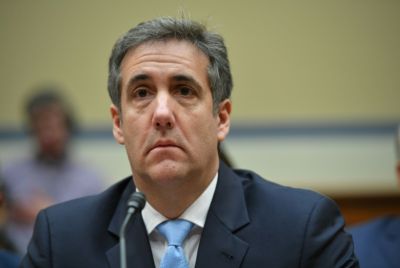
Ghislaine Maxwell's Lawyer Says There Is 'a Good Chance' Trump Will Pardon Her, and He Has Not Yet Even Asked
Attorney David Oscar Markus reveals Maxwell's hopes for clemency while navigating ongoing legal challenges.
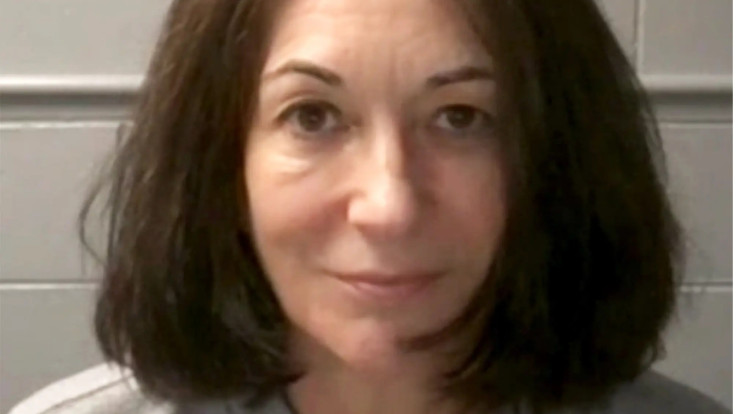
Ghislaine Maxwell's attorney says a presidential pardon is coming, a formal request has not been made, and the White House has already said it is not something the president is thinking about.
In an interview with Politico published 17 April 2026, defence lawyer David Oscar Markus said it is 'no secret' that Maxwell 'obviously wants clemency,' and described her as a 'scapegoat' for the crimes of the late Jeffrey Epstein. Markus confirmed he has not yet approached the Trump administration with a formal pardon request, citing the current media and political climate as the reason for the delay.
The interview lands at a moment when the Epstein case has never been more legally active, with Maxwell serving her 20-year sentence at a minimum-security federal prison camp in Texas, a habeas petition pending in a Manhattan federal court, and the House Oversight Committee's investigation into the Epstein files still ongoing.
Markus on the Pardon Push: Waiting for the Right Moment
Markus was frank about both his client's hopes and his own strategic patience. 'I don't know what the percentages are,' he told Politico. 'There's a good chance and for good reason that she would get a pardon.' He explained that he does not believe 'now is the best time to do it, with everything going on,' a remark that appeared to reference the intense public and congressional attention on the Epstein files and the Department of Justice's handling of them.
The attorney also pushed back against the prosecution's framing of Maxwell's role in the Epstein trafficking network, arguing she 'would never have been prosecuted had Jeffrey Epstein not committed suicide, or whatever, however he died.' Federal prosecutors have consistently maintained that Maxwell was a willing and central participant in Epstein's abuse of underage girls over more than a decade, a position affirmed at trial, on appeal, and in court filings. Maxwell was convicted on five counts in December 2021, including sex trafficking of a minor, and was sentenced to 20 years in prison by US District Judge Alison Nathan in June 2022, as confirmed by the Department of Justice.

Markus's confidence rests partly on his belief that Maxwell holds information that could benefit Trump politically. At her February 2026 House Oversight Committee deposition, he stated in front of committee members: 'Both President Trump and President Clinton are innocent of any wrongdoing. Ms. Maxwell alone can explain why, and the public is entitled to hear that explanation.' The implication was clear: clemency, in his framing, is not a favour to Maxwell. It is, he argued, the mechanism by which the public receives what he describes as the 'unfiltered truth.'
Trump's Shifting Responses and the White House's Official Position
President Donald Trump has given contradictory signals on the pardon question across several months. In October 2025, when asked by a reporter, Trump said he would 'have to take a look at it,' adding: 'I wouldn't consider it or not consider it. I don't know anything about it. But I will speak to the DOJ.'
He also told reporters at the time that he did not know Maxwell was even asking for one. When the White House was contacted by Politico for a response to Markus's latest interview, an official pointed to those prior remarks rather than offering any new statement.
In February 2026, White House press secretary Karoline Leavitt offered a more definitive position, telling reporters that granting Maxwell clemency was 'not something' Trump was 'considering or thinking about.' That comment came shortly after Maxwell appeared before the House Oversight Committee and invoked the Fifth Amendment rather than testifying.
The sequence reinforced a pattern: Maxwell's team floats the clemency offer publicly, Trump neither commits nor categorically refuses, and the White House occasionally damps expectations without closing the door entirely.
One factor complicating any pardon calculation is the optics. Maxwell was convicted of recruiting and grooming girls as young as 14 for Epstein's abuse, crimes described by prosecutors at sentencing as reflecting an 'utter lack of remorse.' Pardoning her would require Trump to act against the recommendation of prosecutors from the Southern District of New York, the findings of a jury, and the ruling of two federal courts. The US Court of Appeals for the Second Circuit affirmed her conviction in September 2024, and the Supreme Court declined to hear her appeal in October 2025.
The House Oversight Deposition Maxwell Turned Into a Clemency Pitch
The most public staging ground for the clemency argument came on 9 February 2026, when Maxwell appeared by video link from the Bryan Federal Prison Camp in Texas for a closed-door deposition before the House Oversight Committee. She was there under a subpoena issued by committee chairman Representative James Comer. As Comer had predicted, she invoked her Fifth Amendment right against self-incrimination more than a dozen times, refusing to answer questions about Epstein's victims, co-conspirators, or her own alleged participation in the abuse.
Prior to the deposition, Markus had written to the committee on 21 January 2026 stating that 'if Ms. Maxwell were to receive clemency, she would be willing and eager to testify openly and honestly, in public, before Congress in Washington, D.C.' During the deposition itself, he reiterated the offer directly to the committee. Democrats on the committee pushed back. Democratic Representative Suhas Subramanyam told reporters: 'Ghislaine Maxwell should have no hope of ever getting out of prison,' arguing that the hope of clemency was the very reason she continued to stonewall the investigation.
Comer himself, despite leading the Republican-majority committee, discouraged the president from granting Maxwell any form of clemency. That internal Republican friction adds a further layer of complexity to any pardon bid. Maxwell's habeas petition, filed by Maxwell herself in a 52-page document to a Manhattan federal court, argues that substantial new evidence emerged after her 2021 trial and that no reasonable jury would have convicted her had it been available. That petition remains pending.
A pardon that has not been requested, for a president who has not decided, from a lawyer who says the timing is not yet right: the Ghislaine Maxwell clemency case is, at this point, an argument being made entirely in public.
© Copyright IBTimes 2026. All rights reserved.
- Recommended For You