The Trans Military Ban Chaos: How an Appeals Court Just Upended Trump's Executive Order
Appeals Court Rules Trump's Transgender Military Ban Unconstitutional

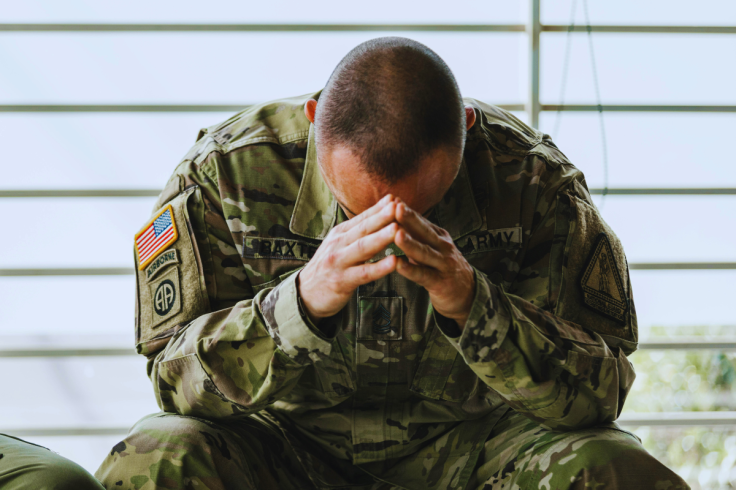
A federal appeals court ruled Monday that the administration's policy banning transgender individuals from serving in the military is potentially unconstitutional, a decision that directly challenges Trump's executive order.
Judges Judith Rogers and Robert Wilkins found the ban prejudiced toward transgender people, which goes against the US Constitution's assurance of equal protection.
Rogers and Wilkins agreed to leave in place a preliminary injunction that prevented the Defence Department from removing transgender troops who are in the military. That only applies to active-duty plaintiffs in the case, per CBS.
The ruling was presided over by a panel of three judges on the US Court of Appeals for the D.C. Circuit, resulting in a decisive 2-to-1 split.
Appeals Judge Criticises 'Harmful' Hegseth Policy
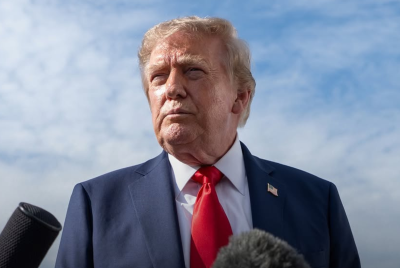
Wilkins wrote in his opinion that Trump also 'declared transgender people as categorically unfit for military service explicitly because of their gender identity.'
'The government's stated reason for issuing the Hegseth Policy as based solely upon gender dysphoria was pretextual, and that instead, the Hegseth Policy was premised, at least in part, on a non-legitimate state interest to harm the politically unpopular group of transgender persons,' he said.
See you at SCOTUS. https://t.co/BhLprXz5Im
— Pete Hegseth (@PeteHegseth) June 1, 2026
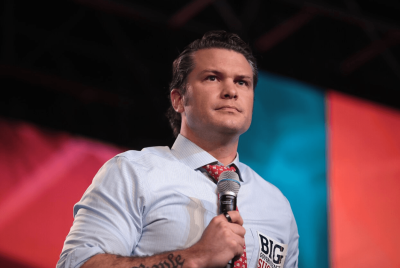
Secretary of Defence Pete Hegseth addressed the ruling on X, stating, 'See you at SCOTUS.'
Critics have been calling out Trump for the order, which supposedly preserves the military's standards for troop readiness, lethality, cohesion, honesty, humility, uniformity and integrity. The order alleged that individuals with gender dysphoria are mentally 'constrained' from adhering to these standards.
How Trump's Order Blocked Transgender Individuals from Military Service
In compliance with Trump's order, Hegseth directed the Pentagon to pause new accessions for people with a history of gender dysphoria and halt medical procedures for transgender troops.
The Defence Department also issued a policy in February 2025 disqualifying people with gender dysphoria from military service unless they obtained a waiver.
Hegseth's policy faced legal challenges at the outset, particularly in Washington, D.C., and Tacoma, Washington. Last month, the Supreme Court allowed the Trump administration to continue enforcing its policy on transgender military service while litigation moved forward, in response to the Tacoma case proceedings.
The D.C. lawsuit was filed by more than a dozen transgender active-duty service members and a group of transgender individuals who were actively pursuing enlistment. They argued that the Defence Department's policy unlawfully discriminated against them based on their sex and transgender status.
Thousands of Troops Impacted by Hegseth's Policy
About 4,200 troops had been diagnosed with gender dysphoria in 2024, a source from the Department of Defence revealed. Some 1,900 active-duty members of the military also received gender-affirming care from the department between January 2016 and May 2021, according to the Congressional Research Service.
'This is not a case where we are left to speculate why the government drafted such broad, undifferentiated classifications,' Wilkins asserted. 'Unless we are going to fall for the old Groucho Marx line — 'who are you going to believe, me or your lying eyes?' — we have direct evidence in this case that animus motivated the classifications in the Hegseth Policy.'
© Copyright IBTimes 2026. All rights reserved.
- Recommended For You