Norway's $2.3T Wealth Fund Posts Record $184B Profit, Reveals $1.2B Stake in SpaceX
Asian technology stocks drove the fund's strongest first-half return, as executives warned of rising concentration risk

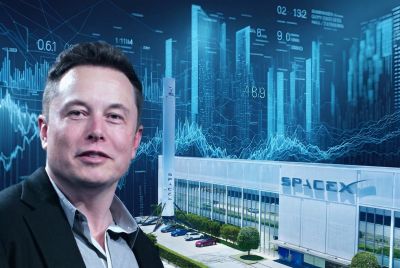
Norway's $2.3 trillion sovereign wealth fund posted a record 1.75 trillion Norwegian crowns ($184.3 billion) profit in the first six months of 2026, driven by a surge in global technology stocks, while also revealing for the first time that it holds a $1.22 billion stake in SpaceX.
The fund, which invests revenue generated from Norway's oil and gas industry, said strong equity market performance, particularly among Asian technology companies, helped deliver its best-ever first-half return. The latest portfolio update also provided fresh insight into its growing exposure to leading technology firms, including Elon Musk's aerospace company.
The disclosure offers investors a rare look at how one of the world's largest institutional funds is positioning itself as artificial intelligence and space-related investments continue to reshape global markets.
Technology Stocks Drove Record Performance
Chief executive Nicolai Tangen attributed the fund's historic gains to strong equity markets, led by technology companies.
'The result is driven by good returns in the equity market, particularly from Asian technology stocks,' Tangen said as the fund announced its half-year results. The 1.75 trillion-crown profit surpassed the previous six-month record of 1.5 trillion crowns, set during the first half of 2023.
The fund owns an average of 1.5% of all listed companies globally, making it the world's largest single investor in public equities. In addition to shares, it invests in bonds, property, and renewable energy infrastructure across international markets.
Norway established its sovereign wealth fund in the 1990s to invest surplus oil and gas revenues for future generations. Today, it has grown into the world's largest sovereign wealth fund, with investments spanning thousands of companies worldwide.
SpaceX Stake Offers Rare Glimpse Into Private Investment
Alongside its earnings report, the fund disclosed for the first time that it owned a 0.05% stake in SpaceX, valued at approximately $1.22 billion as of 30 June. Although the investment is substantial in dollar terms, it remains relatively small compared with the fund's largest technology holdings.
Its portfolio includes a 1.28% stake in Nvidia worth $62 billion, a 1.24% holding in Apple valued at $52 billion, a 1.17% stake in Alphabet worth $50 billion, a 1.27% investment in Microsoft worth $35 billion, and a 1.7% holding in Taiwan Semiconductor Manufacturing valued at $34 billion.
The disclosure came weeks after SpaceX's record-breaking initial public offering. The company's shares initially surged before retreating as investors questioned whether its valuation, estimated at around 77 times expected revenue, could be sustained.
Fund Warns Over Growing Technology Concentration
Despite the record returns, the fund's management cautioned that its increasing concentration in a handful of technology companies presents a growing long-term risk. Tangen said the fund's 10 largest holdings now account for around 20% of its total value, with semiconductor companies making up a significant proportion of that exposure.
'It's chips, chips, chips, chips, chips ... we've never seen such concentration before,' he said.
He added that the fund's index-based investment strategy is set by Norway's parliament, meaning any significant shift away from those allocations would require political approval, a process that typically takes years. The fund has also previously warned that future geopolitical conflicts or a severe global economic downturn could significantly reduce the value of its investments.
Why It Matters for Investors
The fund's record performance highlights how heavily global investment returns continue to depend on a relatively small group of technology companies, particularly those benefiting from the artificial intelligence boom.
Its newly disclosed SpaceX stake also reflects growing institutional interest in the commercial space sector following the company's public listing.
At the same time, the fund's warning about concentration risk serves as a reminder that even the world's largest long-term investors remain cautious about becoming too dependent on a handful of high-performing technology stocks.
© Copyright IBTimes 2026. All rights reserved.
- Recommended For You