

Fake Jon Bon Jovi Used AI Videos to Scam Woman Out of $10,000 in 10-Month Romance Traced to Nigeria
The impostor built trust over seven months with private messages, gifts and convincing videos before demanding cryptocurrency and other payments
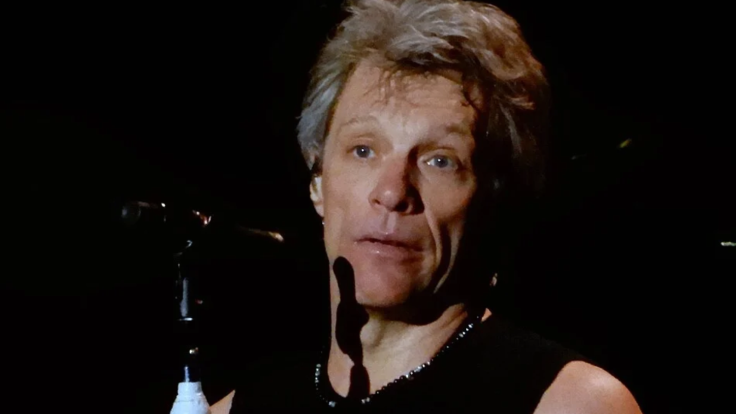
A Louisiana woman who had idolised Jon Bon Jovi since the age of 14 lost more than $10,000 (around £7,478) to a scammer who used artificial intelligence to impersonate the rock star. He sent her personalised videos that carried out her instructions within minutes.
Leslie Pickett says the losses pushed her so far into debt that her home faced foreclosure. Her ordeal features in the National Geographic special 'Super Scam Me'. During filming, an ethical hacker traced the impostor's internet connection to Lagos, Nigeria.
How the Fake Bon Jovi Won Her Trust
The contact began in late 2024, when Pickett left a comment on the singer's verified Instagram page. About five minutes later, she received a reply from an account that looked like his but had no verification badge.
'He gave very thoughtful answers to my questions, so I genuinely thought it was him,' she said. She admitted she knew little about check marks, adding: 'I had doubts, but hey, a girl can dream.'
The impostor said the private account allowed the singer to get closer to fans. He warned that his management would shut it down if they found out, and falsely claimed that he and his wife had secretly filed for divorce.
Over the following months he messaged her day and night, told her he loved her and sent flowers to her home. When she showed the photos and videos to a sceptical cousin, he reportedly said: 'That's him! There's no doubt about it.'
'My heart was shattered,' Pickett said. 'I was still willing to give him the benefit of the doubt. But there was nothing but ill intent. That's what hurt the most.'
There is no suggestion that the real Bon Jovi was involved. Fox News Digital said it had contacted his spokesperson for comment.
The Video Test That Failed to Expose Him
The videos convinced Pickett more than anything else. 'In the videos, he would say my name,' she said.
At one point she asked him to 'Pull on your right ear, cross your eyes and stick your tongue out.' She said: 'He would send me that within five minutes. That's how good AI is.'
Mariana van Zeller, the Emmy-winning journalist who presents the documentary, watched several of the clips. 'These weren't the old deep fake videos of the past that are full of distortions,' she said. 'These looked professional, believable.'
US law enforcement has issued similar warnings. A July 2026 FBI Internet Crime Complaint Center alert stated: 'Scammers use AI-generated videos to create believable depictions of public figures to bolster their fraud schemes.'
Lady heartbroken after being sc@mmed by a Lagos-Based crook who used AI to pose as rockstar Jon Bon Jovi
— Instablog9ja (@instablog9ja) October 25, 2026
A Louisiana woman, Leslie Pickett, has lost over $10,000 to a romance sc@m after believing she was in a relationship with American rock star Jon Bon Jovi, whom she had… pic.twitter.com/18tdU9JofZ
Seven Months Before the First Request
Money did not come up until much later. 'It took him seven months before he asked Leslie for money,' van Zeller said.
The first request followed a sold-out Bon Jovi show in Nashville. The impostor offered Pickett a meet-and-greet arranged through his 'management', with payment in cryptocurrency.
Small payments of $100 (£74) or $150 (£112) were repeatedly said to have failed. Each time she was told to try another method, including Venmo, PayPal, Cash App and cryptocurrency.
In July 2025, he claimed to be visiting Louisiana and sent photos from a hotel she recognised. A supposed security call over Google Chat was then cut short, followed by a demand for far more Bitcoin.
'At that point, I thought, "Oh my God, this is just not real,"' Pickett said.
Hacker Traced the Impostor to Lagos
Pickett contacted van Zeller, whose team brought in an ethical hacker. He set a trap that lured the impostor into trying to claim more Bitcoin, which exposed an internet address in Lagos.
The team then used Google Earth to locate what they believed was the house he had been messaging her from. Pickett has since said the experience took away her love of the band's music.
'I know it wasn't him that scammed me, but I can't listen to any of that anymore,' she said.
Romance fraud is rising sharply. Federal Trade Commission data shows reported US romance scam losses climbed 22% in 2025 to $1.48 billion (£1.11 billion), or about $2,020 (£1,510) per victim.
Asking a suspected impostor to make a specific gesture on camera was long seen as a quick way to catch a fake. Pickett's case shows it no longer worked against a scammer using current AI tools.
Pickett now works full time while repaying her debts and warns others online about unverified accounts. 'My ultimate goal today is to slow it down and eventually stop this industry,' she said.
© Copyright IBTimes 2026. All rights reserved.