

M5 MacBook Air: Leaked Benchmarks Predict 36% Faster GPU Performance
Leaked benchmarks predict the M5 MacBook Air will feature a 36% faster GPU

The quiet revolution continues. The MacBook Air is Apple's most popular computer — a thin, fanless machine that has redefined mobile computing by wielding its power with near-silent efficiency, thanks to Apple silicon. Yet, for many, even the M4 model that debuted earlier this year is just a placeholder.
The real prize, the highly anticipated next-generation leap, is the M5 MacBook Air. The excitement is driven by leaked benchmark scores that indicate a massive 36% jump in graphics performance, making the M5 MacBook Air the most capable consumer laptop for visual tasks yet.
Discerning what Apple has planned is rarely easy, as the company never 'telegraphs' its product launches ahead of time. However, by meticulously dissecting the company's established silicon roadmap, predictable upgrade cycles, and the cadence of its past releases, a surprisingly sharp image of the next great consumer laptop begins to emerge, as detailed by MacRumors. The core facts point toward a relentless focus on increasing the performance ceiling while crucially retaining the MacBook Air's accessible price point.
Predicting the Calendar: Release Timing and Price for the M5 MacBook Air
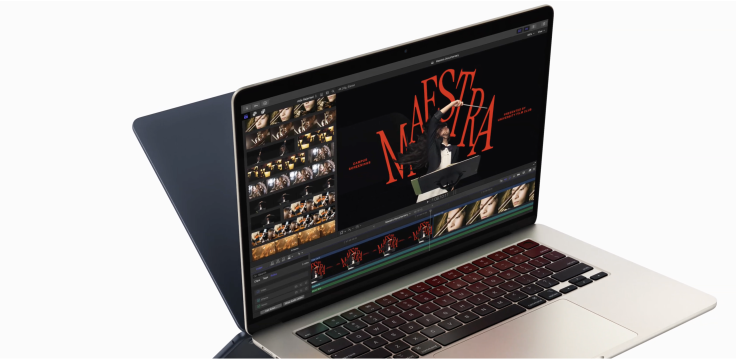
The question of when the M5 MacBook Air will arrive is largely answered by examining Apple's recent history, which strongly suggests the company has settled into a predictable spring refresh cycle for its best-selling laptop.
After releasing the M2 model in mid-2022 with an all-new chassis, Apple skipped 2023, then accelerated the cycle to deliver back-to-back M3 and M4 MacBook Air updates in March 2024 and March 2025, respectively. This back-to-back pattern establishes a clear March launch window as the current strategic norm.
This regularity is further supported by the industry's most reliable sources: Bloomberg's Mark Gurman reports that Apple plans to roll out M5 versions of the MacBook Air in the first quarter of 2026. This points almost unequivocally to a March 2026 launch, provided Apple maintains this established annual update programme.
Equally important to consumers is the expected pricing. The MacBook Air serves as the entry-level gateway to Apple's notebook line, and maintaining an accessible price point is key to its market dominance. Analysts widely expect Apple to keep the pricing structure stable for the upcoming generation. This means the base model M5 MacBook Air will likely retain the current entry-level price of $999.
This stability, combined with the expected jump in performance, ensures the MacBook Air continues to offer compelling value against competing Windows machines. However, it is likely that the top-tier 15-inch M5 MacBook Air will remain priced around $1,499 for the high-end configuration, maintaining the clear segmentation between the Air and the entry-level MacBook Pro.
Processor Upgrade: The M5 MacBook Air's Core Performance Leap
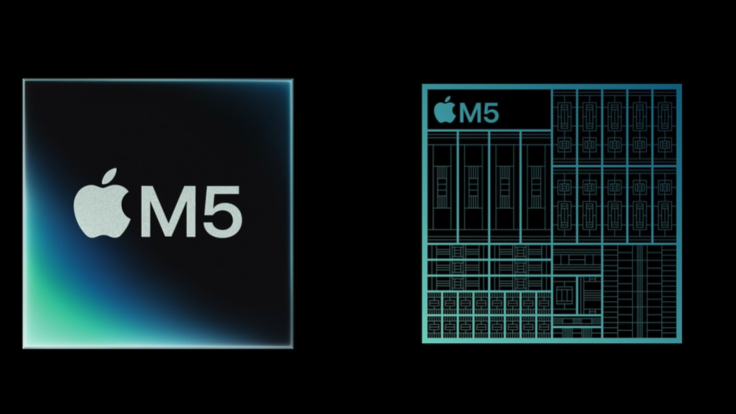
The real story of the next Air lies beneath the hood, in the M5 chip. This series is expected to feature an enhanced ARM architecture and is reportedly being manufactured using TSMC's advanced 3-nanometer process technology. Apple's decision to forgo TSMC's more advanced 2nm process for the M5 chip is believed to be due to cost considerations, but this generational bump on the 3nm node still delivers significant gains.
Leaked benchmarks, allegedly from a next-gen iPad Pro running an M5 chip, provide hard data on the expected uplift. They show single-core scores around 4,133 and multi-core scores around 15,437. That's roughly a 12–15% jump over the current M4 iPad Pro in both categories. This aligns with Apple's strategy of incremental, highly efficient year-over-year chip upgrades.
The benchmark suggests Apple has focused on modest clock speed increases and core-level efficiency improvements for the M5 chip, rather than a radical architecture overhaul. In other words, the M5 will be similar to the step-wise performance upgrade from M3 to M4. Expect 10–15% faster CPU speeds, a slightly more powerful GPU, and better efficiency, potentially leading to even longer battery life.
Furthermore, graphics performance appears to be a key focus: the M5 chip appears to have up to a 36% faster GPU compared to the M4 chip. This substantial boost, which is likely driven by enhancements like a third-generation ray-tracing engine and dedicated Neural Accelerators in each GPU core, will make the fanless M5 MacBook Air significantly more capable for light video editing, 3D workloads, and casual gaming.
The 36% GPU jump is especially notable as it is significantly higher than the 10-15% CPU improvement, suggesting Apple is specifically targeting the growing demand for local AI processing and entry-level graphics-intensive applications. As a result, the M5 MacBook Air will likely feel more responsive in daily use, particularly in single-threaded tasks, but it won't dramatically outpace the M4 for sustained, professional workloads like video rendering — a trade-off inherent in its fanless design.
Design and Display: Subtlety for the M5 MacBook Air
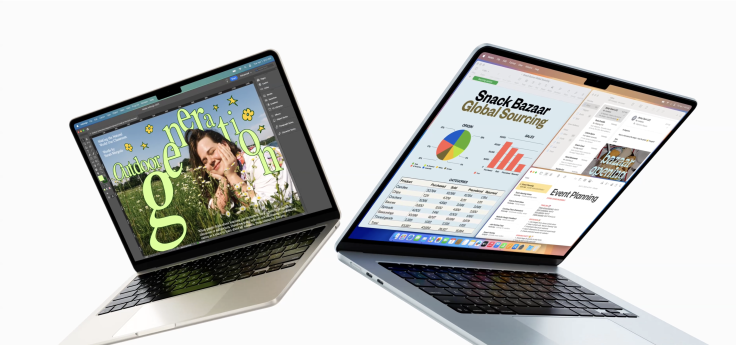
When it comes to the physical appearance, Apple tends to stick with the same industrial design for multiple chip generations. The current MacBook Air design, introduced with the M2 model, is only three years old and shows no signs of ageing.
Users should expect the familiar form factor to carry over: the same 13- and 15-inch sizes, the same fanless aluminium unibody, and similar display technology. Crucially, that means no OLED, which Apple appears to be saving for initial adoption in the MacBook Pro line later next year or in 2027 to maintain product tier differentiation.
If there are any physical changes, they'll likely be subtle, designed to improve the quality of life rather than redefine the aesthetic. Think improved webcam quality, or internal tweaks to accommodate the next generation of wireless connectivity, such as Wi-Fi 7 or Bluetooth LE Audio.
You never know — Apple could even offer the machine in a new colour, just like it did this earlier year with the M4. It is also expected that the M5 MacBook Air will ship with a minimum of 8GB of unified memory and 256GB of storage, though a minimum of 512GB of storage would be a welcome and necessary upgrade for the modern user.
Looking further ahead, according to reports out of Korea, Apple plans to release a MacBook Air with an improved LCD display in 2027, featuring Oxide TFT technology instead of the current amorphous silicon (a-Si) panels. The new display technology is said to be a significant upgrade over current MacBook Air screens. Oxide TFT LCD panels offer better power efficiency and improved performance compared to traditional a-Si displays, resulting in sharper images, smoother scrolling, and enhanced battery life.
The transition to Oxide TFT technology should also mean faster pixel response times and more consistent brightness across the screen. In practical terms, this should translate to reduced motion blur when watching videos or gaming, and more uniform lighting without the 'clouding' effect sometimes visible on current LCD displays.
The evidence is clear: the M5 MacBook Air is shaping up to be a graphics powerhouse that retains the Air's critical balance of portability and price. The combination of a massive 36% GPU performance increase and a highly reliable March 2026 launch date makes this machine a strong contender for a wide range of consumers, particularly those interested in local AI, casual gaming, and media creation.
© Copyright IBTimes 2026. All rights reserved.