Zohran Mamdani States That 'Talk Is Cheap' in Response to Elon Musk Universal High Income Proposal
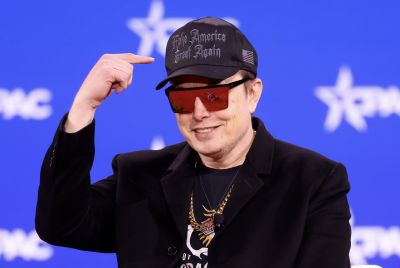
Mamdani challenged Musk to match his support for universal high income with his actions, as the billionaire continued to argue that AI-driven abundance could help offset future job displacement

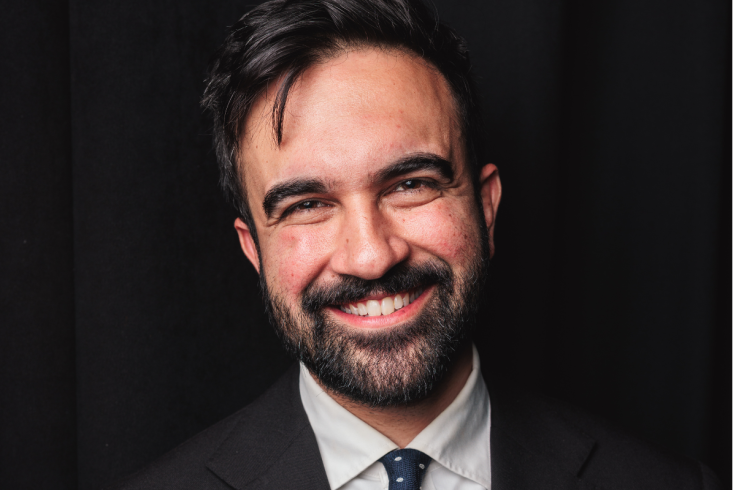
New York City Mayor Zohran Mamdani criticised Elon Musk after the billionaire's support for 'universal high income' was raised during an episode of the PBS programme The Open Mind dated 25 September 2026.
Mamdani said Musk should back his stated support for a high standard of living with action. Musk said in April that federal government cheques could address unemployment caused by artificial intelligence.
Musk argued that AI and robotics could increase the supply of goods and services faster than the money supply, meaning such payments would not necessarily be inflationary. That remains Musk's economic prediction, not an established outcome.
Zohran Mamdani Responds to Musk's Universal High Income Idea
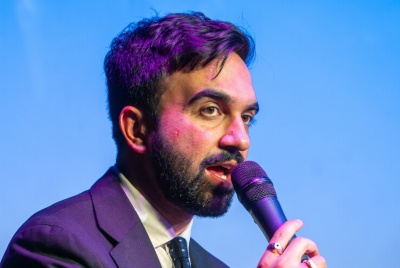
Host Alexander Heffner interviewed Mamdani at Franklin D. Roosevelt Four Freedoms Park in New York City. The discussion covered affordability, the cost of living and other issues facing New Yorkers.
Heffner raised Musk while discussing wealthy political figures and referred to the billionaire's support for a form of basic income. Mamdani replied: 'Well, I would say talk is cheap.'
'If you really do believe in a high standard of living for everyone, then start to show it in your actions,' Mamdani added.
Mamdani then criticised Musk's political involvement and the way he uses his social media company. His remarks were political criticism of Musk, not an independent finding about Musk's intentions or the effects of his activity.
The exchange followed an earlier public clash between the two men in July. In remarks prepared for an address marking the United States' 250th anniversary on 3 July, Mamdani described the country as wealthy but economically unequal.
The mayor said the US was 'the wealthiest country in the history of the world, one where children go to sleep hungry while the world's first trillionaire hungers for more.'
Musk responded on X the same day, writing, 'Mamdani has built nothing. He is a taker, never a maker.' The statement was Musk's criticism of Mamdani, not an independently established assessment of the mayor's record.
Forbes estimated that Musk became the world's first trillionaire on 12 June after SpaceX began trading publicly. Forbes later placed his real-time net worth below the $1 trillion threshold, showing how such estimates can shift with asset values and methodology.
Elon Musk Says AI Could Support Universal High Income
Musk laid out his universal high-income argument on X on 17 April. He called 'Universal HIGH INCOME via checks issued by the Federal government' the 'best way to deal with unemployment caused by AI.'
He argued that AI and robotics would produce goods and services 'far in excess' of growth in the money supply and said there would therefore be no inflation. Musk did not set out payment levels, eligibility rules, tax changes or an implementation timetable in that post.
He returned to the subject during a 23 July interview with The Economist editor-in-chief Zanny Minton Beddoes. When Beddoes asked how people displaced by automation would support themselves and whether greater redistribution or higher taxation would be required, Musk said he thought the US Treasury should 'simply issue people checks.'
Beddoes challenged him on the risk of inflation. Musk responded that inflation was 'simply the ratio of money to goods and services' and argued that dramatic growth in production could allow the money supply to increase without creating the same inflationary pressures seen in a conventional economy.
Musk's argument depends on future increases in AI- and robotics-driven production that have not yet occurred at the scale he described. The timing and extent of automation's effects on employment, production and government policy remain uncertain.
Mamdani's PBS comments therefore did not amount to a detailed critique of the mechanics of Musk's universal high income proposal. Instead, he challenged what he portrayed as a gap between Musk's stated support for broadly shared living standards and his political activity. Musk, meanwhile, has continued to present universal high income as a possible response to widespread job displacement from automation.
© Copyright IBTimes 2026. All rights reserved.
- Recommended For You