

Trump Asks Supreme Court To 'Return the Lower Courts to Their Proper Role' in Bid To Boost His Power
Trump's Supreme Court appeal seeks to narrow judicial power, potentially allowing federal agencies to enforce rules struck down in court
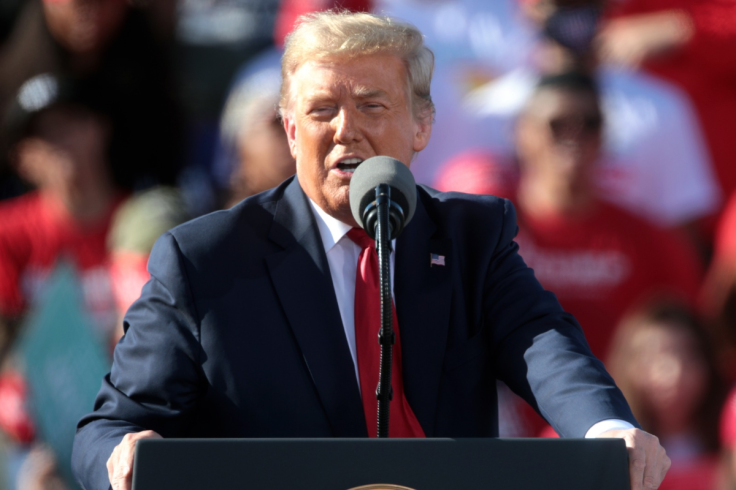
President Donald Trump's administration has asked the US Supreme Court to curb judges' power to strike down federal regulations nationwide, a move that could expand executive authority and limit judicial oversight. The Justice Department filed its petition on 14 October 2026.
The request follows the Supreme Court's 27 June 2025 ruling in Trump v. CASA, which restricted nationwide injunctions, generally limiting relief to those involved in a lawsuit. However, the justices left unresolved whether courts could invalidate federal agency regulations nationwide under the Administrative Procedure Act (APA).
The 2025 Ruling Left a Key Question Open
Enacted in 1946, the APA governs federal agencies and allows courts to review government regulations. Judges have long interpreted the law as permitting nationwide invalidation, also called universal vacatur, when regulations violate legal requirements.
Unlike nationwide injunctions, which prohibit government officials from taking specified actions, APA vacatur sets aside an unlawful agency rule.
The Trump administration argues that courts should generally grant relief only to those directly involved in a lawsuit, rather than invalidate regulations for everyone.
The Supreme Court 'should return the lower courts to their proper role under the APA', the Justice Department argued in its petition.
If successful, the appeal could allow federal agencies to continue enforcing disputed regulations against people who were not parties to successful legal challenges.
Aditya Bamzai, an administrative law expert at the University of Virginia, told Reuters that such a ruling 'would give more flexibility to the executive branch'.
He cautioned that attitudes towards expanded executive flexibility could depend on which administration was exercising that power.
Trump Supreme Court Case Stems From Medical Billing Dispute
The appeal originates from a legal challenge involving Texas doctors, air-ambulance providers and other plaintiffs who opposed federal regulations intended to prevent surprise medical bills.
The healthcare providers argued that the regulations violated the APA and improperly reduced their insurance reimbursements.
On 11 August 2026, the New Orleans-based Fifth US Circuit Court of Appeals upheld the nationwide invalidation of challenged regulatory provisions while reversing other parts of the lower court's decision.
The administration is not challenging the finding that the disputed provisions were unlawful. Instead, it contests whether judges can invalidate such regulations nationwide.
The implications extend beyond healthcare. Trump's administration has faced numerous APA lawsuits involving immigration restrictions, research funding and other federal policies.
However, opposition to limiting nationwide remedies is not confined to Democrats.
Texas, Florida and other Republican-led states defended broad APA remedies in an earlier court filing, arguing that they protect states against federal overreach.
Ronald Levin, a Washington University in St Louis law professor, told Reuters that nationwide invalidation can be necessary when regulations require consistent enforcement.
He cited food and vehicle safety rules as examples of requirements that cannot always be applied selectively.
The Biden administration also questioned nationwide APA remedies in a 2023 immigration dispute. The Supreme Court ruled in its favour without settling the broader legal question.
The Supreme Court has not agreed to hear Trump's latest appeal.
According to its official docket, respondents have until 14 December 2026 to submit their responses. The justices are expected to consider whether to hear the case in early 2027.
© Copyright IBTimes 2026. All rights reserved.