

'We Don't Buy That': 60 Air Controllers Reject US FAA Outage Excuse Amid 'National Security Risk'
Sixty US air traffic controllers reportedly questioned Sean Duffy's explanation for a nationwide FAA ground stop, raising fresh concerns about aviation safety
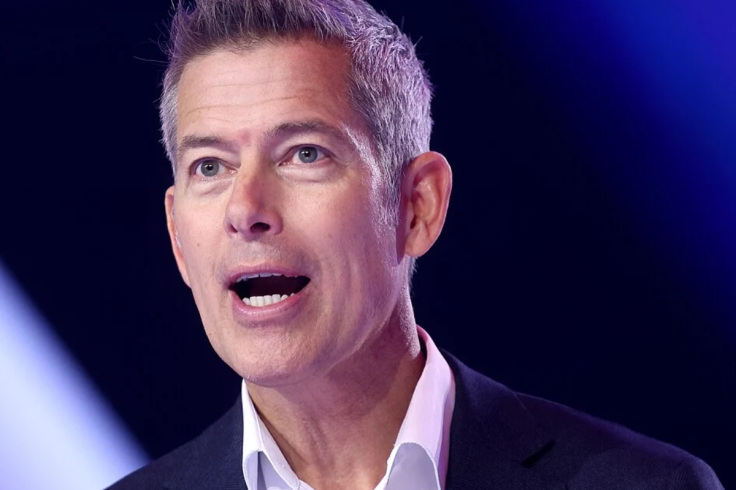
A nationwide shutdown of US flight departures on Friday, 13 November, has come under scrutiny after journalist Anna Giaritelli said 60 air traffic controllers disputed Transportation Secretary Sean Duffy's explanation for the Federal Aviation Administration (FAA) outage.
Speaking on CNN, Giaritelli said the controllers questioned whether the reported technical problems were consistent with normal procedures for changing equipment. Their doubts emerged as officials defended their response to a disruption that affected passengers across the country.
The FAA ordered a nationwide ground stop after communications and radar information became unstable at air traffic control centres. Duffy said problems began at 3.36pm Eastern Time. The FAA lifted the ground stop at 8.15pm, although airlines faced a lengthy recovery.
How Controllers Challenged the FAA's Account
During a White House briefing, Duffy attributed the disruption to ageing telecommunications infrastructure. He said switches and routers handling older time-division multiplexing, or TDM, technology became overloaded, causing inconsistent data.
Duffy initially suggested that the routers had stopped working before correcting his description to emphasise unreliable information. He said newer internet protocol equipment had remained operational while older hardware experienced problems.
Giaritelli, identified in CNN coverage as a Washington Examiner national security reporter, said she had contacted 60 controllers and that none accepted the explanation they heard.
She described their concern about the timing of equipment changes. Such work, according to the controllers she cited, would ordinarily be scheduled overnight or during quieter periods rather than on a busy Friday afternoon.
'We don't buy that,' was the sentiment Giaritelli attributed to them.
That objection raises questions about the circumstances surrounding the failure, but it does not demonstrate that officials deliberately misled the public. Nor does it establish that scheduled switch replacement caused the outage.
The distinction is significant: Duffy described overloaded legacy equipment, while the controllers' reported criticism focused on when equipment changes normally occur. Those are related issues, but not necessarily competing explanations.
Funding Bid Puts Ageing Infrastructure in Focus
Duffy used the emergency to urge Congress to provide $50 billion (€45.4 billion and £37.7 billion) for a comprehensive overhaul of air traffic control infrastructure.
He argued that years of patchwork improvements had left critical equipment vulnerable, pointing to old routers, switches and communications lines. He also warned that further failures were possible without additional investment.
Homeland Security Secretary Markwayne Mullin described the ageing system as a national security risk and supported the demand for federal funding.
Mullin also rejected suggestions that Friday's FAA disruption was connected to a separate Microsoft service outage. Officials said they had found no evidence of a cyberattack, although investigators had not conclusively ruled out malicious activity.
The administration's assessment therefore remained provisional. The Department of Transportation said the stop was precautionary and that pilots and controllers followed established procedures to bring aircraft safely to the ground.
A technical explanation offered at a press conference should not be confused with a completed investigation into precisely what triggered the failure.
For passengers, the consequences were immediate. Thousands of flights were cancelled, and aircraft, crews and travellers were left out of position even after the ground stop ended.
Duffy warned that restoring the system did not mean airlines could instantly resume normal schedules. As investigators examine the outage, questions about its precise cause remain alongside a more immediate challenge: recovering from nationwide disruption again.
© Copyright IBTimes 2026. All rights reserved.