

Marco Rubio Defends Donald Trump's Iran War as 'Necessary' After Midterm Losses
Rubio's defence highlights the political price of a war the White House maintains was necessary for national security
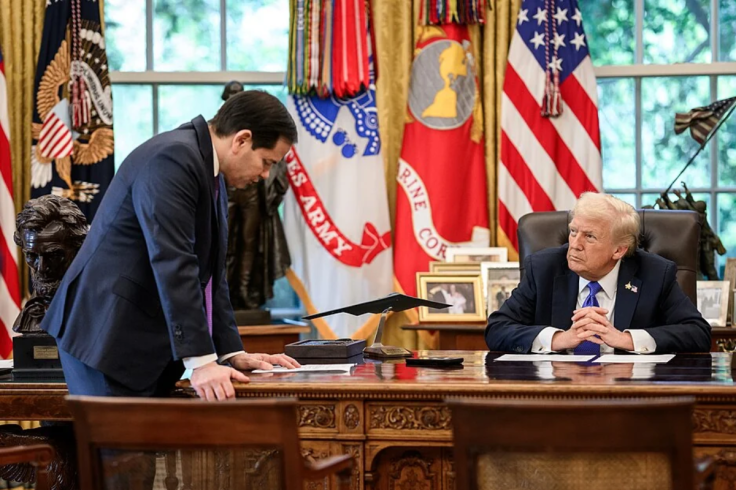
US Secretary of State Marco Rubio defended President Donald Trump's decision to launch the Iran war on Sunday, 8 November 2026, despite Republican losses in the midterm elections. Speaking in Homestead, Florida, he argued that the president had confronted a longstanding nuclear threat.
The remarks followed the 3 November elections, when Democrats won control of both chambers of Congress. Vice President JD Vance blamed the war for the Republican defeat, while rising living costs added to pressure on the White House.
Rubio declined to analyse the election result. According to the State Department transcript, he said Trump had 'identified a very real threat'. Confronting that threat 'isn't necessarily popular but necessary', he argued.
Donald Trump's Iran War Exposes Different Republican Priorities
Vance had written on X that 'The reason we lost is the war'. Rubio did not directly challenge that assessment, instead defending the administration's stated national security justification. The two men emphasised different consequences of the same decision.
In a 60 Minutes interview recorded on 6 November and broadcast two days later, Trump accepted that the war had hurt Republicans. He nevertheless said he would make the decision again, citing the risk of Iran acquiring nuclear weapons.
Trump also praised Rubio when asked about possible Republican presidential candidates in 2028. 'I think Marco's great,' he said. Neither Rubio nor Vance has announced a campaign.
Energy disruption helps explain the political pressure. Before the conflict, oil passing through the Strait of Hormuz amounted to around 20% of global petroleum liquids consumption, according to the US Energy Information Administration. That figure describes the waterway's importance before the war, not current shipping volumes.
The conflict began with US and Israeli strikes on 28 February. Its economic consequences have complicated the administration's efforts to justify continued pressure on Tehran.
Donald Trump's Nuclear Case Meets Uncertain Diplomacy
Iran maintains that its nuclear programme is peaceful. Washington argues that military action was required to prevent Tehran developing a weapon, although that remains the administration's justification rather than proof that Iran had built one.
The International Atomic Energy Agency estimated that Iran held 440.9kg of uranium enriched up to 60% as of 13 June 2025. Weapons-grade uranium is generally enriched to around 90%. The agency later reported losing reliable knowledge of Iran's current nuclear inventory, making the earlier figure unsuitable as a current estimate.
Rubio said on 8 November that negotiations were not near a breakthrough and described Iranian demands as unrealistic. Qatar has helped mediate proposals between Washington and Tehran.

Trump told CNN that renewed strikes were unlikely if Iran accepted a strong agreement. He also said US forces had identified 38 bridges among possible targets, without establishing whether any individual site was a lawful military objective.
On 7 November, US Central Command said American forces disabled the St. Kitts-flagged M/V Huda in the Gulf of Oman. The military accused its crew of ignoring warnings while attempting to breach the US naval blockade.
By Tuesday, 10 November, Rubio was arguing that economic sanctions and the blockade had reduced the need for fresh large-scale attacks. After G7 talks in Paris, he said military operations remained an option if Iran crossed US 'red lines'.
© Copyright IBTimes 2026. All rights reserved.