Mel Gibson Says 'The Resurrection of the Christ' Will Be an 'Acid Trip' With 'Some Crazy Stuff' Ahead
'The Passion of the Christ' filmmaker set out his vision for how the story will leap across time and spiritual space when Part One arrives in cinemas on 6 May 2027
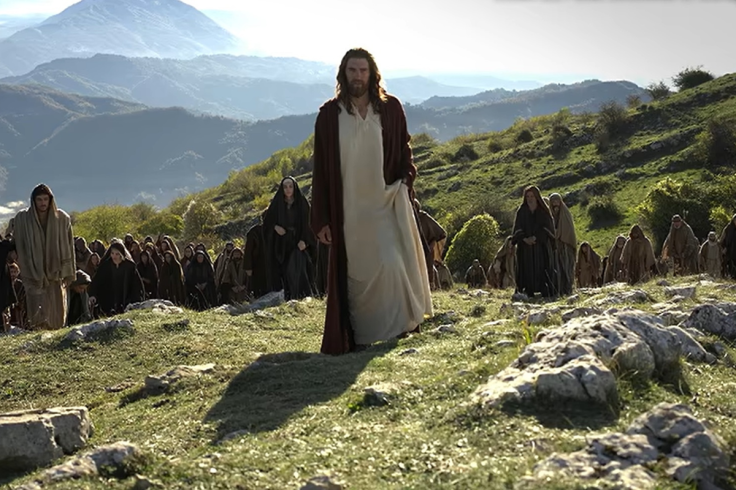
Mel Gibson says The Resurrection of the Christ will be an English-language, two-part epic that goes beyond the earthly events depicted in The Passion of the Christ, describing the new story as a journey into 'other realms and stuff'.
Speaking with Fox News contributor Raymond Arroyo on Arroyo Grande, Gibson explained why he chose English dialogue for the follow-up to his 2004 biblical drama, which used Aramaic, Hebrew, and Latin.
He said the resurrection was a more complex subject than the first film's focus on human suffering and argued audiences would better absorb its 'heady concepts' without reading subtitles.
'I thought it was just silly to make people read subtitles in a foreign language when they were dealing with such heady concepts,' Gibson said.
The Resurrection of the Christ: Part One is scheduled to arrive in cinemas on 6 May 2027, with Part Two scheduled for 25 May 2028. Lionsgate has confirmed the project will be released in two parts.
Gibson has also described the film's scope in metaphysical terms, saying it will move between different realms and include what he calls the 'Hell of the just' and the 'Hell of the damned'. He previously characterised the script as an 'acid trip', while cautioning that he did not want to reveal too much about its story.
Why Mel Gibson Wants The Resurrection of the Christ in English
Gibson said The Passion of the Christ had a more straightforward focal point because it centred on human suffering. 'You had a focal point, and it was about human suffering,' he told Arroyo. 'That was a rather simpler message to get across.'
The resurrection, he said, required him to explore more sources because of its complexity. 'I thought it was just silly to make people read subtitles in a foreign language when they were dealing with such heady concepts,' Gibson said. 'So, it asks more of you, but we help them along with their own language.'
Unlike The Passion of the Christ, which used ancient languages to depict the events surrounding Jesus' final hours, The Resurrection of the Christ will use English dialogue.
An 'Acid Trip' Through 'Other Realms and Stuff'
The language change is only one indication of how differently Gibson is approaching the sequel. During the interview, he revisited an earlier description of the project as an 'acid trip' that would 'mess people up'. Asked what he meant, Gibson described a story that moves beyond the earthly world into different realms.
'Metaphysically speaking,' he said, the film 'takes a pretty broad trip from our own broken world to, you know, other realms and stuff with different natures'. Gibson said the film attempts to present a larger picture of salvation history while connecting its different elements.
'It is a wild ride really through all of salvation history,' he said. He also mentioned several 'benchmark events', including Abraham, the Exodus, David and the resurrection, as he discussed the connections he wanted to establish across the story.
Gibson has previously discussed the film's supernatural and theological material in interviews with The Christian Post.
He has said audiences will visit different realms, including what he described as 'the Hell of the just' and 'the Hell of the damned', as well as the 'firmament before the creation'.
Building a Two-Part Biblical Epic
The Resurrection of the Christ is planned as a two-part follow-up to The Passion of the Christ. The Resurrection of the Christ: Part One is currently scheduled to arrive in cinemas on 6 May 2027, with Part Two scheduled for 25 May 2028.
The project's scope is considerably broader than the first film. Gibson said he had to 'broaden the canvas' when developing the new story, particularly because of its larger themes and the significance of the resurrection.
The filmmaker also said he spent about 10 years writing the project. 'It was a hard struggle,' Gibson said. 'There's at least maybe about 10 years of just writing it.'
He described the process as putting together puzzle pieces and figuring out how to present the story visually, rather than simply explain it in writing.
Gibson also said only one actor from The Passion of the Christ has carried over to the new films, although he declined to identify that performer.
Filling in the Gaps
Gibson sees the new films as an opportunity to explore questions surrounding events described in the Gospel accounts.
'One can look at these things and go, "I wonder what was around that?" and try and analyse those things and make suppositions about what might have been,' he said.
He added that he did not intend to contradict established Christian teaching. 'Not to go against anything in orthodox teaching but to enhance, I think, what's there for everyone to see and hopefully they'll be surprised by some of those revelations,' Gibson said.
The comments indicate that the films will include material that goes beyond a straightforward dramatisation of the Gospel accounts. Gibson has described the project as an attempt to explore the wider theological context surrounding the resurrection while using cinematic invention to fill in areas he believes can be explored.
Can Gibson Reignite The Passion of the Christ
Released in 2004, The Passion of the Christ starred Jim Caviezel as Jesus and depicted the final 12 hours of Jesus' life, including his trial, crucifixion and resurrection.
The film became a major commercial success and was notable for its use of Aramaic, Hebrew and Latin, as well as its graphic depiction of the Passion.
Gibson recalled the strong response from churches and other audiences, saying congregations turned out in 'massive numbers'. He also discussed letters describing conversions and other personal reactions to the film.
During the interview, Arroyo recounted claims that some viewers had confessed crimes after seeing The Passion of the Christ.
Gibson also recalled meeting young viewers discovering the film for the first time and described the experience as evidence that its emotional impact could continue across generations.
The film is scheduled to return to cinemas for a limited engagement from 10 to 17 September, ahead of the release of The Resurrection of the Christ: Part One.
For Gibson, the cinema experience is an important part of the project. He described watching films collectively as a 'communal experience' and said there was value in audiences encountering the material together.
A Broader Vision of the Resurrection
Gibson's comments suggest that The Resurrection of the Christ will be substantially broader in scope than The Passion of the Christ.
While the 2004 film focused on Jesus' suffering and death, the new project will examine the resurrection while moving through different periods and realms as Gibson interprets the wider story of salvation.
The filmmaker has also acknowledged how difficult the material has been to translate into cinema. He said the project required years of writing and visual development, describing it as a 'monster' and a 'massive undertaking'.
For now, Gibson remains guarded about the film's specific revelations. His comments point to a production that combines the Gospel accounts with material drawn from other sources and his own interpretation of events surrounding the resurrection.
The result, he has suggested, will be unlike a conventional biblical drama — and may be the most expansive treatment yet of the story he began telling more than two decades ago.
The Resurrection of the Christ: Part One is scheduled for release on 6 May 2027, followed by Part Two on 25 May 2028.
© Copyright IBTimes 2026. All rights reserved.
- Recommended For You